Most men drink the way they drive: confidently, badly and with no idea how they look to everyone else. They order whatever the person before them ordered, hold the glass like a can of beer, stay an hour past the point where they were good company and wake up on a group chat they would rather not read. None of this is about how much you drink. It is about whether the drink is working for you or you are working for it.
I spent my twenties in a crowd of princes and cavalry officers who drank professionally, and my first biographer still judged me "neither a drunkard, nor a sensualist". I kept a serious cellar and drank from it at dinner, not at breakfast. The rules have not changed much in two hundred years. The drinks have merely improved.
Find one hotel bar and become a regular
A hotel bar is a club without the subscription. The lighting is flattering, the staff are trained to be discreet, nobody is shouting over a DJ, and the drinks are made by people who will still be doing this in twenty years. Pick one in your own city and go often enough that the bartender knows what you drink before you sit down. That is the closest thing a modern man has to a private club, and it costs nothing to join.
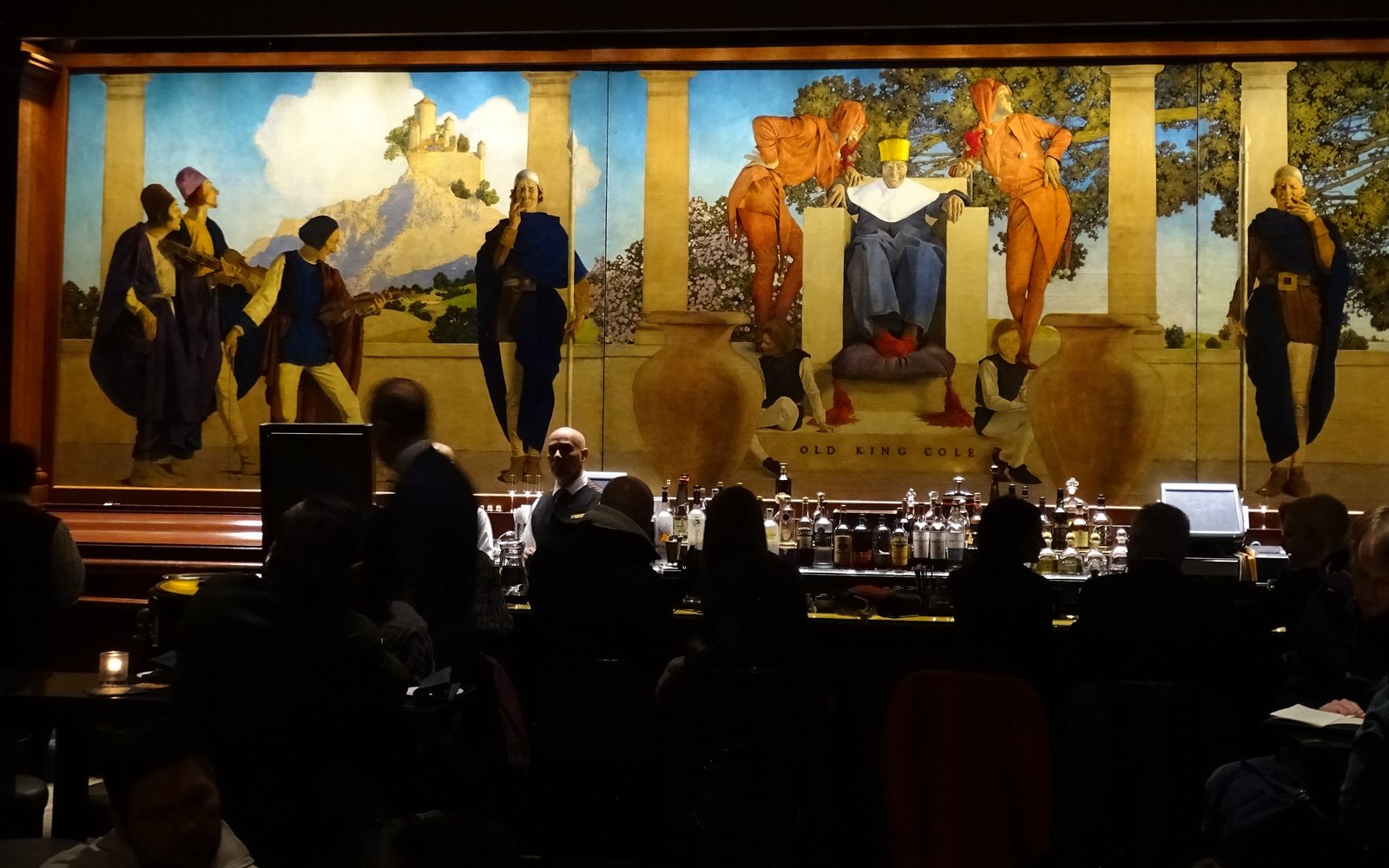
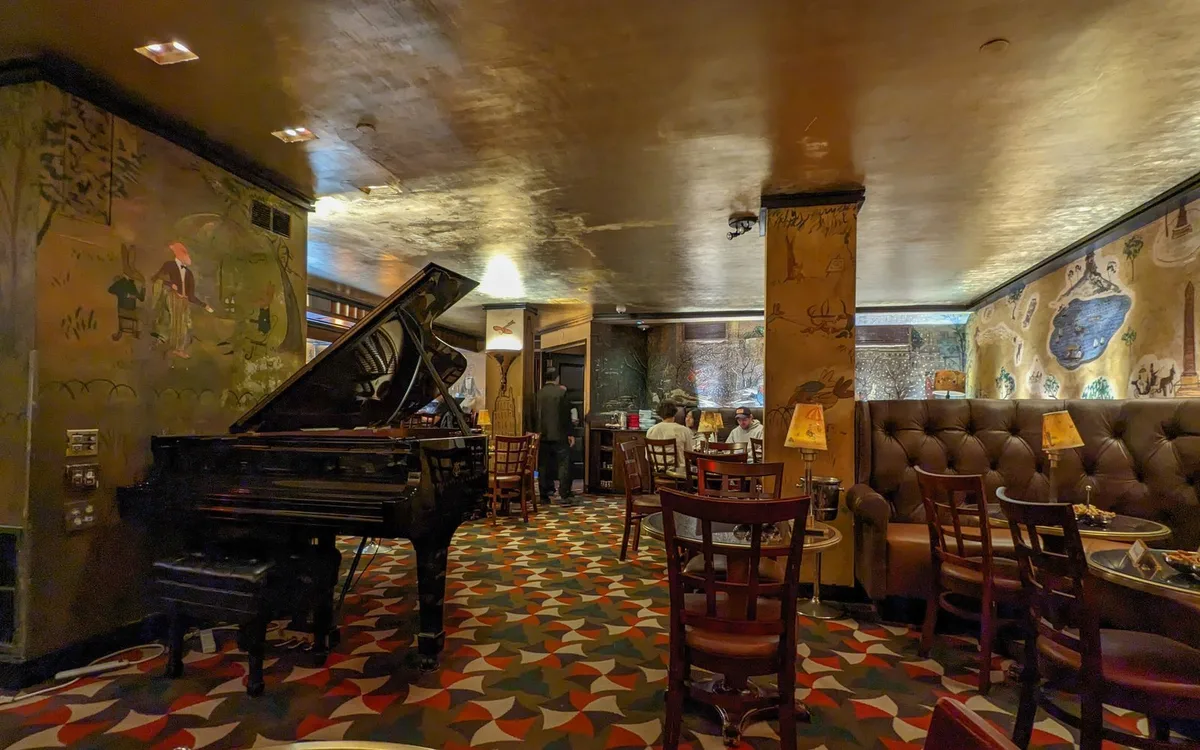
The great ones are worth a pilgrimage. The King Cole Bar at the St. Regis in New York, under Maxfield Parrish's mural, is where the Bloody Mary first came to Manhattan, and it remains the correct place for a drink in the middle of the afternoon. Bemelmans at the Carlyle still asks for a collared shirt in the evening, and you should be grateful: a room that asks something of you is paying you a compliment. The Bar Hemingway at the Ritz Paris is a cliché, and you should go anyway. In Hong Kong, the Captain's Bar at the Mandarin Oriental keeps engraved pewter tankards behind the bar for its most loyal regulars, which is the whole idea of a regular, made out of metal.
Bemelmans Bar at the Carlyle, New York, with Ludwig Bemelmans's murals on the walls. Collared shirts after dark. Photo: Ɱ / Wikimedia Commons, CC BY-SA 4.0
Tip on the first round, not the last
Generosity at the beginning is an investment. At the end it is merely a tip. Look after the bartender properly on your first drink and you will not wait for the rest of the night; your glass will be refilled before you notice it is empty, and your guests will think you are a regular even if it is your first visit. Think of the bartender as a wingman with a liquor licence.
Learn his name and use it once. Order clearly, pay promptly, and never wave a credit card in the air to get attention. Snapping your fingers is how a man announces that he has never worked a service job.
Order like you have done this before
Know what you drink, and say it in one sentence. "A dry gin martini, straight up, with a twist" is an order. "Something, I don't know, maybe fruity?" is a cry for help. If you want to try something new, ask the bartender what he likes making, and then drink it.
Your old fashioned should not arrive with a fruit salad on top. One strip of orange peel, perhaps one good cherry, and nothing else. Any bar that drops in a neon-red maraschino and half an orange is telling you how seriously it takes the rest of the menu.
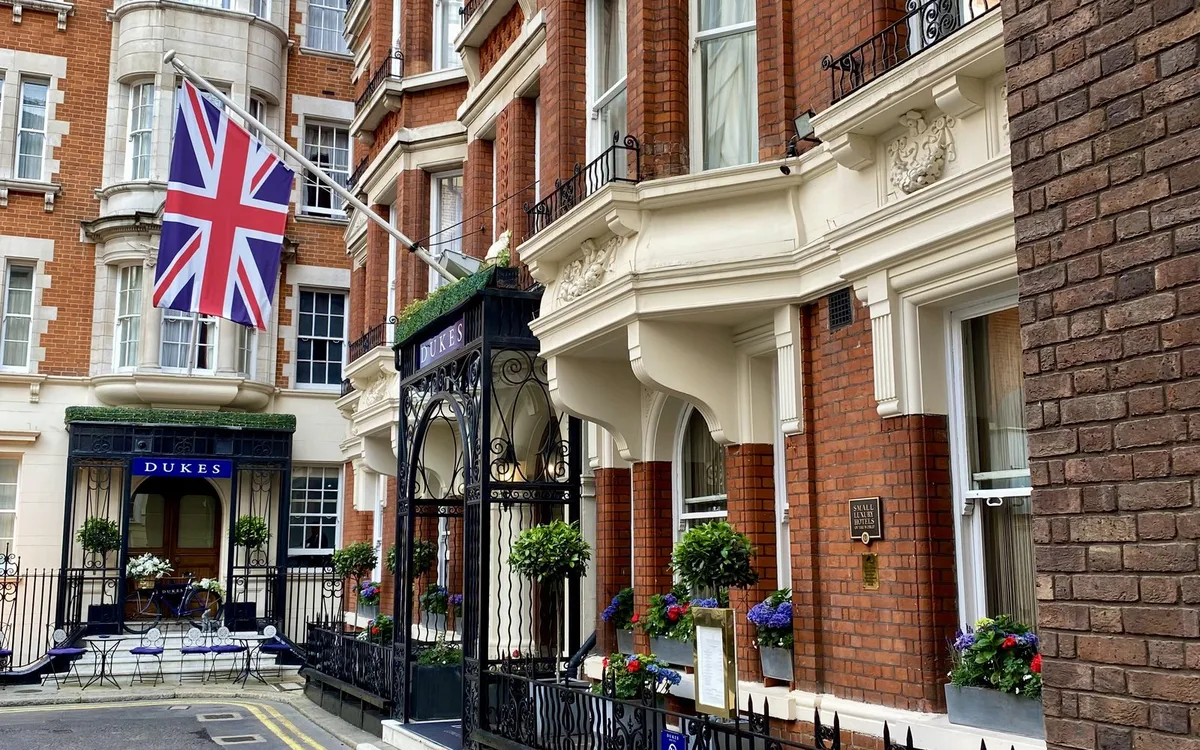
For a drink that does justice to London, walk it. Start at the Connaught, cross the two blocks to Claridge's, and finish at Dukes in St James's, where the martini is wheeled to your table on a trolley and poured from a frozen bottle. Have one at each, and only one at Dukes: they are famously strong, and the staff will gently cap you at two.
Dukes Hotel, St James's Place, London, home of the most famous martini in the city. Measure your evening in streets, not miles. Photo: No Swan So Fine / Wikimedia Commons, CC BY-SA 4.0
At weddings and work events, drink beer
Weddings, conferences and the office party are where careers quietly end. The office party is a meeting with a bar in it, and the people who decide your bonus are taking notes. Drink beer. It paces you, it is hard to overdo, and it comes with a built-in exit strategy: when you are cornered by a bore, finish the bottle, smile and go to get another. You cannot drain a cabernet to escape a conversation.
If you would rather not drink at all, order soda water with lime. It looks exactly like a gin and tonic, and nobody has ever checked. And leave while you're still a pleasure to remember, not a story to tell.
Skip bottle service, everywhere and always. Paying a large markup so that a waitress can parade a bottle of ordinary vodka through a nightclub with a sparkler in it is vanity, not hospitality. Spend the same money on one exceptional bottle and share it with people who deserve it.
Hold the stem
This one takes three seconds to learn and is visible from across the room. Hold a wine glass low on the stem, never by the bowl. Your hand warms the wine, and the bowl ends up covered in fingerprints that everyone at the table can see. A great wine in the wrong grip is a great coat on the wrong man.
The glass matters as much as the hand. Champagne does not belong in a narrow flute, which traps the aroma, or a wide coupe, which loses the bubbles before you have finished your toast. Use a tulip-shaped glass, or a fine all-purpose wine glass. The Zalto Denk'Art Universal, mouth-blown in Austria and so light it seems to disappear in your hand, is the one glass serious wine people use for everything from Champagne to Burgundy. Own six, and stop buying glasses.
Champagne shows best in a tulip or a fine all-purpose glass, not a narrow flute. Photo: Quinn Dombrowski / Wikimedia Commons, CC BY-SA 2.0
For whisky, mezcal or a neat pour of good tequila, you need one proper tumbler, heavy enough to feel like a decision. Baccarat's Harcourt, cut in the same pattern since the nineteenth century, is the one that ends up on every well-run bar cart in Paris.
Know a few bottles, and drink them without apology
You do not need to be a sommelier. You need about six reliable answers. A dry rosé Champagne, such as Billecart-Salmon's, for anything worth celebrating. A good Pomerol or a Brunello di Montalcino when someone else has chosen the steak. A red Burgundy from Nuits-Saint-Georges as the thank-you bottle you bring to dinner: a bottle is the only thank-you note that improves with keeping. Hand it over without instructions; the host is under no obligation to open it that night.
Like what you like. Plenty of excellent Napa Cabernet is sneered at by people who have never paid for a bottle of anything, and the snobbery around it says more about them than about the wine. The only real rule is to choose one strong thing and drink it slowly.
If you open good bottles at home, a Coravin lets you pour a single glass through the cork with a needle and leave the rest of the bottle untouched for months. It means a Tuesday night can be a great wine night, without committing to the whole bottle.
Lay something down
My own cellar, sixteen dozen claret and ten dozen old port, went under the auctioneer's hammer at Christie's when my debts caught up with me in 1816. Build yours for a better reason. When a child is born, open an account with a good wine merchant and lay down a case from the birth year, to be opened at eighteen, at graduation and at their wedding. It is the rare gift that is worth more by the time it is opened, and the only kind of inheritance that is meant to be drunk.
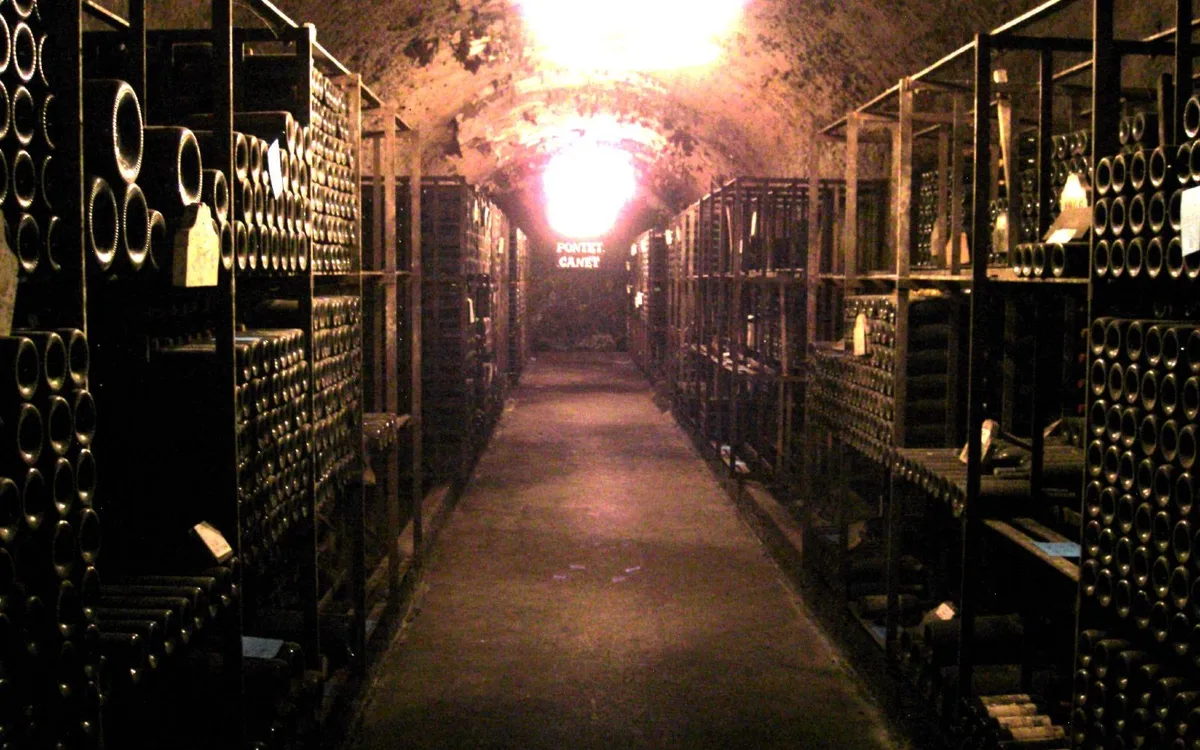
The underground cellar at Château Pontet-Canet, Pauillac. Patience, stored horizontally. Photo: seligmanwaite / Wikimedia Commons, CC BY 2.0
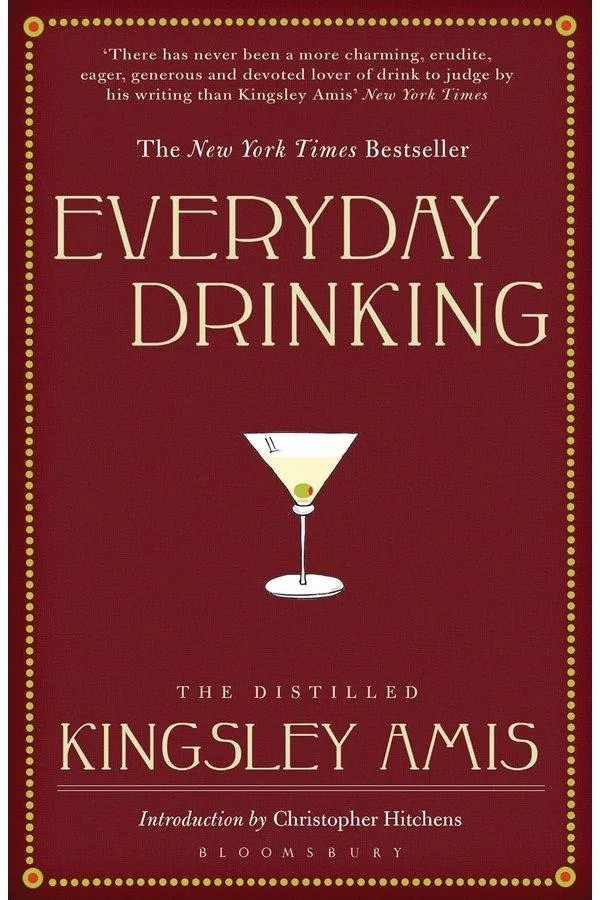
The funniest book ever written about drink, with an introduction by Christopher Hitchens. Practical advice on hangovers, cheap wine and how to be a good host, from a man who had clearly done the research.
How a young widow took over her late husband's struggling wine business in Napoleonic France and built one of the great Champagne houses. A better business book than most business books.
Find one hotel bar and become a regular. Tip on the first round. Know your order and say it in one sentence. Drink beer at work events and leave early. Skip bottle service. Hold the stem, use a proper glass, and know half a dozen bottles you can order without looking at the list. Bring a good Burgundy to dinner and do not tell the host when to open it.
None of this is about drinking less, or more. It is about the drink making you better company, not worse. Be the clearest head in the room, and you will be surprised how often the room comes to you.