Trolling is at least 2,500 years old
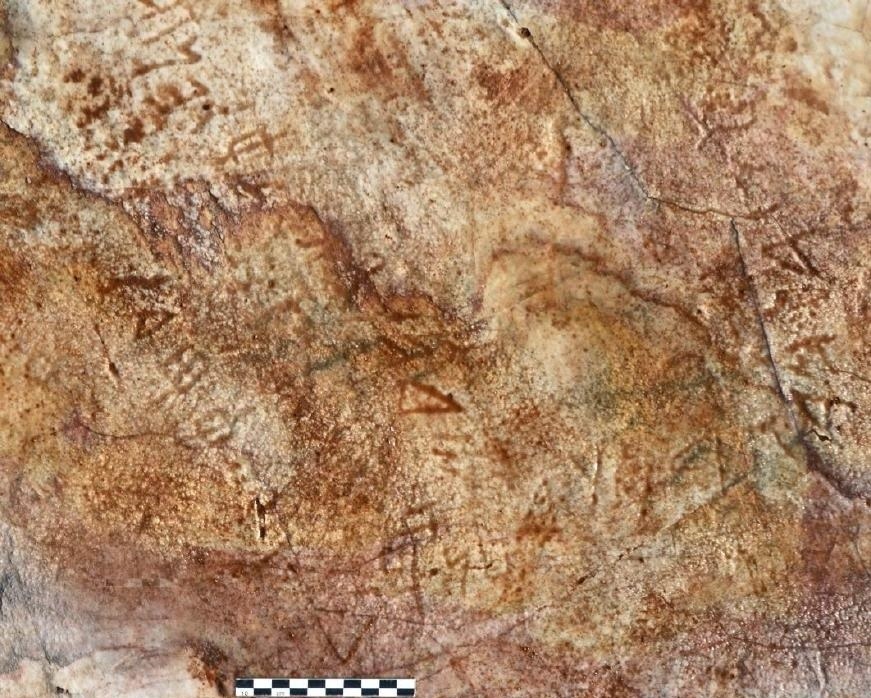
"Trolling is at least 2,500 years old," runs a post doing the rounds this week. "Around 500 BC, a Greek man carved 'Aischias is a butt f**ker' on a rock. It's still there. A stonemason wrote 'Euphiletos, p***y licker' on a brick and put it in a kiln so it could never be erased."
Half of it can be checked, and that half holds up.
The rock
In 2016 the epigrapher Merle Langdon published 19 previously unknown inscriptions cut into bedrock in the hills around Vari, south of Athens, in the journal Grammateion, in "Additions to the Corpus of Greek Erotic Inscriptions". Fourteen use katapygon, a coarse term for a man given to anal sex. Langdon translates one as: "Butt f**ker Aischias (is) beforehand."
The date fits. The graffiti are in the Old Attic alphabet, dropped in 403/2 BC, and Langdon places them in the sixth century, no later than about 500 BC. They are on open rock, not in a museum. Neighbouring carvings call a man named Straton katapygon, and one writer styles himself "Thraix, son of the butt-f**ker".
Most known katapygon insults are scratched on drinking cups, read by scholars as party banter. Carved into the countryside, Langdon argues, these "may be seen as real slaps in the face".
The brick
We could not find a published source for a kiln-fired brick calling a Euphiletos a "p***y licker". The name was common in Athens. It turns up on a lead curse tablet of about 375 BC that binds "Euphiletos, himself and his wife" (Inscriptiones Graecae), but that is not the brick. The detail is reported, not established. The method is plausible: potters routinely wrote on clay before firing, a study of Attic vase inscriptions notes, which made the words permanent.
A long tradition
The 2,500-year figure may be conservative. On Santorini, ancient Thera, Archaic rock inscriptions near the sanctuary of Apollo Karneios include the claim that "Krimon had sex here with a boy, the brother of Bathykles"; the ThERA project has digitised them.
Athens even gave abuse a ballot. In an ostracism, citizens scratched the name of a politician they wanted exiled onto a potsherd. One ostrakon from 472/1 BC names "Megakles son of Hippokrates" and adds moichos, "adulterer". Thousands are catalogued in Ostraka (Athenian Agora XXV).
The Romans kept it up. A couplet on Pompeii's Basilica reads: "O wall, I am amazed that you have not collapsed under the tedious scribblings of so many" (CIL IV 1904).
The rock is real. The brick may be. People have been writing insults in public for as long as they could write, and the oldest were made to last.