Forgotten History: Diocles, the chariot racer called the best-paid athlete ever
In AD 146, a 42-year-old chariot driver from Lusitania, roughly modern Portugal, retired from Rome's racetracks with 35,863,120 sesterces in prize money. His fellow drivers carved the number in stone. Nearly 1,900 years later, it's still the reason Gaius Appuleius Diocles is called the best-paid athlete who ever lived.
We know about Diocles from only two inscriptions. One was put up in Rome while he was alive. It is catalogued as CIL VI 10048 and is unusually detailed. The other was made in Praeneste, the hill town east of Rome where he retired. Between them they give a career record that would satisfy a modern statistician: races started, races won, how they were won and how much they paid.
A long career in a deadly sport
Diocles was born in AD 104 in Lusitania, the Roman province in the west of the Iberian peninsula. He made his debut in Rome at 18, in 122, driving for the Whites, one of the four racing stables known by their colours. He didn't win a race for two years.
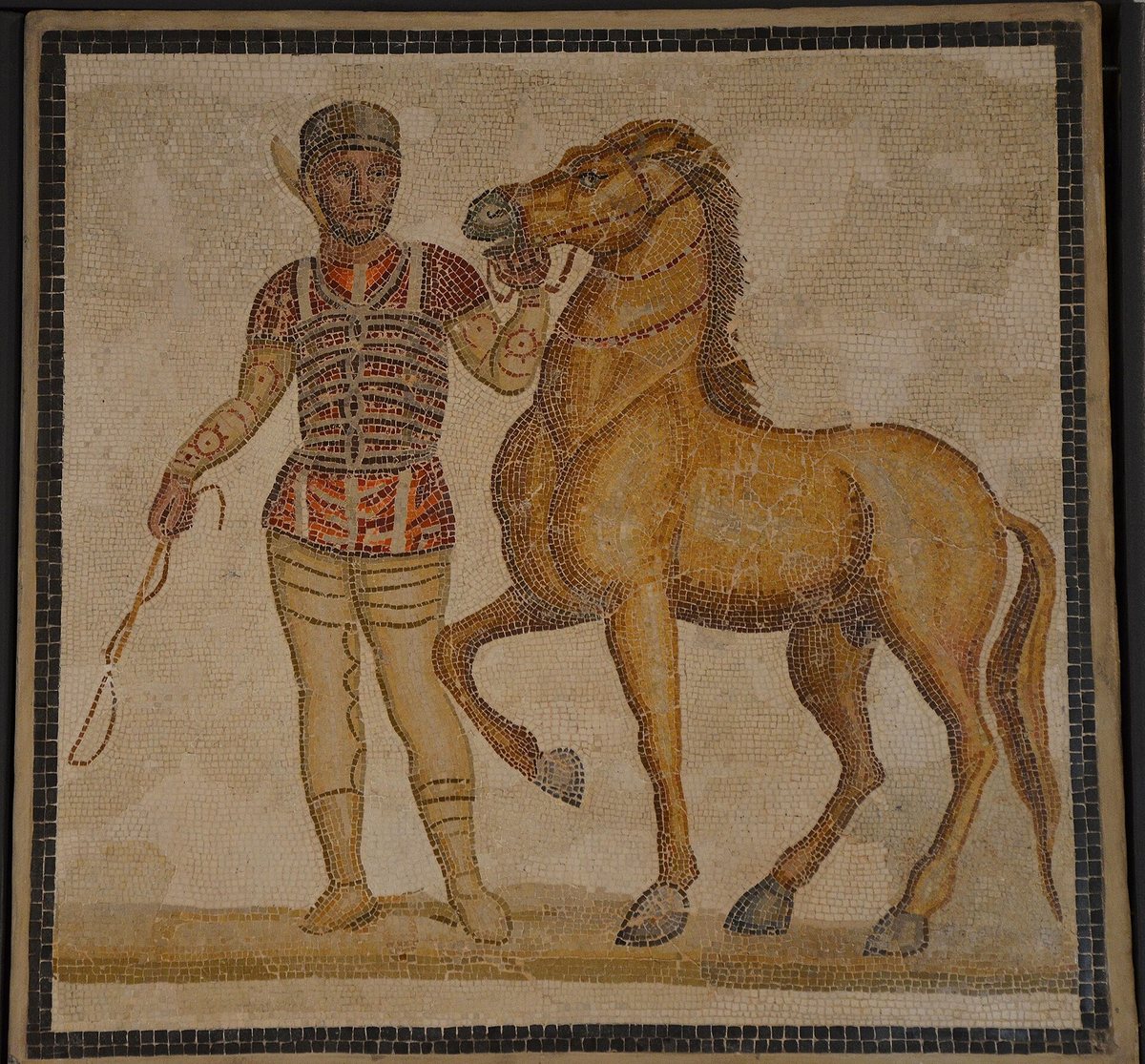
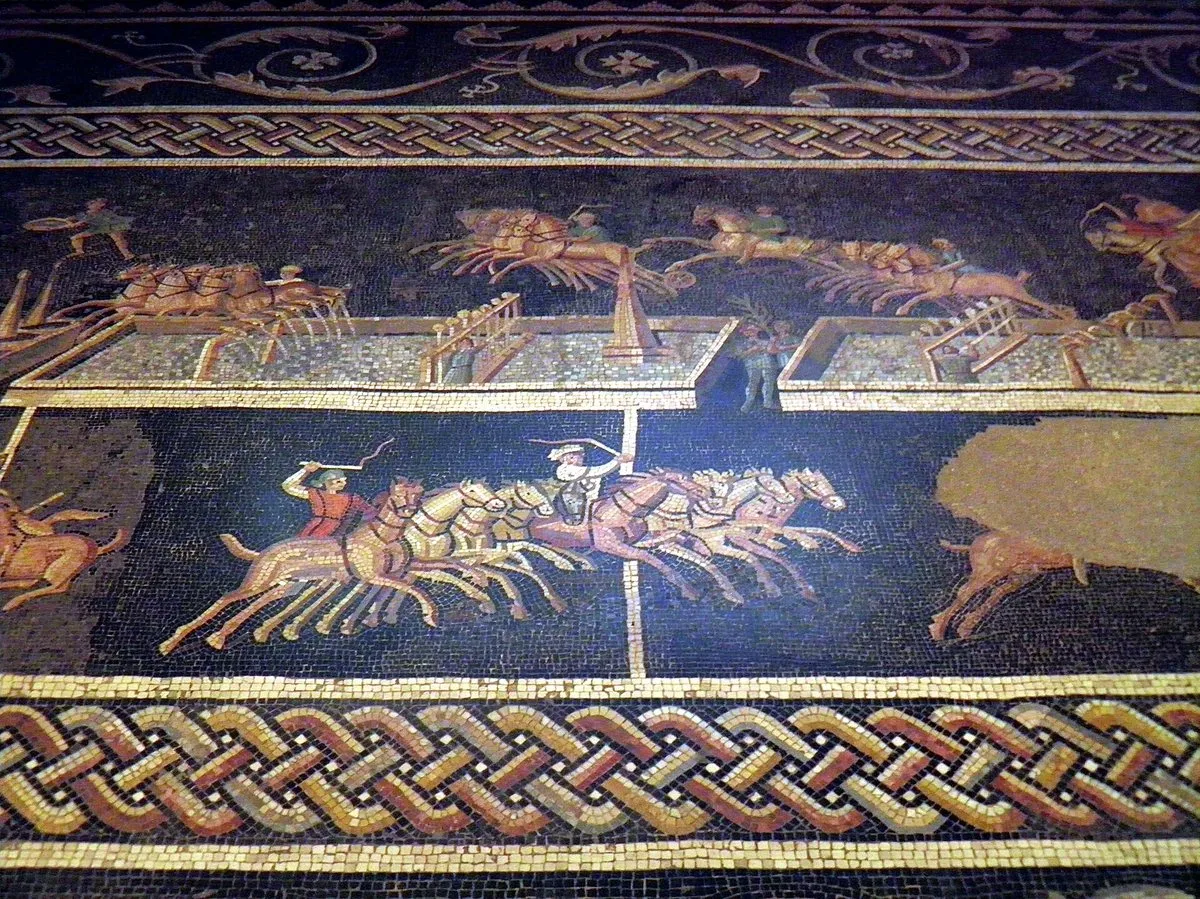
Chariot racing was the great mass entertainment of Rome. Writing in Lapham's Quarterly, the classicist Peter Struck notes that the Circus Maximus held about a quarter of a million people, and that the races outdrew plays and even gladiator fights. Spectators turned up the night before to get seats. Drivers wore leather helmets and chest protectors and carried a curved knife, so they could cut themselves free of the reins if they crashed. Races ran seven laps. The prizes went to the drivers who finished in the top three and came out alive.
After six years with the Whites, Diocles moved to the Greens. He was hurt on the track there, and his results were poor. The historian David Matz has suggested he fell out with the Greens' management, who may have kept him off their best horses. After three years he left for the Reds and stayed 15 years, the rest of his career.
The record
He raced mostly the four-horse chariot, the quadriga. Of his wins, 1,064 came in races where each team entered a single chariot, so the driver was on his own rather than working with teammates. He won the most prestigious race of the day, the one run straight after the opening procession, 110 times. He won 815 times by leading from the start. His other trademark was the reverse: hanging back and making a late dash to win clear.
How rich was he?
His prize money is what makes Diocles famous now. In his 2010 Lapham's Quarterly essay, Struck worked out that it was five times what the best-paid provincial governors earned over a similar period. It was enough to buy grain for the whole city of Rome for a year, or to pay every ordinary soldier in the Roman army for about a fifth of a year.
That last comparison is where the figure you will see online comes from. Struck took a fifth of a year's pay for the modern US armed forces and arrived at about $15 billion. It's a striking number, and it's worth knowing what it is: an estimate based on one comparison. Rome's economy, its army and the price of things were so different from ours that no conversion is exact. What's certain is that the sum on the stone was enormous.
It's also unclear how much of it he kept. Wikipedia's summary of the scholarship notes that he may have been a slave early in his career, or a freedman still with duties to a patron. Either way his owners or managers took a share, and the size of his own cut is unknown. One modern estimate quoted there suggests that even if Diocles kept only a tenth of the prize money, he would have earned about 150,000 sesterces a year, more than any other competitor on record.
Rich but not respectable
The money didn't buy him status. Diocles had more than enough wealth to qualify for Rome's equestrian or senatorial classes, but his job ruled him out. Competing openly for money was considered disgraceful for a gentleman. Professional drivers were legally classed as "infamous", along with actors, gladiators, prostitutes, auctioneers and undertakers, a status that barred them from public office and some citizens' rights.
He retired at 42 to Praeneste, a small, wealthy town, after what one historian has called an "unusually long" career. The inscription that recorded his winnings called him champion of all charioteers. He is assumed to have died in or soon after 146.
Why he's worth remembering
Most famous Romans are remembered through other people's histories. Diocles is remembered through his own numbers, set in stone by the people who raced against him. That record now helps historians work out how chariot races were actually run.
It also makes a point about sport that hasn't changed: the crowds, the money and the danger have been there for 2,000 years. What changed is who gets to keep the money and the respect.
Sources: Peter Struck, "Greatest of All Time," Lapham's Quarterly (2010); Wikipedia, Gaius Appuleius Diocles, citing the inscriptions CIL VI 10048 and CIL XIV 2884. Images: Carole Raddato via Wikimedia Commons, CC BY-SA 2.0.