Tesla can no longer speed 50% over the limit in Europe
Until this week, a Tesla in the Netherlands running the company's driver-assistance software could be set to drive half as fast again as the speed limit. On a 100 km/h road, that meant up to 150 km/h. In a 30 km/h city zone, it meant 45.
That setting is gone. The RDW, the Dutch vehicle regulator that approved the system for Europe in April, said on November 3 that it had signed off on a software update that caps the margin at 10% over the limit. The same update drops the "Full Self-Driving" name. In Europe the system is now called Tesla Assisted Driving.
It looks like a small software change. It is really Tesla's attempt to clear the biggest obstacle to approval across all 27 EU countries.
What changes in the car
The RDW notice is short and specific. The driver can still set a "speed margin", which the regulator describes as a percentage by which the system may deviate from the speed limit "if necessary for safety and traffic flow". That margin was +50%. It is now capped at +10%.
The setting also resets. Every time the car starts, the margin goes back to 0%, and other speed-related functions are switched off by default. The RDW did not say which ones.
The new name, Tesla Assisted Driving, or TAD, will appear on the in-car display, in the owner's manual and in all other information for the driver. The update applies to cars with Tesla's hardware version 4.0 or later, and arrives over the air like every other Tesla software update.
The regulator stressed that the name change "does not affect how the system works", it said. The driver "remains responsible for driving".
A 'minor' change with a big audience
The RDW describes the update as "a number of minor changes" that Tesla asked it to assess. It says it checked how they were implemented and how the system behaves, found "no adverse or unintended effects", and folded them into the approval it had already granted. The type approval does not need to be amended or extended.
It then told the nine other EU countries that have accepted the Dutch approval: Belgium, Croatia, Czechia, Denmark, Estonia, Latvia, Lithuania, Slovakia and Slovenia. With the Netherlands, that is 10 countries, up from eight at the start of October, according to Electrek.
Why speed was the sticking point
The Dutch approval on April 10 came after more than 18 months of testing, including more than 1.6 million kilometres on EU roads, Electrek reported at the time. But a national approval is not a European one. Turning it into an EU-wide authorisation needs a vote of the Technical Committee on Motor Vehicles, known as the TCMV, and a qualified majority: 15 of the 27 member states, together representing at least 65% of the EU's population.
Speed has been the biggest problem for that vote. In an April 30 letter to the committee, Sweden's transport administration warned that "allowing automated systems to systematically exceed legal speed limits ... risks undermining both the legal framework and the expected safety benefits of vehicle automation". It recommended a no vote unless the ability to speed was removed, Electrek reported in June.
Then came a field test. In September, Johanna.be, a Brussels group that campaigns for pedestrian and cyclist safety, published results from about 400 km of driving, mostly on low-speed city streets. The system broke the limit in 55% of the 30 km/h segments tested, averaging 44 km/h, and its screen showed a 50 km/h limit in most of the 30 km/h zones it drove through, according to Electrek. That was in Belgium, a country that had already approved the system.
The German deal
Germany, the EU's most populous country, then set its own terms. On October 6, its transport ministry published an agreement it had reached with Tesla in talks in September. The system may exceed the speed limit "slightly", by a maximum of 10%. The ministry also called the name "FSD" somewhat misleading, because the system does not take over the whole driving task, and said Tesla had offered to rename it Tesla Assisted Driving. The driver, it added, remains 100% responsible.
On that basis, transport minister Steffen Bilger said he would push for the system to be approved across Europe soon. This week's Dutch update delivers both of Germany's conditions.
What happens next
The EU decision still sits with the TCMV. The RDW says the committee's discussions are confidential and it will not comment on them. The committee did not vote at its October meeting, which pushed the earliest possible vote to December, Electrek reported.
A 10% cap may win Germany, but it is not what Sweden asked for. Sweden wanted no setting above the limit at all. And the cap does nothing about the other way a car ends up speeding: misreading the sign in the first place, as the Brussels testers found. A 10% margin on top of a limit the car thinks is 50 km/h still leaves it well over 30.
For owners in the 10 countries where the system is approved, the visible change is a new name on the screen and a speed setting that starts at zero. For the rest of Europe, the answer comes in December at the earliest.
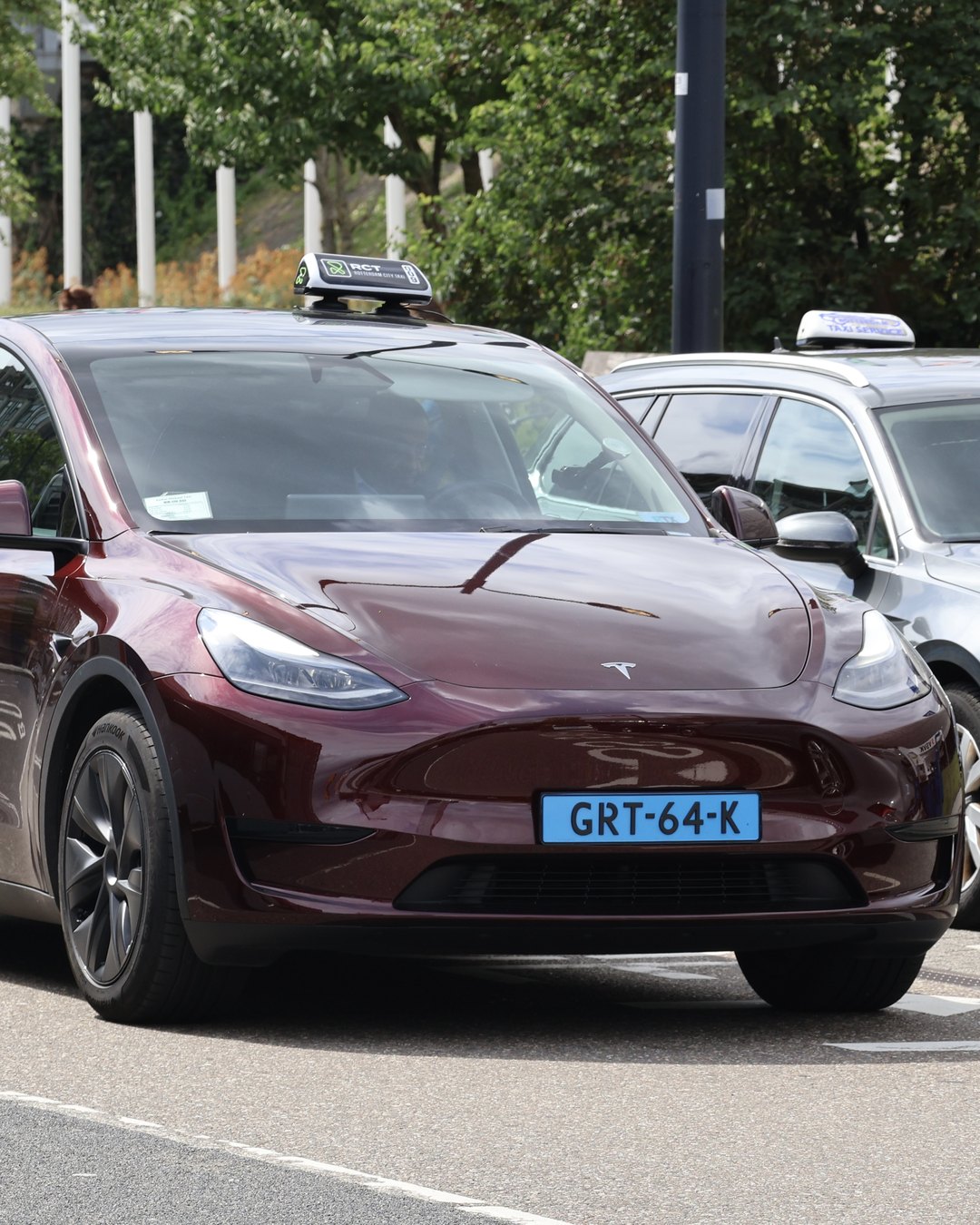
_Image: a Tesla Model Y on Dutch plates at Rotterdam Centraal, June 2025. Photo by S5A-0043, Wikimedia Commons, CC BY 4.0. Cropped._