The three-way duel: the interview puzzle that explains Wall Street
You hit one time in three, the next man two in three, the third never misses, and you shoot first. The answer to a classic interview puzzle, the exact odds, and what it teaches about interviews, dress and the first year on the desk.
By Beau Brummell · November 1, 2026 · 4 min read
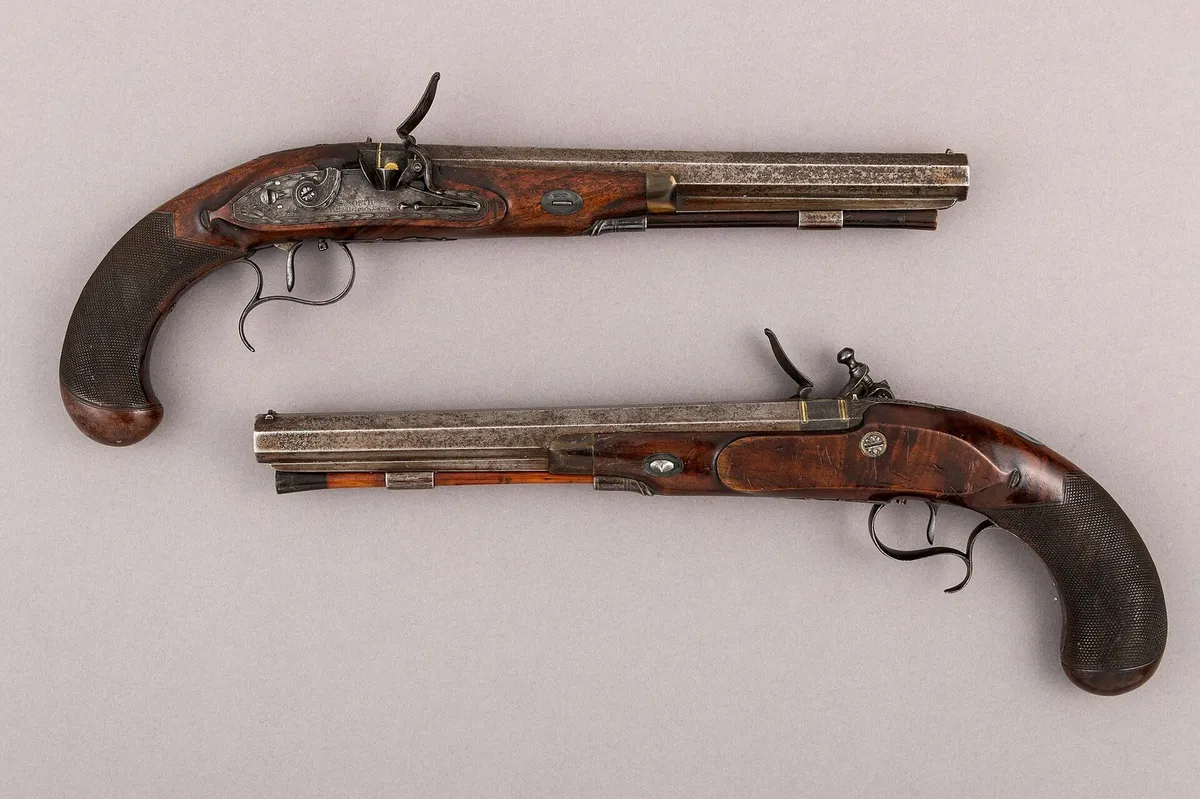
Here is an interview question with a long history in probability textbooks. Three men fight a duel, all at once. You hit your target one time in three. The second man hits two times in three. The third never misses. You shoot first, and after that each man takes his turn in order, until one is left standing. Where do you aim?
Most candidates answer quickly and with total confidence: the perfect shot, obviously. That is what a managing director would say. It is also the answer that gets you killed.
Why the obvious answers lose
Suppose you aim at the man who never misses, and hit him. The game is now a duel with the two-in-three shot, and he fires first, at you. You have removed the only other target in the room.
Aim at the middle man and it is worse. Hit him, and the man who never misses gets the next shot. He has nobody else to aim at.
So the worst shot in the room fires into the air.
Now the two dangerous men have only each other to worry about, and each shoots at the bigger threat. Whoever survives that exchange then faces the weakest shot, and the weakest shot fires first.
The numbers
Work it through exactly. If you fire into the air, the two-in-three man shoots at the perfect shot. If he hits, which happens two times in three, you face him alone with the first shot, and you win that duel three times in seven. If he misses, the perfect shot kills him, and you get a single shot at the perfect shot before he kills you.
| Your first shot | Chance you survive |
|---|---|
| Fire into the air | 25/63, about 39.7% |
| Aim at the man who never misses | 59/189, about 31.2% |
| Aim at the two-in-three man | 50/189, about 26.5% |
Played that way, the whole contest ends in a result that looks absurd. The worst shot survives about 39.7 per cent of the time. The two-in-three man survives 38.1 per cent, and the man who never misses survives only 22.2 per cent. The perfect shot has the worst odds of all because he is the obvious threat, so everyone aims at him.
Mathematicians call this a truel, a name coined by the game theorist Martin Shubik. Frederick Mosteller included a version, "The Three-Cornered Duel", in his collection of fifty probability puzzles. In his version, too, the weakest marksman does best by deliberately missing. D. Marc Kilgour and Steven Brams surveyed the mathematics in 1997, and the result keeps coming back. In a fight with several players, being the strongest can make you the main target.
What the interviewer is really asking
Nobody hires an analyst for his skill in duels. The question tests whether you can see the whole game before you act, and whether you keep your head when the confident answer is wrong. The same lessons apply in the room where you are being asked it. A 2016 column by GSElevator for eFinancialCareers set them out plainly, and they have aged well.
The first is "Interview like an equal". Then: "Control the conversation. Bankers like talking about themselves, so ask questions that make them feel smart and in their comfort zone."
The interview is a three-way contest, too, between you, the interviewer and the candidates you cannot see. The candidate who tries to outgun everyone is the one who gets shot at. The one who lets the bankers talk usually ends up with the last shot. As the column put it: "While most kids were getting grilled on bond math, I've spent entire interviews swapping boarding school tales and recommending hotels in Zanzibar."
That does not mean the homework is optional. "Be up to date on current events and ready to explain their implications on financial markets. Most banks have evolved beyond asking how many manholes are in Manhattan or how much you'd charge to wash all the windows in Canary Wharf. They want to know that, in addition to intellect, you have a passion and clear understanding of what you are getting into." Puzzles like this one survive because they test exactly that. Anyone can learn the answer. The job goes to the candidate who understands who is in the room.
The same goes for what you wear in. "Dress like an analyst (not like an MD)." The column was precise about it: "Guys, that means a single-breasted, two-button suit, with a plain shirt and a simple tie. No Hermes or Gucci. Just make sure the knot (half Windsor) is tight and the shoes are shiny." Look like the one-in-three man. Do not arrive looking like the man everyone aims at.
And on the desk
The truel does not stop on the first day of the job. The analyst who looks most dangerous in his first week is the one who draws fire, from his peers and sometimes from above. Do the work, let the big guns take each other on, and take your shot when the room has cleared.
The column ended its own list with a joke that also makes the point: "Finally, it's OK to lie. Just be smart about it. Lower your handicap to single digits, make yourself president of a school investment club, and upgrade your SCUBA experience to advanced." Don't make the joke your strategy. But do take its real point, which is the one the duel teaches: know the game you are in before you pull the trigger.
For the reading that matters more on the day itself, see the books to read before your first day on Wall Street.
The quotations are from "GSElevator: Alternative routes to getting a job on Wall Street", eFinancialCareers, 14 January 2016, reproduced as written. Sources: Frederick Mosteller, Fifty Challenging Problems in Probability with Solutions (1965); D. Marc Kilgour and Steven J. Brams, "The Truel", Mathematics Magazine (1997). Survival odds calculated by The Graze.