How to buy a suit: fit, cloth, construction and the tailor
Most men buy a suit the way they buy a mattress: rarely, in a hurry and on the salesman's advice. What to buy first, what to check in the mirror, what the labels mean, when made to measure or bespoke is worth it, and how to work with a tailor.
By Beau Brummell · November 1, 2026 · 7 min read
Most men buy a suit the way they buy a mattress. They go rarely, in a hurry and for a specific event, and they lean heavily on whoever is selling. The result hangs in the wardrobe for a decade, worn to weddings and interviews and never quite right. It does not have to be like that. A good suit is not complicated. It comes down to fit, cloth and construction, in that order, and to a tailor you trust.
Start with what you actually need
Most men do not wear tailoring often enough to need many suits. Keep a small tailored wardrobe and buy it well. The first suit should be navy, single-breasted with two buttons and notch lapels, in a plain worsted wool. It works at an interview, a wedding, a funeral with a black tie and a dinner without one. The second should be charcoal grey. After that you are buying for pleasure, which is allowed, but you should know the difference.
What to avoid, at least until the first two are done: black (for funerals and waiters), brown (as this site has said before, brown suits are for back office guys), loud checks, shiny cloth, double-breasted cuts and anything sold as "this season's" silhouette. Double-breasted suits look good on perhaps one man in a hundred. For everyone else, the risk is bigger than the reward. Skip pleats and turn-ups on the trousers. Wear black or dark brown leather shoes with it, never trainers.
Fit: what to check in the mirror
Fit is where suits succeed or fail, and a tailor can fix some faults but not others. Learn which is which before you hand over a card.
The shoulders. This is the part that has to fit off the peg, because it is the hardest and most expensive thing to alter. The shoulder seam should end where your own shoulder ends. Look for a smooth line down to the sleeve, with no dent at the top of the arm and no overhang.
The collar. The jacket collar should sit flat against your shirt collar at the back of the neck, with no gap. A collar that stands away is difficult to correct.
The chest and waist. Button the jacket (the top button only, on a two-button suit). The fabric should lie flat. If it pulls into an X around the button, the jacket is too small. Loose folds mean it is too big.
The length. The jacket should cover your seat. Fashion has spent fifteen years making jackets shorter. Ignore it. Body length is very hard to alter.
The sleeves. With your arms by your sides, a little shirt cuff should show, about a centimetre. Sleeves are among the easiest things to shorten, unless the buttonholes on the cuff have already been cut open. Check before you buy.
The trousers. They should sit comfortably at the waist without a belt pulling them up, and fall cleanly with little or no break over the shoe. Hems and waists are routine work for a tailor.
Cloth
Start with worsted wool: smooth, durable and right for most of the year. Weight matters more than most shops admit. A mid-weight cloth drapes and recovers from a day of sitting and travelling. A very light one creases and wears out sooner.
The "Super" number on the label (Super 110s, 130s, 150s and up) measures the fineness of the wool fibre, not its quality in any broader sense. Higher numbers feel softer and look smarter, but they are more delicate and wear out faster. For a suit you will wear hard, something in the Super 110s to 130s is the sensible middle. Be wary of a salesman who leads with the number.
Brummell, whose taste shaped men's dress for two centuries, preferred the plainer, more durable cloth. One contemporary anecdote, recorded by his first biographer, has it that "the Prince wears superfine, and Mr. Brummell the Bath coating". Bath coating was the humbler cloth. The lesson still holds: matte beats shiny, and durable beats delicate.
Construction: fused, half canvas, full canvas
Inside the front of every jacket is a layer that gives the chest its shape. How that layer is attached is the biggest difference between a cheap jacket and a good one.
Fused. The interlining is glued to the cloth. This is cheaper and quicker to make, and modern fusing is far better than it was. But the chest can look flat and stiff, and badly fused jackets can bubble after dry cleaning or years of wear.
Half canvas. A canvas layer is stitched into the chest and lapels, with fusing lower down. The lapel rolls rather than lying pressed flat, and the chest moulds to you over time. For most men this is the best value.
Full canvas. The canvas runs the length of the front. It is the traditional method, used in the best ready-made jackets and in bespoke.
To check in a shop, pinch the cloth just below the top buttonhole and gently pull the layers apart. If you can feel a separate, loose third layer between the outer cloth and the lining, the jacket is canvassed there. If the layers feel stuck together, it is fused.
Off the peg, made to measure or bespoke
Off the peg. The jacket is made in standard sizes to a standard pattern, and then altered. It is the right choice if the shoulders fit you well, and it is the quickest and cheapest route. Budget for alterations on top of the price. Almost every off-the-peg suit needs some.
Made to measure. A house pattern is adjusted to your measurements and the suit is made for you, usually in a factory, in a few weeks. You choose the cloth and the details. It suits men who fall between standard sizes, or who want a particular cloth. Quality varies enormously. The person taking your measurements matters more than the label.
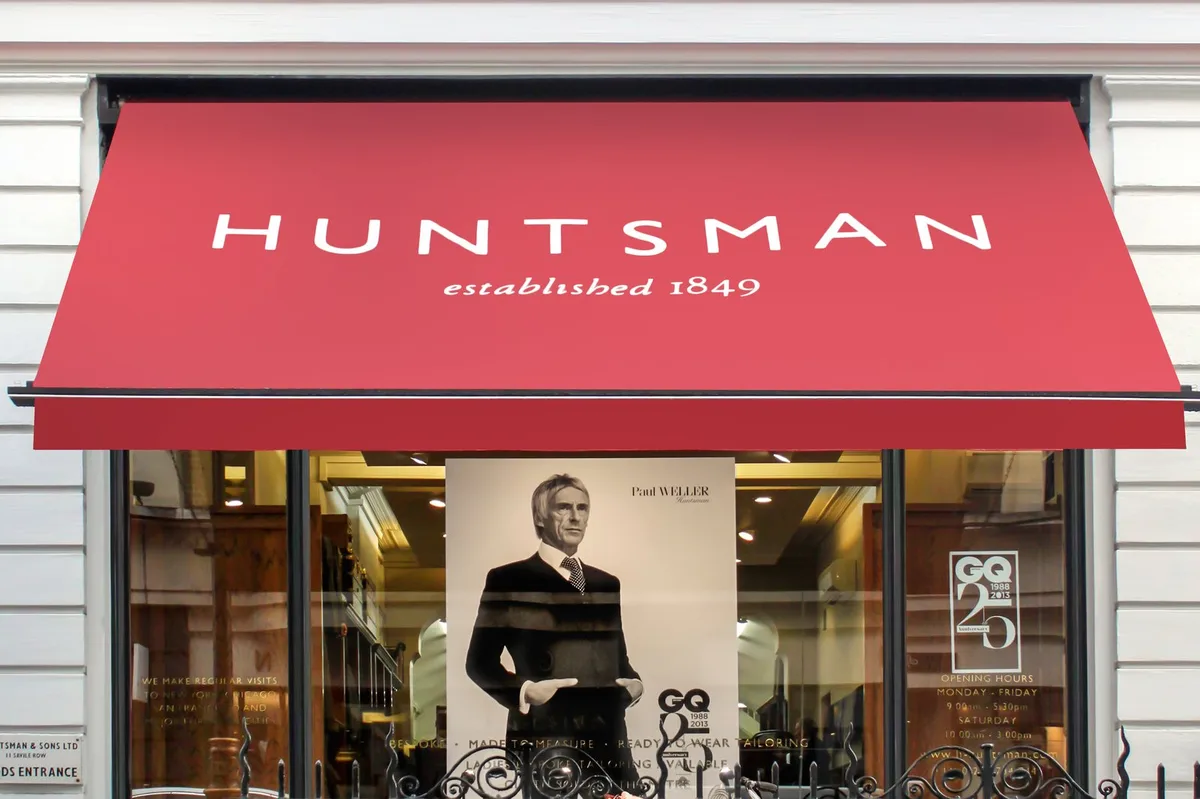
Bespoke. A pattern is cut from scratch for your body, and the suit is built by hand over several fittings. The Savile Row Bespoke Association, whose members trade on or near the street in Mayfair, expects a two-piece suit to take at least 50 hours of hand work, cut from an individual paper pattern. That is why bespoke takes months and costs what it does. It is worth it when your body is hard to fit, when you wear suits every day, or when you want the one you will keep for twenty years. Be careful with the word. In 2008 the British advertising regulator rejected a complaint from Savile Row and allowed "bespoke" to be used for made-to-measure suits that were largely made by machine. Ask how many fittings there will be, and whether a paper pattern is being cut for you.
Working with a tailor
Find a good tailor in your twenties, before the weddings start, and pay for at least one really good suit. The relationship matters more than the address.
- Wear the shirt and shoes you will wear with the suit to every fitting.
- Stand naturally. Do not stand up straight for the mirror and then slouch for the rest of the decade.
- Say what feels wrong, not what you think the fix is. "It pulls when I reach for something" is more useful than a diagnosis.
- Sit, reach and lift your arms in the fitting room. A suit has to work at a desk and in a taxi, not only in front of a mirror.
- Ask what can and cannot be altered later, and keep the receipt for the alterations.
- Go back. Weight changes, and a good tailor would rather adjust your suit than see you buy a new one.
Making it last
Hang the jacket on a broad wooden hanger that fills the shoulders, never on a wire one. Rest a suit for a day between wears. Brush it rather than sending it to be cleaned, because dry cleaning is hard on cloth and fused interlinings. Have it pressed when it needs it, and cleaned only when it is actually dirty. Put cedar shoe trees in the shoes.
Brummell's first biographer, Captain Jesse, said he was "always carefully dressed, but never the slave of fashion". Jesse also records his view that the worst humiliation a gentleman could suffer was "to attract observation in the street by his outward appearance". Both still apply. Buy a suit that fits so well nobody notices it, wear it until it is part of you, and let fashion pass by.
The one book to read
Sources: Captain William Jesse, The Life of George Brummell (1844); Ian Kelly, Beau Brummell: The Ultimate Man of Style (2006); Savile Row Bespoke Association, membership requirements; The Daily Telegraph and BBC News on the 2008 Advertising Standards Authority ruling on "bespoke".