Fifteen Books to Read Before Your First Day on Wall Street
Fifteen books to read before you work in finance, from Den of Thieves and Liar's Poker to Meditations and Heart of Darkness, with notes on why each one earns its place.
By Beau Brummell · October 31, 2026 · 10 min read
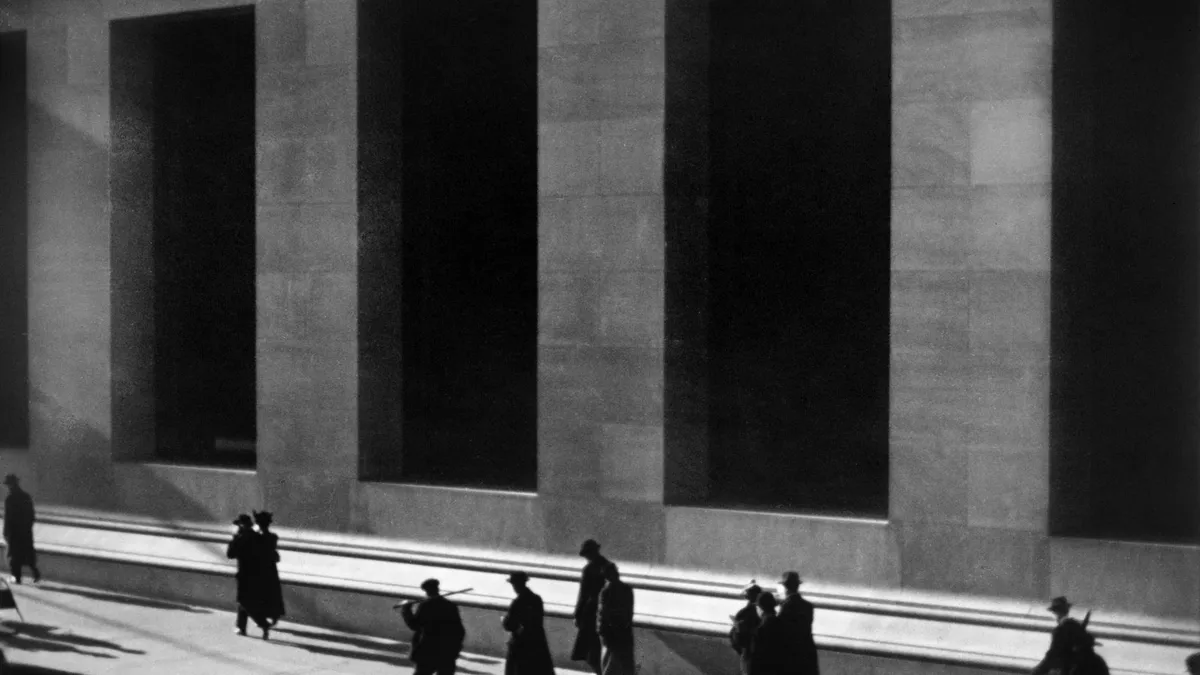
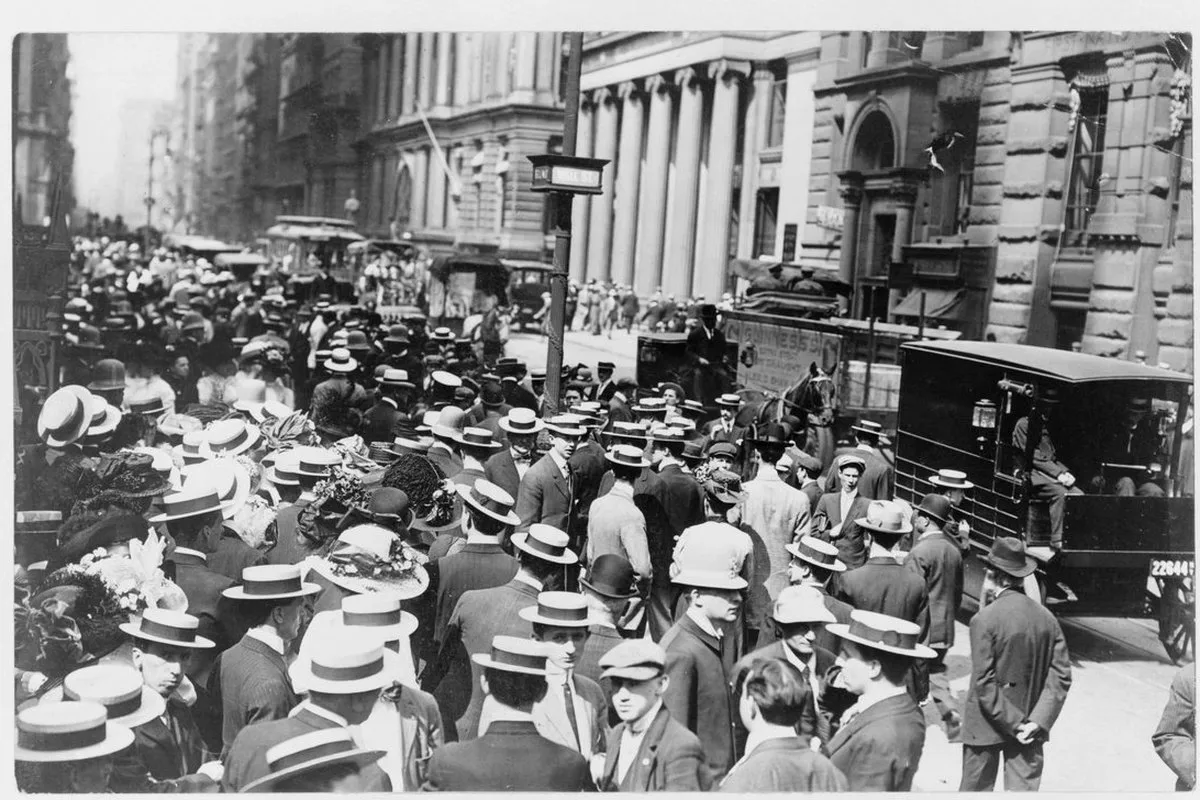
Photo: Paul Strand, Wall Street, New York City, 1915 / Wikimedia Commons (Public domain)
Every profession keeps a library it does not advertise. The law has its casebooks, the army its campaign histories, and Wall Street has perhaps two dozen volumes that senior people quote at one another without troubling to explain. A newcomer who has not read them will not be dismissed for it. He will simply miss half the jokes, and on a trading floor that is very nearly the same thing.
The usual recommendations are of limited use. Sun Tzu is cited chiefly by men who have never finished him, and Machiavelli is best left unquoted in the presence of one's managing director. What follows is a shorter and, I hope, better-mannered shelf: fifteen books, arranged as one might arrange a dinner, with the scandals first, the classics in the middle, the useful volumes after, and two novels to close.
I write as a man who knew something of fortune and rather more of its absence. I left London for Calais in 1816 with creditors at my heels, which is a form of financial education the curriculum does not yet offer. The books below are cheaper.
The best books about Wall Street scandals and crises
The finance books that endure are rarely about how to become rich. They are about what happens to people once they have, and then the morning they discover they no longer are. The first four concern insider trading, vanity, a Roman emperor's private notebook and a financial system that came within a weekend of collapse.
1
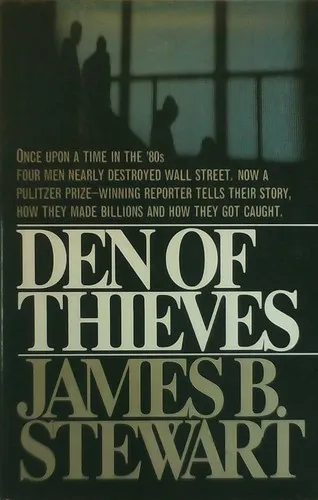
Den of Thieves
James B. Stewart
The best book ever written about Wall Street wrongdoing, and the first to read. Stewart won a Pulitzer Prize for his Wall Street Journal reporting on the 1987 crash and insider trading, and here he follows Ivan Boesky, Dennis Levine and Michael Milken to their reckonings with the patience of a prosecutor and the pacing of a thriller.
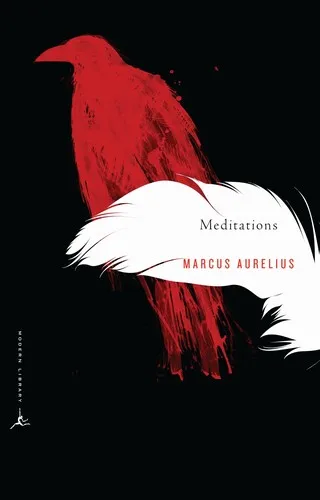
The private notebook of a Roman emperor, written for himself and never intended for publication. When the deal on your desk has made the front page, it is a comfort to be reminded that the front page is recycled by Thursday.
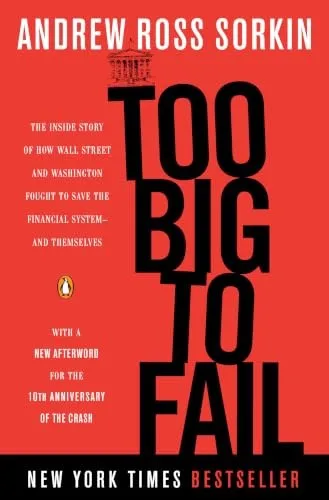
The definitive account of the autumn of 2008, reconstructed from hundreds of interviews. It reads as a series of telephone calls between very tired men, each of whom believed himself the only adult in the room.
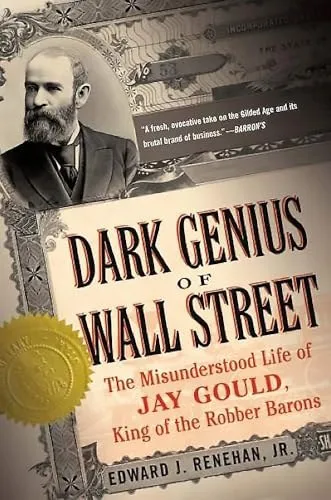
Jay Gould was the most reviled of the robber barons, one of the richest men of his age and, quietly, an early philanthropist. Renehan argues that history has been too simple about him, and he makes the case well.
Those who finish Den of Thieves wanting more should turn to Connie Bruck's The Predators' Ball, the inside story of Drexel Burnham and the junk bond raiders. The title was the nickname for Drexel's annual high-yield conference in Beverly Hills, where Milken received his court.
Meditations is the outlier, and the one most likely to matter in twenty years. Marcus Aurelius wrote it in Greek, partly on campaign, as a series of reminders to himself about duty, mortality and the vanity of reputation. Every generation on the Street believes its transactions historic. The emperor is a useful corrective.
Too Big to Fail was adapted by HBO in 2011, competently. The book is better, as books generally are.
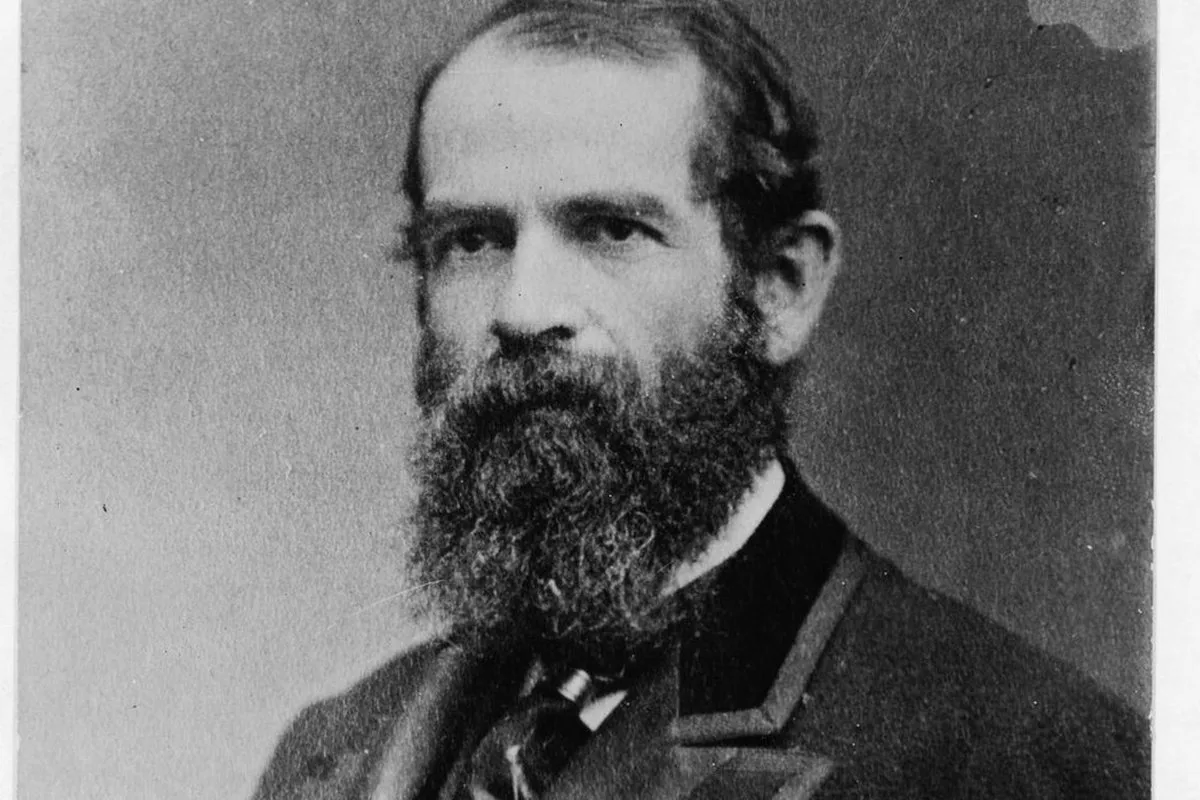
Jay Gould, the railroad speculator who tried to corner the gold market in 1869. Newspapers joked that his casket should be sealed so he could not return to raid Wall Street one last time. Photo: George Grantham Bain Collection, Library of Congress / Wikimedia Commons (public domain)
Gould is the reminder that none of this is new. He fought the Erie Railroad wars, helped engineer the Black Friday gold panic of September 1869 with Jim Fisk, and died in 1892 among the richest men in America. A gentleman may disapprove of him. He should not ignore him.
Classic Wall Street books every trader has read
These are the books one hears quoted on a trading floor, often inaccurately. Two are memoirs, one is a fictionalized biography a century old, and one is the story of the most famous takeover battle of the 1980s.
5
Reminiscences of a Stock Operator
Edwin Lefèvre
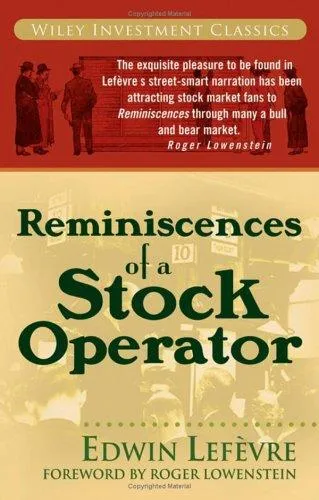
A thinly fictionalized life of Jesse Livermore, the greatest speculator of his day, first published in 1923. Its lessons about crowds, patience and the losing of money have not aged an hour.
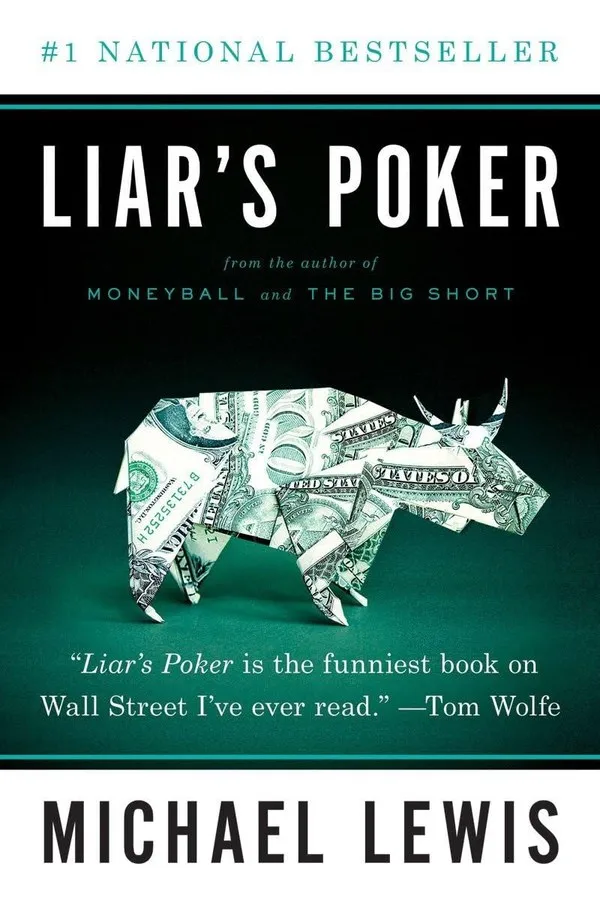
The Salomon Brothers bond desk in the 1980s, an era of unprecedented greed and excess, described by a young man with the good sense to leave and the better sense to take notes.
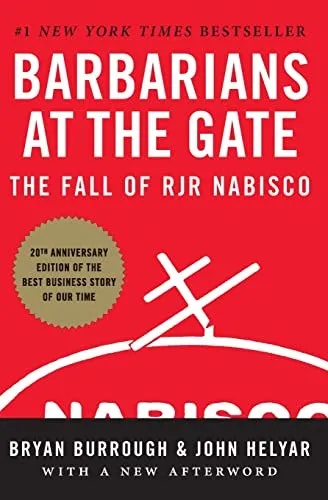
The 1988 battle for RJR Nabisco, which ended in KKR's leveraged buyout, the largest of its era. A book one does not put down, about men who could not put anything down either.
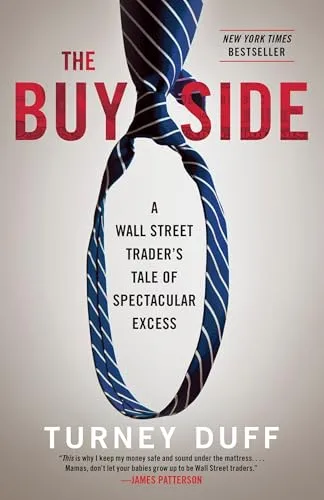
A hedge fund trader's memoir of spectacular excess. Two million dollars a year, a table at every restaurant in Manhattan and a cocaine habit to match. It is a cautionary tale told by the caution.
Livermore made and lost several fortunes, and Lefèvre's book about him is the one that serious traders press upon the young. It is also the source of the most useful sentence in this article.
Liar's Poker was published in 1989. Its title comes from the game traders played with the serial numbers on dollar bills, a pastime that required nerve, arithmetic and an indifference to the dignity of currency. It made more men want to work on Wall Street than any recruiter has, which was not, one gathers, quite the author's intention.
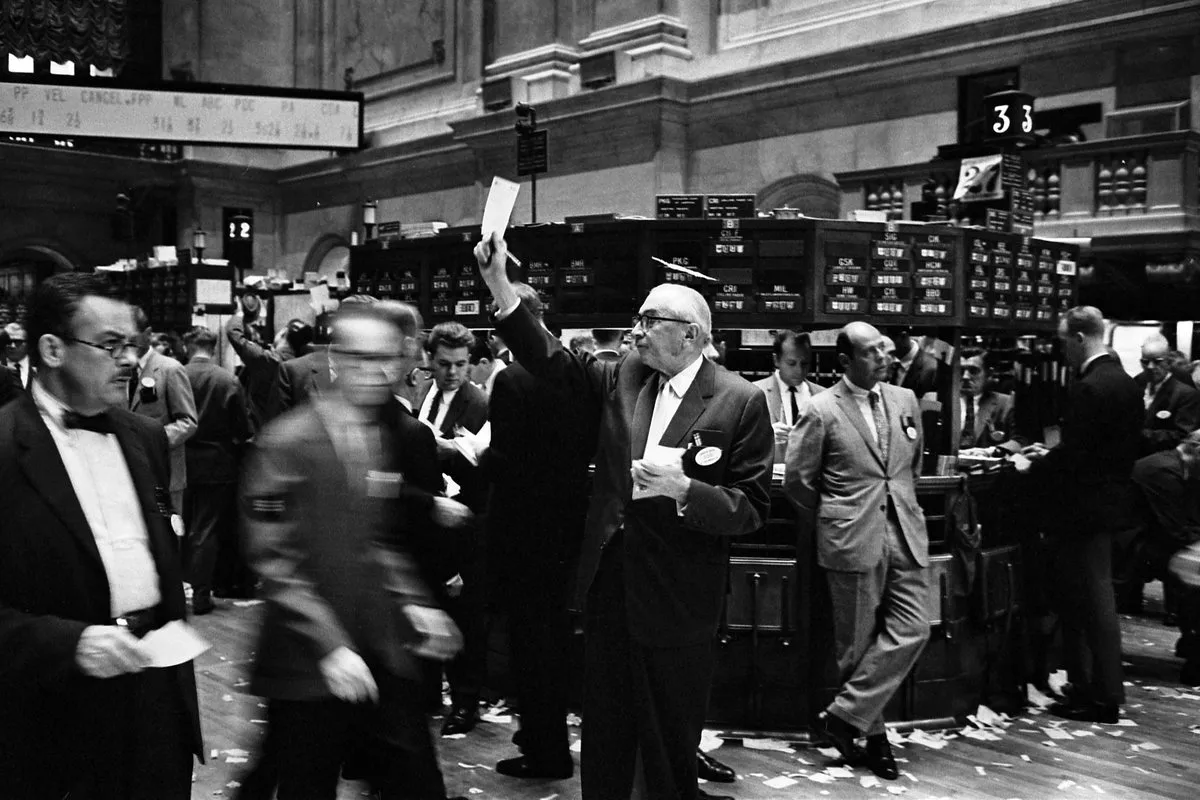
Traders on the floor of the New York Stock Exchange in 1963, photographed by Thomas J. O'Halloran for U.S. News & World Report. The noise has moved onto screens; the psychology has not. Photo: Thomas J. O'Halloran, Library of Congress / Wikimedia Commons (public domain)
Barbarians at the Gate needs no defence, though the critics supplied one anyway.
The 1993 HBO film, with James Garner as F. Ross Johnson, is broader than the book but entirely watchable on a long flight.
The Buy Side is the warning. Turney Duff traded for hedge funds, Galleon among them, at the height of the 2000s boom. His memoir includes a morning on which, late, hungover and worse, he threw himself into a puddle, punched himself in the face, tore his clothes and told his employer he had been mugged. One reads it as one reads the casualty lists: attentively, and with no wish to appear in the next edition.
Finance books that make you better at the job
Narrative teaches the culture. These four teach judgment, the nature of the people around you and, in one case, bonds in very considerable detail.
9
Thinking, Fast and Slow
Daniel Kahneman
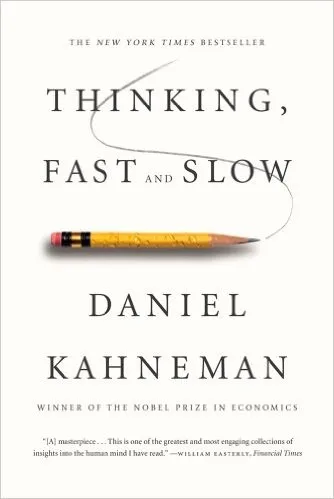
How we decide, and why we decide badly. The Nobel laureate's account of the shortcuts that distort judgment, and the habits that guard against them. Indispensable for anyone paid to take risk with other people's money.
It is satire, though a surprising number of young bankers have failed to notice. The film is well known; the book is sharper, and its business cards remain the finest passage on male vanity since my own era.
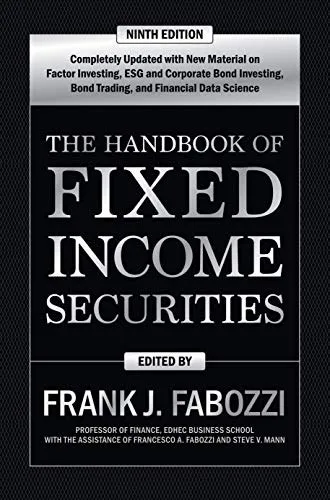
The unglamorous choice, and the most practical. A candidate who can discuss duration and convexity without bluffing has an advantage over most of the people interviewing him. The current edition runs to more than 1,900 pages.
Kahneman won the Nobel in economics in 2002 for work done largely with his collaborator Amos Tversky. On a trading desk his chapters on overconfidence and loss aversion read less like psychology than like the minutes of last Tuesday.
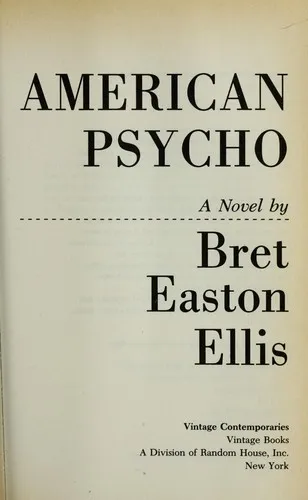
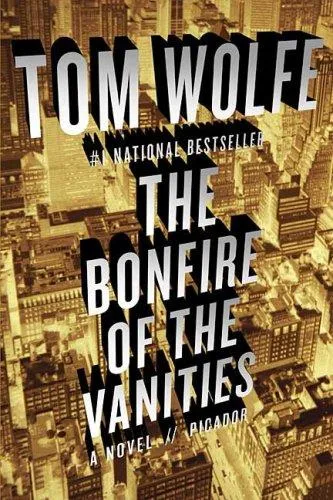
American Psycho carries one rule of etiquette: a man who arrives on his first day making jokes about Dorsia has told his colleagues everything they need to know. Patrick Bateman, incidentally, works at Pierce & Pierce, the same fictional firm that employs Sherman McCoy in The Bonfire of the Vanities. Ellis borrowed it from Tom Wolfe, which is the highest compliment one novelist can pay another short of stealing his tailor.
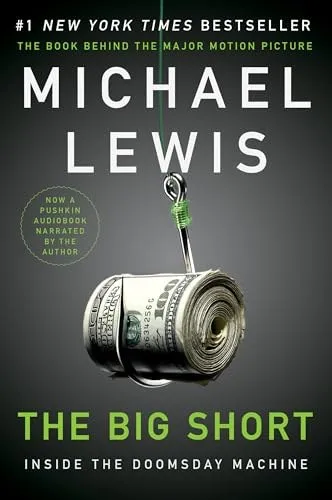
The Fabozzi is for the interview. Even a candidate set on equities or M&A will find that a command of fixed income marks him out, because so few of his rivals have troubled to acquire one. The Big Short, meanwhile, became the 2015 film that won the Oscar for best adapted screenplay. It is good. Read the book first.
Wall Street novels, and the book that gets you the interview
13
The Bonfire of the Vanities
Tom Wolfe
The novel of the 1980s, and of the men who will be your seniors. Sherman McCoy, the bond salesman who thinks of himself as a Master of the Universe, has not dated nearly as much as his trousers.
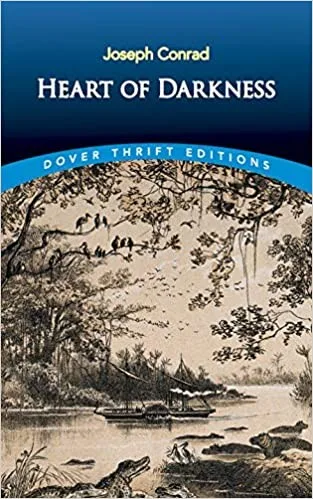
What becomes of the best and brightest when they are sent into a closed world with its own rules and no visible bottom? It could be the Congo, it could be Vietnam, and it could be downtown Manhattan.
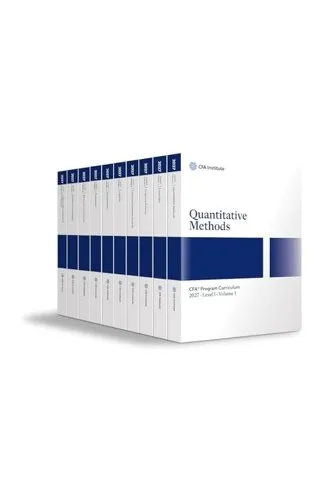
Wall Street is famously difficult to enter without connections. Working toward the CFA charter is one honest way to reach the interview stage on merit.
Conrad's novella appeared in 1899, and Francis Ford Coppola moved it to Vietnam for Apocalypse Now. Its question, what a sealed world with its own values does to ambitious people, is the most honest one on this shelf.
The CFA curriculum is the opposite of a page-turner, which is precisely its merit. The programme has three levels, each with its own examination, and the official curriculum covers ethics, accounting, valuation, fixed income, derivatives and portfolio management. Nobody will ask about it at dinner. Recruiters notice it on a CV.
A crowd on Wall Street in front of Trinity Church in the 1910s. Every generation on the Street believes it is living through something unprecedented. Photo: George Grantham Bain Collection, Library of Congress / Wikimedia Commons (public domain)
More of the best finance books: honourable mentions
Nine more that nearly made the fifteen, and that belong on any serious finance shelf:
Guns, Germs, and Steel by Jared Diamond, the Pulitzer-winning account of why some societies came to dominate others.
Lords of Finance by Liaquat Ahamed, on the four central bankers who steered the world into the Great Depression. It won the Pulitzer Prize for History.
When Genius Failed by Roger Lowenstein, the rise and fall of Long-Term Capital Management, founded by John Meriwether, a figure in Liar's Poker.
Against the Gods by Peter L. Bernstein, the story of how mankind learned to measure risk.
Billion Dollar Whale by Tom Wright and Bradley Hope, on Jho Low and the 1MDB fraud.
The Man Who Solved the Market by Gregory Zuckerman, on Jim Simons and the quantitative revolution at Renaissance Technologies.
The Frackers by Gregory Zuckerman, on the wildcatters who bet everything on shale.
Straight to Hell by John LeFevre, a bond banker's memoir of the Asian debt markets in the boom years.
How to read your way onto Wall Street
Nobody requires all fifteen before the first morning. Given a month, read Liar's Poker, Den of Thieves and The Big Short for the culture and the history, then begin the Fabozzi so that bonds may be discussed without improvisation. Keep Meditations by the bed for the difficult weeks. Save the novels for the holidays, when they can be enjoyed rather than survived.
For the question that follows naturally, see [is Wall Street still a great place to start a career?](/a/wall-street-great-place-to-start-career) And for reading beyond finance altogether, the next shelf is [100 books every man should read](/a/100-books-every-man-should-read).
Sources: The Graze's original list of must-read Wall Street books (2023); publishers' editions; The New York Times Book Review on Barbarians at the Gate; Daniel Kahneman, Thinking, Fast and Slow (2011). Photographs from the Library of Congress via Wikimedia Commons.
Wall Street books: frequently asked questions
What is the best book about Wall Street?
Den of Thieves by James B. Stewart, a meticulously reported account of the 1980s insider-trading scandals that brought down Ivan Boesky and Michael Milken. Liar's Poker and Barbarians at the Gate are close behind.
What books should I read before working on Wall Street?
Read Liar's Poker and Den of Thieves for the culture, Too Big to Fail and The Big Short for the modern history, Thinking, Fast and Slow for judgment, and a technical text such as Fabozzi's Handbook of Fixed Income Securities to stand out in interviews.
Is Liar's Poker still worth reading?
Yes. Michael Lewis's 1989 memoir of the Salomon Brothers bond desk is still the book most traders have read, and its portrait of ambition, bravado and absurd incentives has hardly dated.
Do you need a CFA to work on Wall Street?
No, but working through the CFA Program curriculum shows commitment and gives you the vocabulary of valuation, fixed income and portfolio management, which helps you get to the interview stage.
What are the best finance books for beginners?
Start with Liar's Poker and The Big Short for narrative, Reminiscences of a Stock Operator for trading psychology, and Against the Gods for the history of risk. They teach how markets behave without reading like textbooks.
The Graze may earn a commission from qualifying purchases made through links in this article.