Michelangelo's secret: a paintbrush with ten heads
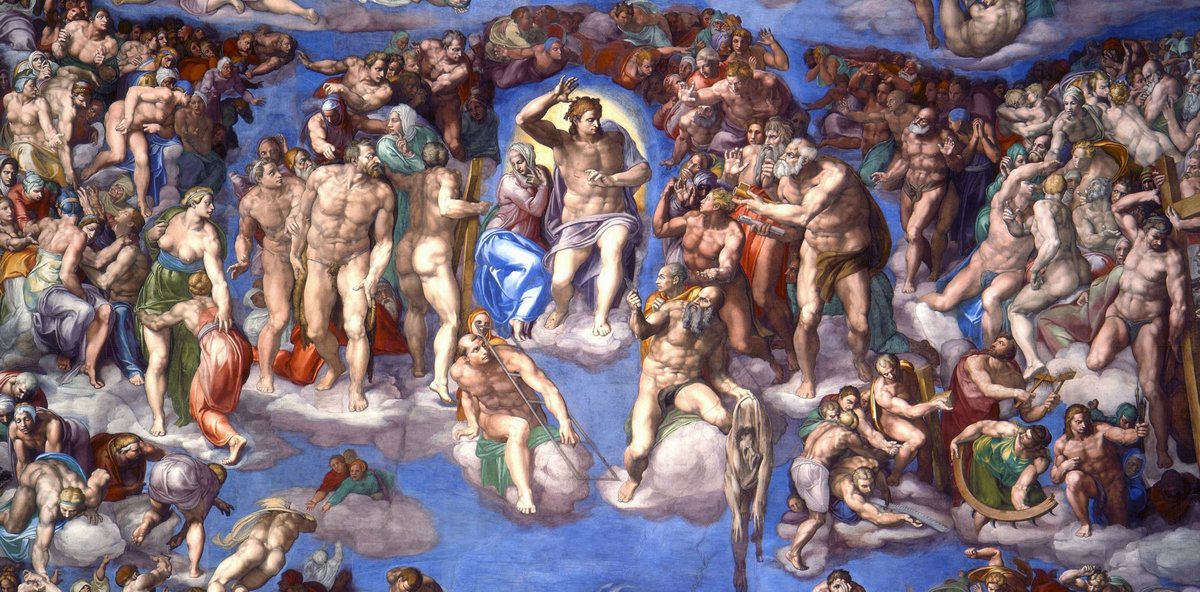
The dynamism in Michelangelo's Last Judgement was not only in the composition. It was in the brush.
After the Vatican Museums finished the first major restoration of the altarpiece in more than thirty years, chief restorer Paolo Violini went up the scaffolding and studied the parallel strokes that had been buried under a white film of visitor grime. Even where a stroke wobbled, the lines beside it wobbled in step. That, Violini told the London Times, meant special brushes with multiple heads: several small tips on one handle, so a single pass laid down parallel marks. Examinations pointed to rake-like tools with three heads and another with as many as ten tips spanning nearly six inches.
The three-month clean, chronicled in the Vatican's new book Michelangelo 2026: The Extraordinary Maintenance of the Last Judgement, also sharpened older discoveries. Art historian Fabrizio Biferali revisits a self-portrait of Michelangelo on a cloth worn by a figure of death near the bottom of the scene, separate from the famous flayed skin of St Bartholomew. Biferali reads it as a mark of rebirth after the fall Michelangelo suffered while painting the fresco.
Vatican Museums director Barbara Jatta puts the technical point in one line: Michelangelo painted "as a sculptor." The multi-headed brushes let him translate the vibrating cross-hatch of a multi-point chisel into paint, especially in hair, while keeping flesh apparently smooth. Speed was a side effect. The real product was stone-logic in pigment.
A ten-headed brush sounds like a gimmick until you stand under the wall. Then it looks like engineering.
*Image: Detail from The Last Judgement. Photo: via Artnet.*
Source: Artnet