Words of Wisdom: Benjamin Franklin's lessons, in his own words
Benjamin Franklin left school at 10, ran away from an apprenticeship at 17 and retired from printing in his early 40s, rich enough to spend the rest of his life on science and public service. He also wrote down how he did it. Here are eight of his lessons, in his own words, and how to use them now.
Franklin is also one of the most misquoted men in history. Half the "Franklin quotes" on social media are things he never said, so every line below has been checked against his own writings, the Founders Online archive of his papers or Wikiquote's sourced sections. At the end are four quotes he gets credit for that aren't his.
1. Do the work, then talk about it
Well done is better than well said.
From Poor Richard's Almanack for 1737, the yearly almanac Franklin wrote and printed for 25 years under the pen name Richard Saunders. It's the shortest line here and the most useful. A plan, a pitch or a promise is worth very little next to a finished job. Say less about what you're going to do and let people see it.
2. Time is the asset you're spending
Remember that time is money.
From Advice to a Young Tradesman, Written by an Old One (1748). The full passage is less of a slogan than it sounds. Franklin's point is that a man who earns ten shillings a day and idles half of it has lost five shillings as well as whatever he spent. The hour on your phone has a cost even when nothing leaves your bank account.
3. Want less, and you'll have enough
If you desire many things, many things will seem but a few.
From the Almanack for 1736. Franklin was a businessman, not an ascetic, but he understood that appetite grows to fit income. A raise only feels like a raise if your idea of enough doesn't rise with it.
4. Listen to the people who don't like you
Love your Enemies, for they tell you your Faults.
From the Almanack for 1756. Friends spare your feelings, and rivals don't. The most accurate review of your work often comes from someone who wants you to fail. Take the information and leave the hostility.
5. Happiness is mostly small things
Human Felicity is produc'd not so much by great Pieces of good Fortune that seldom happen, as by little Advantages that occur every Day.
From Part III of his Autobiography. He was defending the time he spent on clean, paved streets, matters some readers thought too trivial to mention. His example: teach a poor young man to shave himself and you may do more for his happiness than by giving him a thousand guineas. It works for a life too. A good bed, a decent coffee and a short walk will do more for most weeks than waiting for the big win.
6. Share what you invent
As we enjoy great Advantages from the Inventions of Others, we should be glad of an Opportunity to serve others by any Invention of ours, and this we should do freely and generously.
Also from the Autobiography. Governor George Thomas of Pennsylvania offered him a patent on his new fireplace, now known as the Franklin stove. He turned it down on this principle. Franklin made his money from printing, not from his inventions. The lesson isn't to give everything away. It is that generosity with ideas builds the kind of reputation that money can't.
7. Work on one fault at a time
In reality, there is, perhaps, no one of our natural passions so hard to subdue as pride. … For, even if I could conceive that I had compleatly overcome it, I should probably be proud of my humility.
At 20 Franklin drew up a list of virtues, from temperance onwards, and kept a little book in which he marked each day's failures, giving a week's strict attention to one virtue at a time. The list started with 12. Humility became number 13 after a Quaker friend told him he was generally thought proud. He admitted he had little success with it. The method still works: pick one habit, track it daily, then move on.
8. Keep your own counsel
Let all Men know thee, but no man know thee thoroughly: Men freely ford that see the shallows.
From the Almanack for 1743. Be open and friendly with everyone, but don't show anyone all your weak spots. People cross a river where they can see the bottom. It's advice for negotiations, offices and dinner parties alike.
Things Franklin never said
"Tell me and I forget. Teach me and I may remember. Involve me and I learn." There's no evidence Franklin said this. Quote Investigator traces a shortened form to a "Chinese adage" printed in 1953, and the idea is believed to come from the ancient Chinese text Xunzi.
"The definition of insanity is doing the same thing over and over and expecting different results." It is also credited to Einstein and Mark Twain. Wikiquote's earliest sources are teaching material from the late 1960s and a Narcotics Anonymous text from 1981.
"We do not quit playing because we grow old, we grow old because we quit playing." This is a modern variant of a line by the psychologist G. Stanley Hall in 1904.
"If we fail to prepare, we prepare to fail." Wikiquote finds no evidence Franklin coined any version of it.
And one he did write but didn't invent: "He that has once done you a kindness will be more ready to do you another, than he whom you yourself have obliged." Franklin calls it an "old maxim" in his Autobiography. Psychologists now call it the Ben Franklin effect.
Read the original
Franklin's Autobiography is short, funny and free. Project Gutenberg has the full text.
Read The Autobiography of Benjamin Franklin on Project Gutenberg
Words of Wisdom runs every Monday.
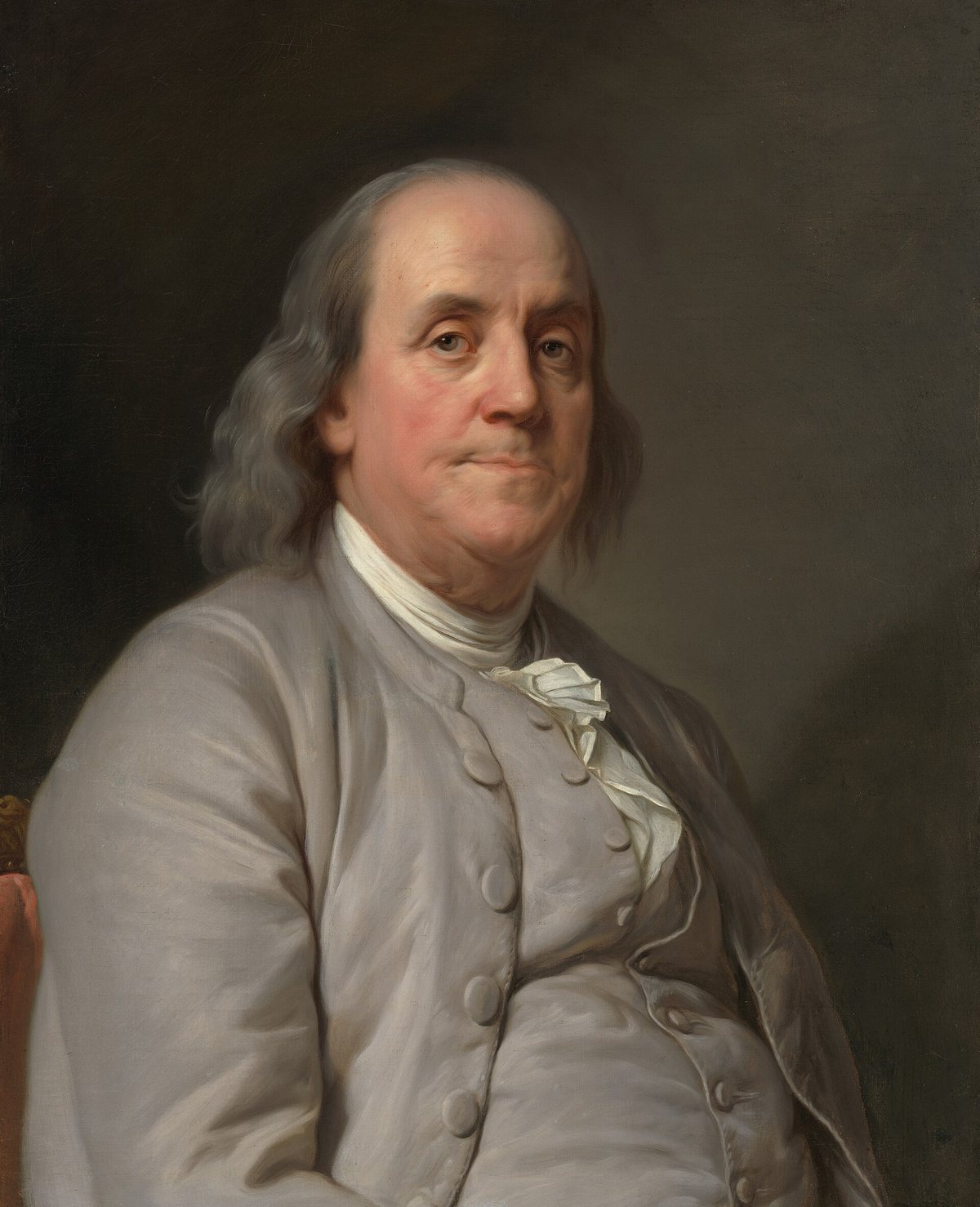
Portrait: Joseph-Siffred Duplessis, Benjamin Franklin, about 1785, public domain, via Wikimedia Commons. Quotes checked against Wikiquote's sourced sections, which cite Founders Online (National Archives) and The Papers of Benjamin Franklin, and Quote Investigator.