Window or aisle? What the data says about the best seat on the plane
Window seats win the surveys. Airlines now sell the choice, and federal rules require them to say a seat is already in the fare.
By The Graze · November 16, 2026 · 6 min read
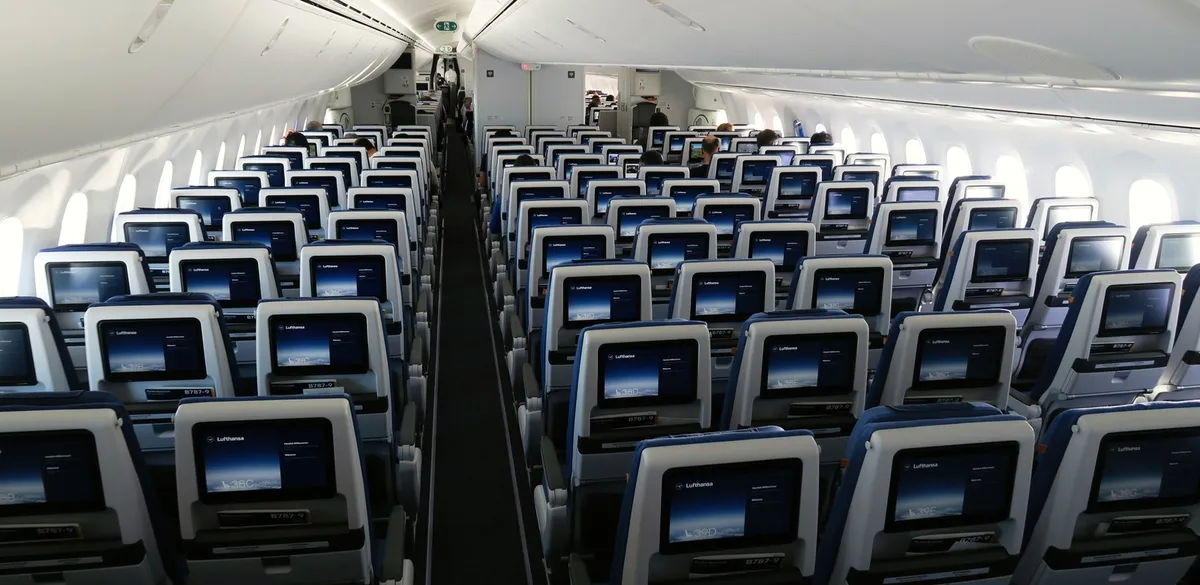
Ask a cabin which seat is better and you will start an argument. Ask a large survey and the argument is already over. In every poll checked for this piece, the window wins. The aisle has a loyal minority. The middle is a rounding error. What has changed is the price of acting on that preference. Airlines now sell the choice, and US rules require them to admit that a seat — if not that seat — is already in the fare.
What the surveys say
In mid-August 2026, Verasight asked 1,000 US adults which airline seat is superior. The window took 63.7 per cent, the aisle 33.7 per cent and the middle 2.5 per cent, with a margin of error of ±3.2 percentage points. The sample is all adults, not only recent passengers.
Two years earlier, Upgraded Points put a Boeing 737-800 seat map in front of 3,142 US passengers in 44 states, between 14 and 21 June 2024. The split was almost the same: 66.6 per cent window, 31.7 per cent aisle, 1.7 per cent middle. Eight of the ten most-selected seats were windows, led by a first-class window at 1A, bulkhead seats in row 7, and the exit rows.
The pattern is older than the fees, and it is not only American. YouGov in the United States in April 2013, YouGov in Britain in May 2022, and Scoot's "Great Aussie Seat Survey" by Pureprofile in May 2026 all returned the same order: window, then aisle, then middle. In the Australian poll, of more than 1,000 adults aged 18 and over, window voters cited better views (38 per cent) and fewer disturbances (23 per cent). YouGov's British figures include those who never fly.
Why the aisle still has a following
The case for the aisle is not mysterious: you can stand up without asking anyone to move. Upgraded Points' aisle voters cited freedom to move around the cabin and, often, more legroom. The same study found that 21 per cent of flyers never use the lavatory on a flight, and only 16 per cent prefer a seat near it. Window voters talk about the view and a place to rest their head.
Forty-one per cent of that sample said they would accept the added responsibility of an exit-row seat for the legroom and the proximity of a way out. A separate 41 per cent said their sense of the seat's safety factors into the choice, and 66 per cent believe the middle of the aircraft has the least turbulence and is the safest section in a crash. That last figure is a belief the survey measured, not a finding of crash-worthiness.
The duty in an exit row is written into the rules. Under 14 CFR 121.585, an airline may not place a passenger in an exit seat if it determines that the person is likely to be unable to perform the required emergency functions, including opening the exit and helping others onto a slide. Exit seats are those with direct access to an exit, or in the row through which others would have to pass to reach one. Occupants must be at least 15 and able to do the work without help.
What it costs to pick
A seat is included in the fare. Choosing which one often is not.
The Department of Transportation's final rule on airline ancillary fees, published on 30 April 2024 and effective on 1 July, requires US and foreign airlines, and ticket agents selling to US consumers, to disclose seat-selection fees as a critical ancillary charge. On any booking page that offers a paid seat, they must say, clearly and conspicuously: "A seat is included in your fare. You are not required to purchase a seat assignment to travel. If you decide to purchase a ticket and do not select a seat prior to purchase, a seat will be provided to you without additional charge when you travel." Airlines had to meet the consumer-facing disclosure requirements by 30 April 2025.
The fees vary by route, fare and airline, and appear on the seat map. United's official list of optional service charges prices preferred seating — a regular Economy seat closer to the front, without extra legroom — from $24 per person per flight on a standard Economy ticket and from $136 on Basic Economy. Advance seat assignments on Basic Economy start at $15. Economy Plus, which does add legroom, is listed from $29 to $299 per flight. United sells preferred seating for earlier onboard service and a faster exit. Premier-status members can get it at no extra cost on standard tickets; those on Basic Economy must still buy it.
Delta sells "Preferred Seats" — exit rows, bulkhead window and aisle seats, and seats in front of Delta Main — for purchase until the check-in window closes on most Delta-operated flights. The seats are non-changeable and non-refundable except as required by law. Main Basic tickets do not include a seat assignment until after check-in, and cannot be upgraded. Delta does not publish a single nationwide price.
Southwest, which spent decades without assigned seats, now sells them for travel from 27 January 2026. A Basic fare includes a Standard seat, assigned at check-in, in the back of the cabin. Choice lets the passenger select a Standard seat at booking; Choice Preferred, a Preferred seat near the front; Choice Extra, Extra Legroom at the front and near the exit rows, with up to five additional inches of pitch on the 737-700. Pitch otherwise varies by aircraft.
In the Upgraded Points survey, nearly 60 per cent of passengers said they were willing to pay to select a seat in advance, at an average of $33.59 — a 2024 willingness-to-pay figure, not a current tariff, in the same range as United's starting preferred-seating price on a standard Economy ticket.
Our take
The window is the better seat if what you want is a wall to lean on and a view you did not have to share. The aisle is the better seat if what you want is to stand up when you choose — on a long flight, with a tight connection, or with a child who will not stay seated. Neither claim has moved much in more than a decade of polling. The middle seat remains the one almost nobody would pick if the other two were free.
The new fact is not the preference. It is that the preference is now a product. A federal rule had to make airlines say that a seat is already in the fare, because the seat map had started to look mandatory. Paying $24, or $136, to sit where you actually want is rational if you care about the window, the aisle, or the extra inches in an exit row you are fit to occupy. It is also a reminder that "included" and "the one you would choose" have been pulled apart.
Southwest's move to assigned seating from 27 January 2026 closes the last large US hold-out. The question worth asking before you pay is whether the fare you bought already included a seat you can live with.
Sources
- United Airlines, preferred seating. Preferred seating, Basic Economy advance-assignment and Economy Plus prices are from United's official optional service charges list, opened on 16 November 2026.
- Delta Air Lines, seats and Preferred Seats
- Southwest Airlines, assigned seating and fare bundles
- US Department of Transportation, Enhancing Transparency of Airline Ancillary Service Fees (final rule, 30 April 2024, 89 FR 34620)
- 14 CFR § 121.585, exit seating
- Verasight, Window seats are preferred to aisle seats (13–18 August 2026) and JSM and Quirk's Omnibus report
- Upgraded Points, The most sought-after seats on an airplane (survey 14–21 June 2024; study updated 13 September 2024)
- YouGov, Fliers want window seat even if smaller (US Omnibus, 16–18 April 2013)
- YouGov, If travelling alone on a flight, which seat on the plane would you prefer? (11 May 2022, 3,525 GB adults)
- Pureprofile, Aussies have revealed their perfect flight (Scoot "Great Aussie Seat Survey")
- Travel Monitor, Scoot study reveals Aussies prioritise value travel (fieldwork date, May 2026)