Why so many supercars wear Montana plates. Inside the LLC loophole, and the states closing it
Montana has no sales tax and lets out-of-state owners register cars through companies formed there. On a $240,000 car, California's tax alone would be $17,400. Now the states where such cars are actually driven are chasing it.
By The Graze · November 15, 2026 · 6 min read
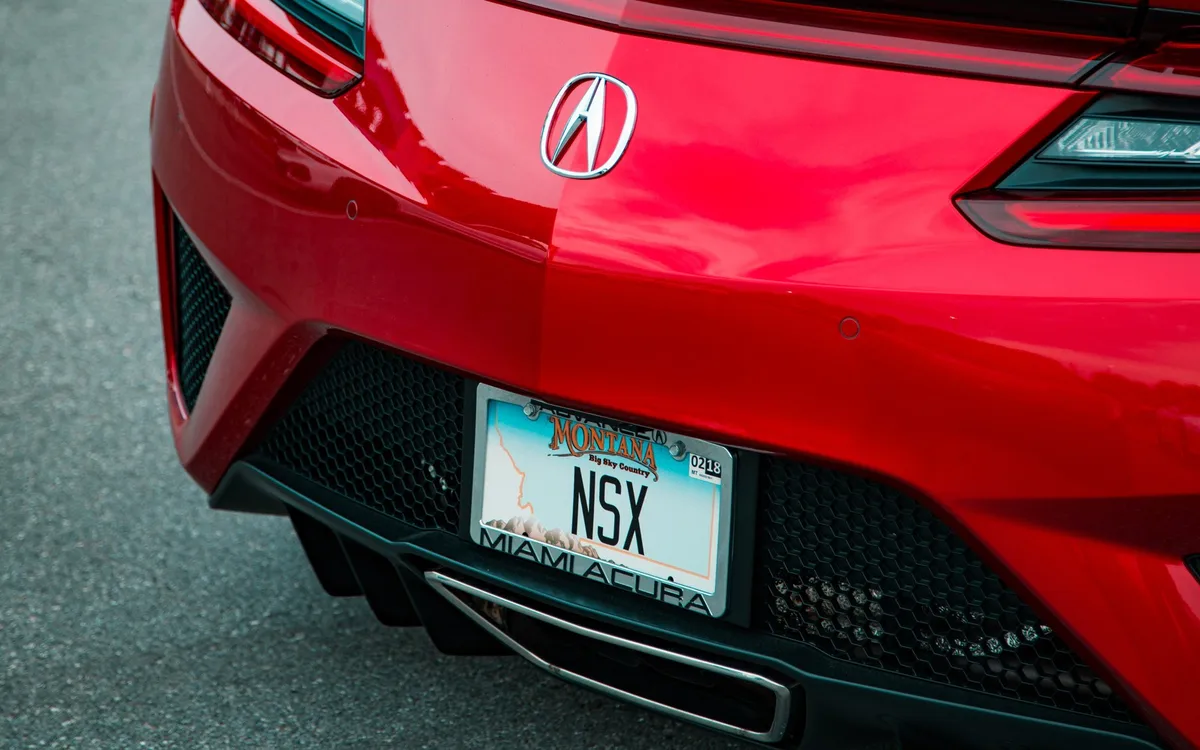
Montana has no sales tax, and its law lets a company formed there own and register a car, wherever its owner lives. Put a $240,000 sports car through a Montana limited liability company and the sales tax that would be charged at home never appears on the bill. The arrangement has put Montana plates on supercars in California and motorhomes in Utah. Now the states where those vehicles are actually driven are coming after the tax.
How the arrangement works
Montana is one of five states with no statewide sales tax, along with Alaska, Delaware, New Hampshire and Oregon. Many non-residents create a Montana LLC solely to register a vehicle under a Montana address, and local businesses offer to handle the paperwork. The company buys the car, titles and registers it in Montana, and the car is then driven wherever its owner lives.
What Montana charges instead is modest. Under section 61-3-321 of the Montana Code, a car up to four years old pays a registration fee of $217 a year. If its sticker price was more than $150,000 and it is no more than ten years old, it pays an extra $825 a year, a luxury fee Montana added in 2017. A further $10 goes to the state. Counties may add a local option tax of up to 0.7 per cent of the car's value if their voters approve it, and several levy none.
A spokesman for Montana's Department of Justice, which runs the state's Motor Vehicle Division, told the Montana State News Bureau that registering out-of-state owners' cars is legal under Montana law and "not a workaround". The state collected more than $21.5m in luxury fees in 2025, he said. Montana's assistant budget director said luxury-vehicle registrations had grown from about 1,000 a year in 2017 to 8,000 a year in 2025. A 2025 bill to raise the luxury fee died on a tied vote in the state Senate.
Legal in Montana, taxable at home
The catch is that Montana's law does not settle what is owed anywhere else. California residents owe the state's sales tax on a vehicle unless it is first used and kept outside California for at least 12 months, according to the California Department of Tax and Fee Administration (CDTFA). Utah's law treats anyone who spends six months or more of a year in the state as a resident for registration purposes. To those states, a car registered to a Montana company but garaged at home is a local car whose tax has not been paid.
What a $240,000 car would owe
| State | Statewide rate (%) | Tax on $240,000 ($) | Years of Montana fees |
|---|---|---|---|
| California | 7.25 | 17,400 | 16.5 |
| Tennessee | 7.00 | 16,800 | 16.0 |
| Minnesota | 6.875 | 16,500 | 15.7 |
| Illinois | 6.25 | 15,000 | 14.3 |
| Utah | 6.10 | 14,640 | 13.9 |
| Colorado | 2.90 | 6,960 | 6.6 |
In California, the tax on that car would cover more than 16 years of Montana's fees. But a Californian found to have falsely claimed out-of-state use can face a penalty of 50 per cent of the tax, the CDTFA says: another $8,700 on a $240,000 car, before interest.
The crackdown
California has moved furthest. In March its attorney-general, Rob Bonta, announced a 56-count complaint against 14 people in the Bay Area, charging conspiracy, filing false sales tax returns, failing to file returns, perjury and money laundering. Prosecutors allege that from 2018 the defendants filed false tax forms, motor vehicle forms and bills of lading claiming that more than $20m of luxury cars had been bought for use outside California, avoiding more than $1.8m in tax. The cars, including a $1.8m McLaren Elva, a $1.5m Porsche 918 Spyder and a $1.26m Ferrari F12tdf, were delivered, driven and stored in the state, according to the complaint. The charges are allegations, and the defendants are presumed innocent.
The same day the CDTFA said it had found close to 500 California dealers involved in more than 2,500 sales since 2023 to customers claiming to use the vehicle in Montana, costing the state more than $10m a year. The state's DMV said it had pursued 81 criminal investigations since June 2023, found 601 fraudulently registered vehicles and recovered $2.3m.
Then the law changed. Senate Bill 1406, signed on 30 September and in force immediately, makes a shell company a California resident for this tax if any shareholder, partner, member or beneficial owner lives in California. Before, an LLC counted only if residents held at least half of it. The law also makes the shell company's officers, managers, members and beneficial owners personally liable for unpaid tax, interest and penalties.
Utah took a different route. A 2025 law, SB 52, lets its Tax Commission match insurance records against registrations to find vehicles insured in Utah but registered elsewhere. Owners who are flagged get a notice, a $150 penalty and 60 days to register and pay; ignore it and the penalty rises to at least $500. By July the commission had sent about 1,500 notices and collected $1.6m in sales tax and $32,540 in fines. Nearly 90 per cent of the suspect vehicles were registered in Montana. Its list included 17 Lamborghinis, ten Ferraris and nine McLarens, but the most common makes were Ford, GMC and Chevrolet. A Utah tax official warned that a fraudulent registration could also give an insurer grounds to deny a claim.
Our take
The Montana plate was never really a tax loophole. It was an enforcement gap. The tax was always owed where the car lived, and the arrangement worked because nobody was matching Montana registrations against where the cars were kept. Insurance records, dealer sales reports and a willingness to prosecute are now closing that gap.
For an owner, the trade has changed shape. The saving is fixed and modest: $17,400 on a $240,000 car in California. The exposure is open-ended: back tax, a penalty of up to half the tax, interest, personal liability under the new California law and, at the far end, a criminal complaint. Add the risk of an insurer refusing a claim on a seven-figure car and the arithmetic stops working.
There are legitimate Montana registrations: cars that really are kept and used there. What has ended is the idea that a mailing address in Montana settles the question. Montana has shown no appetite to change its rules, so the pressure will come from the states where the cars are driven. Expect more of them to copy California's any-owner rule and Utah's data matching.
Sources
- Montana Code Annotated 2025, section 61-3-321, registration fees, and section 61-3-537, local option motor vehicle tax
- Office of the Attorney General of California, Bay Area tax evasion scheme involving luxury vehicles registered out of state (6 March 2026)
- California Department of Tax and Fee Administration, CDTFA and DMV are cracking down on auto dealers who help buyers evade California taxes (6 March 2026)
- California Legislature, SB 1406, Sales and Use Tax Law: vehicles: shell companies (Chapter 1036, Statutes of 2026), and Senator Jerry McNerney, statement on its enactment
- Utah Legislature, S.B. 52, Vehicle Registration Modifications (2025 General Session)
- Minnesota Department of Public Safety, vehicle sales tax
- Tax Foundation, 2026 sales tax rates, midyear update
- KUER, Utah is cracking down on scofflaws using the Montana car registration loophole (28 July 2026)
- Montana State News Bureau, Prosecutors crack down on "Montana loophole" luxury vehicle sales tax avoidance (as published by the MSU Exponent, 13 March 2026)
- Calculations by The Graze: tax on a $240,000 car at each statewide rate; Montana's yearly fees under section 61-3-321; years of Montana fees each tax bill equals; the California penalty at 50 per cent of the tax.