A $180m Van Gogh at Sotheby's is challenged as 'sold under duress'
Heirs of publisher Samuel Fischer have asked Sotheby's to withdraw Chestnut Trees in Blossom from Wednesday's New York sale, saying the 1936 sale was forced by Nazi-era losses. Sotheby's says its research has not established that.
By The Graze · November 15, 2026 · 4 min read
Culture
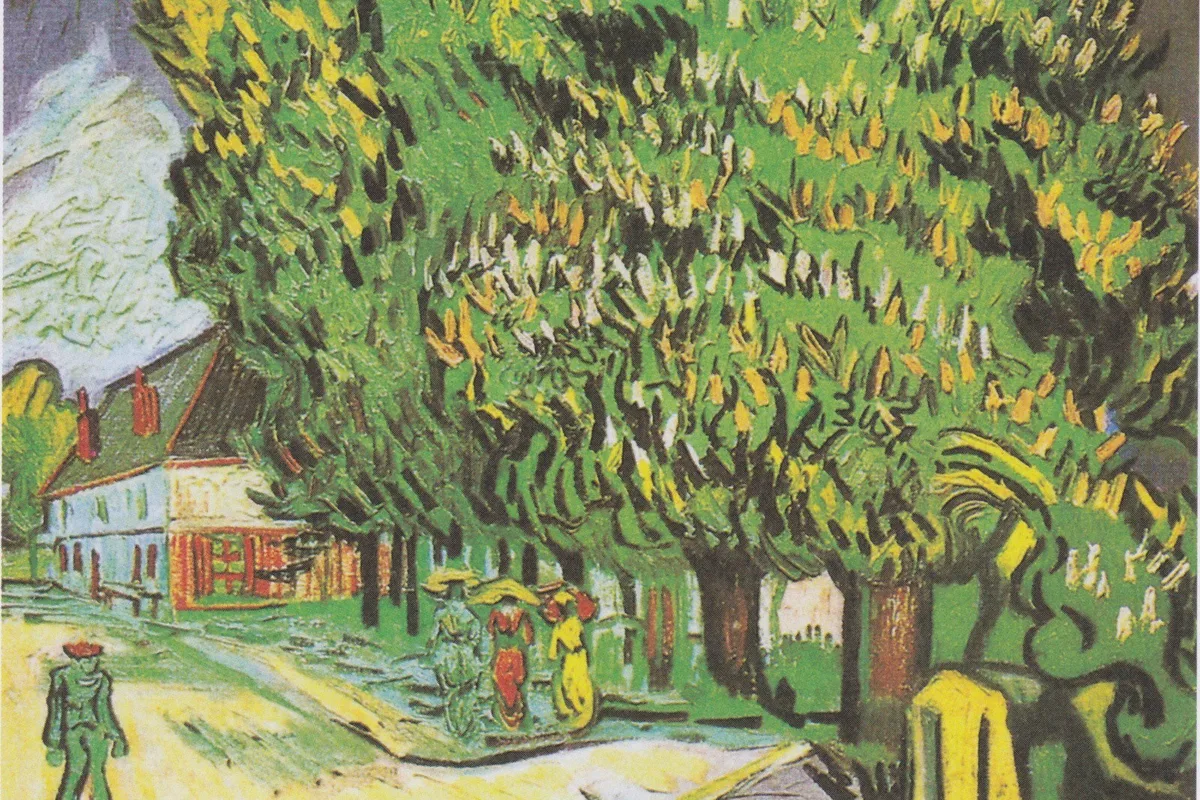
Heirs of the German publisher Samuel Fischer have asked Sotheby's to withdraw Van Gogh's Châtaigniers en fleurs from its New York sale on Wednesday, arguing that the picture was sold under duress in 1936. The auction house says its research has not established that, and that it is talking to the family.
The claim
Châtaigniers en fleurs, or Chestnut Trees in Blossom, painted in Auvers-sur-Oise in May 1890, is the headline lot in Sotheby's sale of the Blaquier-Arrieta collection. The estimate is about $180 million, which would, if achieved, overtake Van Gogh's auction record of about $117 million, including fees, for Orchard with Cypresses at Christie's in 2022, The Art Newspaper reported in October.
The Fischer heirs, who are based in the United States, say the canvas was sold in Amsterdam in 1936 because of financial losses their family's publishing house suffered under Nazi rule in Germany, the BBC and JNS report, both drawing on an account first published in the New York Times. The Netherlands was not under Nazi occupation in 1936. The heirs' argument is that persecution in Germany still forced the sale.
Gunnar Schnabel, the family's Berlin lawyer, has said, according to JNS, that the painting was sold three months after the family left Germany, and that they had to pay the "Reich flight tax" imposed on emigrants. He has asked Sotheby's to show that the sale was at market value and would have happened even without Nazi rule. The BBC says it has contacted the lawyer for comment.
What Sotheby's says
The auction house gave the BBC a statement:
Sotheby's also said it "takes provenance and restitution matters extremely seriously" and has done "extensive research into the ownership history" of the picture, and that it has been in dialogue with the heirs' representatives. It did not say, in that statement, whether Wednesday's sale would go ahead.
The house's own account of the provenance, as summarised by the BBC, is that Samuel Fischer bought the painting in 1909; that it passed in the family after his death in 1934; that it was deposited with the dealer Paul Cassirer in Amsterdam in 1932 or 1933; and that it went to Henriette and Marcel Kapferer in Paris in 1936. Four later owners held it before this year's sale.
An earlier comment, given to The Art Newspaper in October, before this challenge became public, was more categorical: a Sotheby's spokesperson said the house was "satisfied that the family was free at all times to dispose of the painting," even while acknowledging that the Fischers were persecuted as Jews. The mid-November wording is narrower. It says only that the research so far has not established duress.
The picture, and the sale around it
Van Gogh painted the trees after leaving the asylum at Saint-Rémy. On 25 May 1890 he wrote to his brother Theo that he had just finished "a study of chestnut trees," The Art Newspaper notes. Of some 50 landscapes from the Auvers months, it says, only eight remain in private hands. After Vincent's death the picture passed to Theo and then to Jo Bonger, who sold it in 1905; Fischer bought it four years later.
It has been in the Blaquier-Arrieta collection since 1975 and is being sold with a group of 12 works that The Art Newspaper said could raise about $450 million. Sotheby's has given the Van Gogh a financial guarantee, so the house has already underwritten a sale of some kind. That guarantee does not, on its own, settle a restitution claim.
This is a different story from the preview of Sotheby's New York week, which set out the $180 million estimate. The new question is whether the lot will be allowed to stand.
Our take
Restitution arguments from the 1930s often turn on a painful distinction: a sale that was formally voluntary, in a city not yet occupied, but made because Nazi policy had already made staying in Germany, or keeping a business there, impossible. Courts and auction houses have reached different conclusions on different facts. This one is not decided.
Sotheby's has an interest in a clean sale, a guarantee on the lot, and a public statement that leaves the door open. The heirs have an interest in a withdrawal, or in a settlement that recognises the 1936 sale as tainted. The careful shift in the house's language, from "free at all times to dispose" in October to "has not established" this week, suggests the letter from the family's lawyer has at least been read closely.
Until there is a court order, a settlement or a formal withdrawal, the catalogue still says the picture will be sold on Wednesday. That is a timetable, not a verdict on 1936.
What to watch: whether Sotheby's keeps the lot in the 18 November sale, and whether any statement from Schnabel, the heirs' lawyer, goes beyond what has been reported so far.
Sources
- BBC News, Sotheby's auction of $180m Van Gogh challenged over claims it was 'sold under duress', 14 November 2026, including Sotheby's statement
- JNS, Jewish heirs seek to halt Sotheby's sale of $180 million Van Gogh, 14 November 2026
- The Art Newspaper, The story behind the record-price Van Gogh up for auction in November, 2 October 2026