Two Caravaggios found in two days
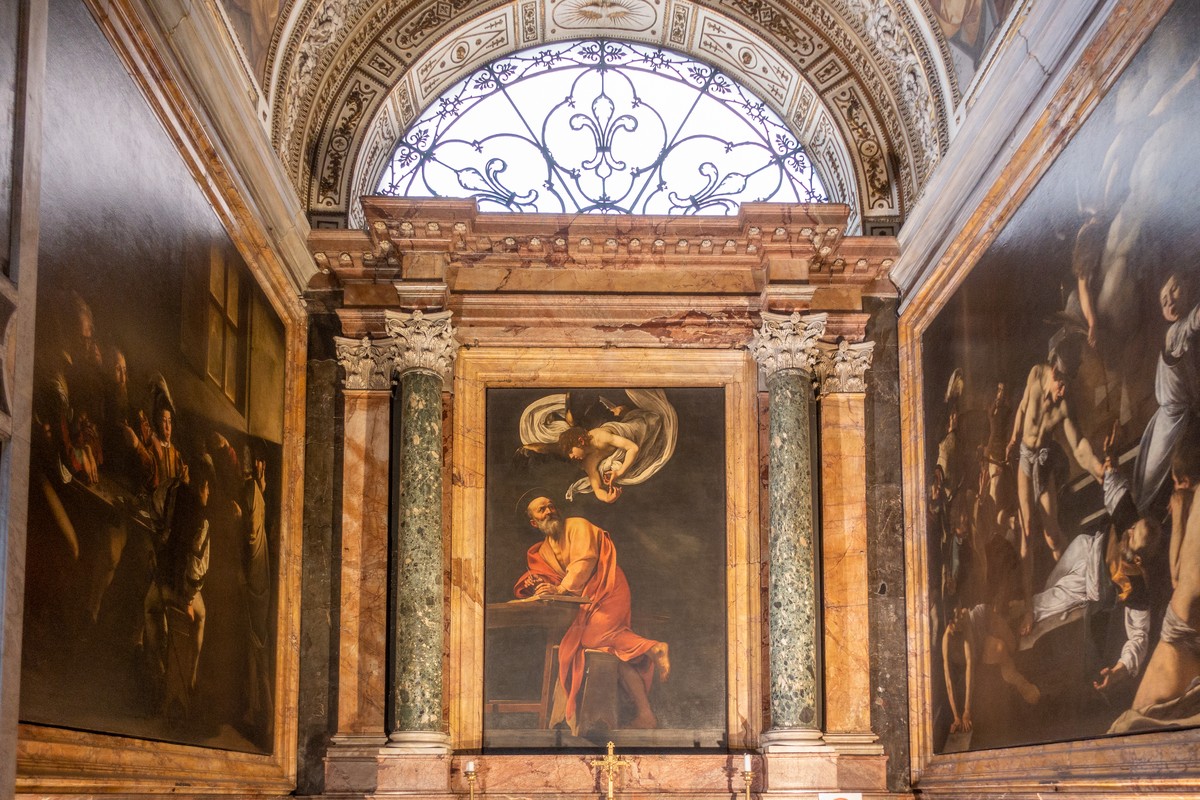
Lost Caravaggios are the art world's buses. You wait years for one, then two are announced in a single weekend.
Two Italian scholars, working separately, have each attributed a newly identified painting to the young Michelangelo Merisi da Caravaggio. Neither attribution has yet been tested by the wider scholarly community, and Caravaggio claims have a long history of being disputed. But both come from serious specialists, and one of the paintings was sold at auction nine years ago for less than the price of a decent used car.
Find one: the €3,810 portrait
The first came from the historian Gianni Papi, who on November 7 told a conference at the Pinacoteca Civica in Montepulciano that a dark portrait of a young man is, in his view, by Caravaggio. The announcement was reported by the Italian art news site Finestre sull'Arte.
The canvas had previously been catalogued as Tuscan school, 16th century. In 2017 it sold at the Dorotheum auction house in Vienna for €3,810, about $4,300.
Papi has declined to say more until the conference proceedings are published, when his full argument will be made public. He has form: last year he claimed to have identified the earliest known Caravaggio, a small picture of a boy peeling fruit thought to date from 1592–93, when the artist was about 20.
Find two: the boy with the roses
The second attribution is the more detailed. Maria Cristina Terzaghi, co-curator of last year's blockbuster Caravaggio exhibition at the Palazzo Barberini in Rome, told La Repubblica that she has traced Young Man with a Vase of Roses to a private collection in France.
The composition was already known, but only through copies and a description by Giovanni Baglione, a rival painter who later wrote a life of Caravaggio. Terzaghi says she came across the original at the back of a Paris gallery some years ago and recognised it at once.
What convinced her, she said, is its "exceptional" quality: "the boy's extraordinary face, his moist eyes, the iridescent whites of his shirt, and the marvelous still life." Those features, she said, "leave no doubt as to the painting's authenticity". She dates it to about 1596–97.
A painting with a past
If Terzaghi is right, the picture's history is as dramatic as its painter's. Records show the original belonged to Giuseppe Cesari, the Cavalier d'Arpino, the fashionable Roman painter in whose workshop the young Caravaggio worked in the early 1590s. In 1607, d'Arpino's collection was seized during a criminal case against him. Pope Paul V passed it to his nephew, Cardinal Scipione Borghese, the great collector, and the painting stayed in the Borghese collection until at least 1831. It was sold at auction in Paris in 1909. How and why it left Italy is not known.
Terzaghi has also pointed to its link with a better-known early work, Boy Bitten by a Lizard, painted around 1593–94, of which two versions are believed to be authentic. There, the boy recoils in shock. Here, she says, the young man appears serene, "perhaps even sorrowful".
Our take
Two things are true at once. These are credible scholars with real track records, and an attribution, even from an expert, is not the same as consensus. The test comes when the evidence is published and other specialists look at the paintings themselves, along with the technical analysis that usually follows: X-rays, pigment studies, the underdrawing.
The money is the reason to be careful. A Tuscan-school portrait worth €3,810 becomes, as a Caravaggio, a work worth many millions. That gap is why every claim deserves scrutiny, and why the market will wait for the proceedings.
The other lesson is about Caravaggio himself. He sold cheaply in his early years and was copied constantly. If the Dorotheum painting holds up, someone at a Vienna auction in 2017 bought one of the bargains of the century. Whoever sold it will not enjoy reading the news.
Sources: La Repubblica (Maria Cristina Terzaghi); Finestre sull'Arte; Dorotheum, 2017 sale; Artnet News