Starbucks will know you as you pull into the drive-thru: how fast food learned to recognise customers
Starbucks says it is exploring app-based, opt-in drive-through recognition in 2027. Rivals already use geofencing, and privacy law will shape how far it goes.
By The Graze · November 16, 2026 · 5 min read
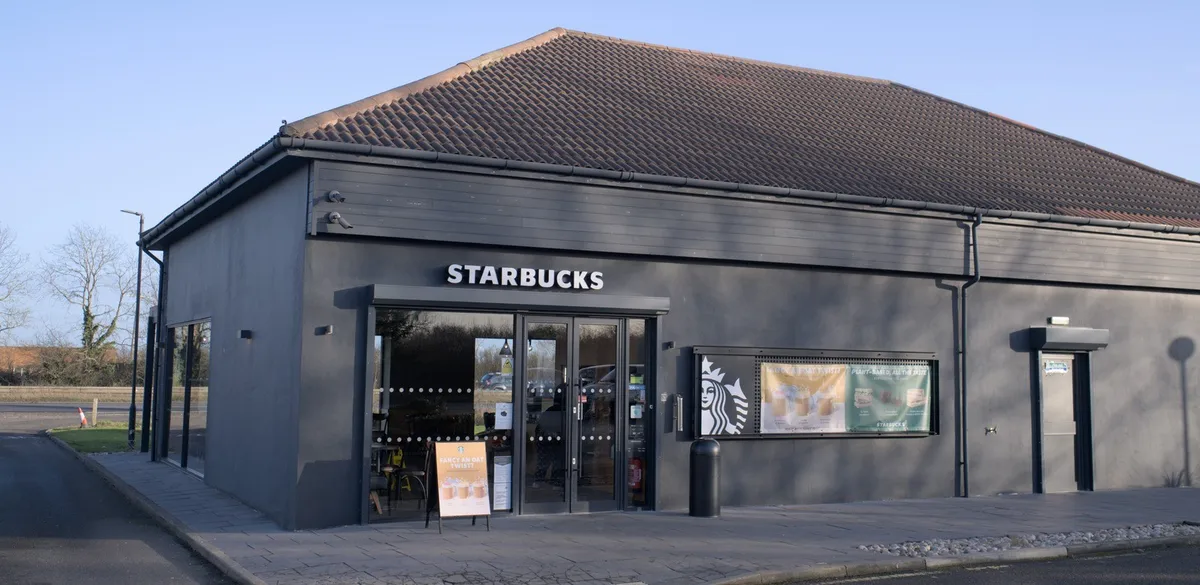
Starbucks is exploring how to recognise participating customers in the drive-through and greet them by name, show them their usual order, or let them pay automatically. The plan sits in an official company note published on 11 November 2026 by Paul Riedel, senior vice president of digital and loyalty. It is written for 2027, it is optional, and it would run through the Starbucks app. It is not a description of a system that is live today, and it does not say the company will read licence plates.
What Starbucks has actually said
Starbucks Rewards, the same note says, has a record 36 million members in the United States who have been active in the past 90 days. On that base, the company is "exploring how customers who choose to participate could extend their personalised Starbucks experience beyond the app and into the drive-thru." That "could mean being greeted by name, receiving recommendations based on favorites and usual orders, or choosing to pay automatically." Customers "would choose to enroll in these experiences through the Starbucks app." For those who do, "the app would enable the personalised experience, including recognition based on the preferences and information they choose to share with Starbucks." Transparency, customer choice and data protection, it says, will guide how the features work.
A separate test is more concrete. Beginning in early 2027, Starbucks plans to try artificial intelligence that can assist baristas as they take drive-through orders, working "in the background" so that partners can stay focused on the customer. That is an order-entry tool, not a promise that the store will know the car as it arrives.
What the official note does not do is name the sensor. There is no mention of cameras on the lot, no mention of licence plates, and no mention of face scans. The mechanism described is enrolment in the app, and recognition based on information the customer has chosen to share.
How rivals already know you have arrived
The underlying idea is not new. McDonald's, in a technical blog posted on 12 May 2026, describes Ready on Arrival, a mobile-app feature that uses geofencing — virtual boundaries drawn with GPS, Wi-Fi and cellular signals — to alert restaurant crews when a customer is nearby, so that preparation can start at the right moment. The feature launched in US markets in April 2023, was deployed in many large markets, and is enabled in the drive-through through an integration with McDonald's order-management tools. If location services are switched off, the company says, food preparation begins only when the customer arrives in the restaurant. The same post says it is "critical to adhere to all applicable data-privacy regulations such as GDPR and CCPA."
Chick-fil-A took a similar path, and said so on its own press page. On 3 May 2023 it announced that, for curbside and carry-out orders placed in its app with location services enabled, the app can tell when a customer is close "so we can start preparing your order." It called the technology geofencing. After tests at 100 restaurants, it said customers saved one to two minutes on average, and that estimated wait times were accurate more than 90 per cent of the time. The features were to roll out chainwide through early summer, if the customer enabled location services.
Those systems recognise that a participating phone has entered a zone. They do not, on the official pages opened for this piece, claim to read a number plate or a face. A licence-plate camera is a different tool, and it is not what Starbucks has announced.
What the law actually covers
Whether a drive-through "knows you" is legal as well as technical, and the statutes are narrower than the slogan. Illinois's Biometric Information Privacy Act, the most litigated of the American biometric laws, defines a biometric identifier as a retina or iris scan, fingerprint, voiceprint, or scan of hand or face geometry. Photographs are excluded. So are ordinary physical descriptions. Licence plates and a phone's location are not on the list. A private entity that does collect a biometric identifier must give written notice of the purpose and term, obtain a written release, publish a retention schedule, destroy the data when the purpose is met or within three years of last interaction, and must not sell it. A person aggrieved may sue. Damages are $1,000 for a negligent violation, or $5,000 for an intentional or reckless one, or actual damages if greater, plus fees. A 2024 amendment, in force since 2 August 2024, allows only one recovery where the same identifier is collected from the same person by the same method more than once.
Texas takes a similar definition — retina or iris scan, fingerprint, voiceprint, or a record of hand or face geometry — and requires notice and consent before capture for a commercial purpose. The civil penalty is not more than $25,000 for each violation, and it is the attorney general who may sue. There is no private right of action in the section.
California's Consumer Privacy Act, as amended, is broader. "Personal information" includes geolocation data when it can be linked to a consumer or household. "Precise geolocation" — device-derived data used to locate a consumer within a circle of 1,850 feet or less — is "sensitive personal information," as is the processing of biometric information to uniquely identify a consumer. App-based arrival detection can fall inside that perimeter even when Illinois's biometric statute does not.
If Starbucks stays inside the app, with an opt-in and no face scan, it is navigating geolocation rules, not a classic BIPA collection. If it later added a camera that maps a face, Illinois and Texas would be in play at once.
Our take
The version of this story that travels fastest is the one in which the shop already knows you as the bonnet crosses the lot. That is not what Starbucks has put on paper. It is exploring an opt-in, app-based layer for 2027, on top of 36 million recent Rewards users, and a separate test of AI that helps a barista punch in an order. Those are real plans. They are also narrower, later and more voluntary than "the drive-through will know you" suggests.
The industry has already trained customers to leak their arrival. McDonald's and Chick-fil-A use geofences in the official description of how mobile orders get timed. That works only if the phone is on, the app is trusted, and location is enabled. It is a bargain many people will make for a minute saved. It is still a bargain.
The legal risk is uneven, which is why the missing sensor matters. Face geometry is heavily regulated in Illinois and Texas. A phone ping is not a biometric under those statutes, but it can be precise geolocation under California law. A company that says it will be guided by "customer choice" will be judged on whether the choice is real — a clear enrolment, not a buried toggle — and on whether the recognition stays inside the app that the customer already opened. The moment the camera, rather than the phone, does the recognising, the statute book looks very different.
Sources
- Starbucks, Building the future digital Starbucks experience (Paul Riedel, 11 November 2026)
- Illinois General Assembly, Biometric Information Privacy Act, 740 ILCS 14/
- Texas Constitution and Statutes, Business and Commerce Code § 503.001
- California Legislative Information, Civil Code § 1798.140
- McDonald's technical blog, Inside the Geofence: Faster Pickups Start Here (Chandrani Gupta Chowdhury, 12 May 2026)
- Chick-fil-A, A new way we're preparing your mobile order (3 May 2023)