How Southeast Asia's data centres became a back door for AI chips
America stopped Nvidia's best AI chips being sold to China. It did not stop a data centre in Malaysia importing the same chips and renting out the computing time.
By The Graze · November 15, 2026 · 6 min read
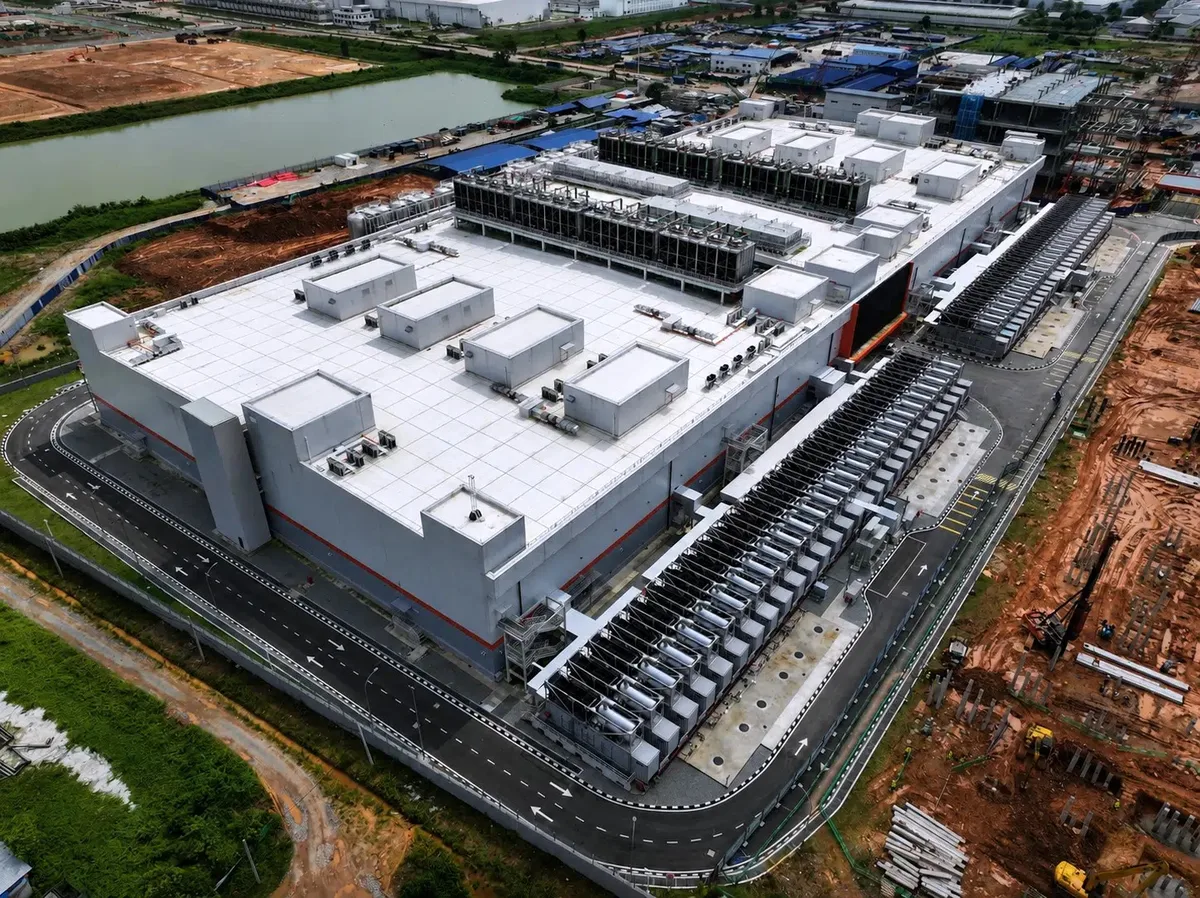
The United States made it illegal to sell Nvidia's most advanced artificial-intelligence chips to China. It did not, on the face of the published rules, make it illegal to install those same chips in a data centre in Johor or Singapore and rent the computing time to a customer in Shenzhen. That gap, and a well-worn route for moving the hardware itself through the same buildings, is how Southeast Asia's data-centre boom became a back door.
The rules, and the gap
In October 2022 the Commerce Department's Bureau of Industry and Security began requiring a licence to send advanced computing chips, and servers that contain them, to China. A year later it extended that requirement to any entity headquartered in China, or whose parent is, even if the buyer sits in another country.
What the rules do not clearly stop is a different transaction: a data-centre operator in a country that can still import the chips, fitting them in its own racks and selling computing time to a client in China. The chips never leave the building. The work is done remotely.
In January 2025 BIS published a Framework for Artificial Intelligence Diffusion that would have imposed worldwide licence requirements and country caps from 15 May 2025. On 13 May it said it would not enforce the new requirements and would rescind the rule, while adding licensing for shipments to Malaysia and Thailand "due to known instances of diversion." On 31 May 2026 it reminded exporters that the older, November 2023 control still applied to China-headquartered companies, and to companies with a China-headquartered parent, wherever they are located. That guidance is about exporting the hardware. It does not, by its terms, prohibit a non-Chinese operator from renting out the computing time.
The boom
Singapore's Ministry of Digital Development and Information told parliament in February that the city-state's data-centre capacity exceeds 1.4 gigawatts, with more than 70 cloud, enterprise and co-location facilities. Malaysia has been building faster, just across the strait in Johor and around Kuala Lumpur. The Malaysian Investment Development Authority said in September that approved data-centre-related investment had reached 385.7 billion ringgit from 2021 to the first half of 2026. In mid-October, Investment, Trade and Industry Minister Johari Abdul Ghani told the Dewan Rakyat that 57 data centres were already operating, requiring 6,237 megawatts of electricity, with another 60 in the pipeline that could need a further 11,172 megawatts.
A permit is not required to bring AI chips into Malaysia, the ministry said on 13 November. Since July 2025, anyone wanting to export, re-export, transship or transit high-performance US AI chips from or through Malaysia must first obtain a permit under the Strategic Trade Act 2010.
Two routes
One method is to rent the computing power where the chips already sit, which current US rules do not clearly forbid. The other is to buy the hardware through a company in Southeast Asia and move it on to China, which they do forbid. Prosecutors have charged the second method in several cases. The charges are allegations, and the defendants are presumed innocent.
In a case unsealed on 19 March 2026, the Justice Department charged Yih-Shyan "Wally" Liaw, a co-founder and then board member of Super Micro Computer, plus a Taiwan sales manager and a contractor, with conspiring to divert US-assembled servers to China. A Southeast Asian company placed the orders as if it were the end user; the servers were then sent on in unmarked boxes, the indictment says. When inspectors came to check, the conspirators allegedly staged thousands of dummy replicas in a rented warehouse, using a hair dryer to lift and restick serial-number labels. About $2.5bn of servers were bought; at least $510m-worth were diverted in a single month, prosecutors say.
What the charging papers describe
| Case | Date | Alleged route | Alleged value |
|---|---|---|---|
| Liaw, Chang and Sun | Mar 2026 | Southeast Asian buyer; unmarked boxes to China; dummy warehouse | $2.5bn bought; $510m diverted in one month |
| Janford Realtor | Nov 2025 | Tampa front company, via Malaysia and Thailand | 400 Nvidia A100s delivered; later shipment stopped |
| Earthmade Computer | Oct 2026 | California seller, via Malaysia and Singapore | More than $300m of servers; $176m from Malaysian shippers |
Serial numbers and warehouse inspections are how the chips are supposed to be traced. The dummy-server case is how that tracing is alleged to have been beaten.
The checks in Kuala Lumpur and Singapore
The company that has drawn the most official attention is Megaspeed International, a Singapore firm, and its Malaysian affiliate, Speedmatrix. Malaysia's Ministry of Investment, Trade and Industry said on 13 November that it has never cleared either company, and that Speedmatrix is a tenant at data centres in Malaysia. It is working with Malaysian Customs "to determine whether any of the chips brought into Malaysia have since been reexported." "Malaysia will not allow itself to be used to get around export controls," it said.
Singapore's MHA said the day before that police and customs opened an independent investigation in February 2025 into several companies, including Megaspeed, over possible false declarations on servers exported through Singapore to Malaysia. Investigations into Megaspeed remain open. Singapore does not enforce other countries' export controls, the ministry said, but "does not condone companies using their association with Singapore to circumvent or violate" them through fraud. Between February 2025 and July 2026 it charged four individuals and four companies over fraud by false representation in relation to server purchases.
Johari said in mid-November that Malaysia is drafting a law requiring data-centre operators to disclose their identity, locations, electricity use and imported graphics processors, so that chips brought in for local use are not shipped out again.
Our take
America's chip ban was built around a customs idea: stop the box. That works when the box is labelled for Shanghai. It works less well when the box is labelled for Johor, the chips are bolted into a rack, and the customer in China opens a remote session. One of those paths is a crime, if the charges stick. The other has been, on the face of the published rules, a service offering.
BIS closed a related hole by requiring a licence when the buyer itself is a Chinese company, even outside China. It has not published a rule that stops a non-Chinese operator from selling that buyer computing time.
Malaysia now needs a permit to take the chips back out, and is checking whether any left. Singapore is pursuing false declarations. The boom in Johor and Singapore is real, and most of it is ordinary cloud business. The risk is that a minority of tenants use the halls as a transshipment shed, and that the entire cluster then carries the reputation. That is why both governments are now saying they will not be the place the chips disappear.
Sources
- US Bureau of Industry and Security, Implementation of Additional Export Controls: Certain Advanced Computing and Semiconductor Manufacturing Items (Federal Register, 13 October 2022)
- US Bureau of Industry and Security, Implementation of Additional Export Controls: Certain Advanced Computing Items; Supercomputer and Semiconductor End Use (Federal Register, 25 October 2023)
- US Bureau of Industry and Security, Framework for Artificial Intelligence Diffusion (Federal Register, 15 January 2025)
- US Bureau of Industry and Security, rescission of the Biden-era Artificial Intelligence Diffusion Rule (13 May 2025), and guidance on licence requirements for advanced computing items destined for entities headquartered in Country Group D:5 and Macau (31 May 2026)
- US Department of Justice, three charged with conspiring to unlawfully divert cutting-edge US artificial intelligence technology to China (19 March 2026), and Super Micro Computer, statement on action by the US Attorney's Office (19 March 2026)
- US Department of Justice, US citizens and Chinese nationals arrested for exporting artificial intelligence technology to China (20 November 2025)
- US Department of Justice, California man arrested for smuggling more than $300 million in export-controlled computer servers to China (1 October 2026)
- Singapore Ministry of Digital Development and Information, response to a parliamentary question on the number and load capacity of data centres in Singapore (25 February 2026)
- Malaysian Investment Development Authority, Data Centre Nexus 2026: from attracting investment to building value (14 September 2026)
- Malaysia Ministry of Investment, Trade and Industry, statement on Megaspeed International Pte Ltd and Speedmatrix Sdn Bhd (13 November 2026)
- Singapore MHA, investigations into Megaspeed International Pte Ltd (12 November 2026)
- The Star, Data centres must pay for unused power allocations, says Johari (15 October 2026), quoting Johari Abdul Ghani in the Dewan Rakyat
- The Edge Malaysia, Johari: New law to tighten data centre oversight, prevent chip transshipment (12 November 2026)