Self-made or inherited? Where the world's billionaires got their money, country by country
Forbes classes two-thirds of the world's 3,428 billionaires as self-made. In mainland China almost all are. In Germany barely one in four is, and more than four-fifths of French billionaire wealth is inherited.
By The Graze · November 17, 2026 · 5 min read
Forbes counts 3,428 billionaires this year, worth a combined $20.1 trillion, and classes two-thirds of them as self-made. That global average hides a split. In mainland China almost every billionaire built their own fortune. In Germany barely one in four did, and in France more than four-fifths of billionaire wealth was inherited.
The global picture
Forbes's 2026 World's Billionaires list, which values fortunes as of 1 March, says 67 per cent of the world's billionaires are self-made. Measured by money rather than heads, the share comes out at almost exactly the same level: about 67 per cent of the $20.1 trillion belongs to people Forbes marks as self-made, on our count of its list data.
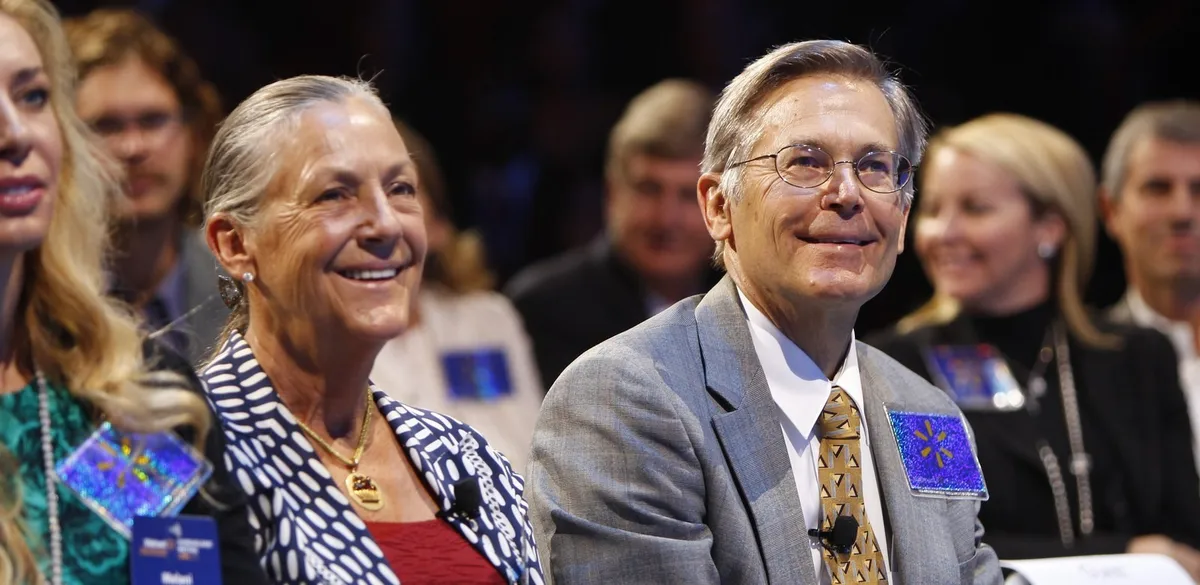
The split is sharper for women. Of the 481 women on the list, Forbes says three-quarters inherited their fortunes, including the world's richest woman, the Walmart heir Alice Walton, at an estimated $134 billion. Only 122 women are self-made.
Inheritance is also growing faster than it used to. UBS, which tracks billionaire wealth with PwC, found that 91 heirs inherited a record $297.8 billion in 2025, 36 per cent more than in 2024, even though fewer people inherited. In the same year 196 new self-made billionaires added $386.5 billion. UBS counts some 860 multi-generational billionaires holding $4.7 trillion, and expects at least $5.9 trillion to pass to children by 2040.
Self-made share of billionaires, by country
| Country | By number (%) | By wealth (%) |
|---|---|---|
| World | 67 | 67 |
| United States | 72 | 74 |
| China (mainland) | 97 | 96 |
| India | 48 | 40 |
| Germany | 27 | 23 |
| Russia | 94 | 98 |
| Italy | 33 | 51 |
| Canada | 80 | 83 |
| Hong Kong | 65 | 72 |
| Brazil | 41 | 58 |
| Taiwan | 62 | 64 |
| United Kingdom | 89 | 94 |
| Australia | 70 | 70 |
| Singapore | 53 | 59 |
| France | 47 | 18 |
| South Korea | 38 | 32 |
| Sweden | 42 | 30 |
Old money: Europe
Germany has more billionaires than any other EU country, 212 by our count of the list data, and Forbes classes 155 of them as heirs. Its three richest, Dieter Schwarz (retail), Klaus-Michael Kuehne (shipping) and Stefan Quandt (BMW), are all on the inherited side of the line.
France is the starkest case once fortunes are weighted by size. Nearly half of its billionaires are self-made, but the four largest fortunes, Bernard Arnault and family, Françoise Bettencourt Meyers and family, and Alain and Gérard Wertheimer, are all classed by Forbes as inherited. Together they hold $350 billion, 56 per cent of French billionaire wealth.
This is not new. In a 2016 study for the Peterson Institute for International Economics, Caroline Freund and Sarah Oliver found that just over half of European billionaires on the 2014 Forbes list had inherited their fortunes, against one-third in the US. More than 20 per cent of inherited European fortunes were in the fourth generation or later; in the US the figure was under 10 per cent. The median company behind a European billionaire was 61 years old, against 42 in America.
The US: mostly new, with one huge exception
On Forbes's list data, 72 per cent of US billionaires are self-made, holding 74 per cent of US billionaire wealth. Elon Musk alone, at $839 billion, accounts for about a tenth of the American total, but taking him out still leaves the self-made share at 71 per cent. UBS, using its own database, also puts 74 per cent of America's 924 billionaires in 2025 as self-made.
The single biggest pool of inherited American money is one family. Seven Walton family members whose fortunes Forbes traces to Walmart are on the list, worth about $531 billion together. That is roughly a quarter of all inherited US billionaire wealth.
Self-made is not the same as competitive
Russia and mainland China top the self-made table, at 94 and 97 per cent by number. That is not proof of open markets. A high self-made share can simply mean that a country's private fortunes are young, so few have yet been handed on.
How the money was made matters too. Freund and Oliver split self-made wealth into company founders, executives, finance, and a fourth group for fortunes tied to natural resources or political connections. They put every privatisation in that last group, since buying state assets requires dealing with the state. On Forbes's industry tags, 53 per cent of Russian billionaire wealth sits in fortunes linked to energy or metals and mining. In the US the figure is 3 per cent.
Our take
The phrase "self-made" does a lot of work in these rankings, and it is worth reading the definition before reading the headline number. Forbes's flag is binary. In the Peterson Institute's scheme, too, an heir who turned a family firm into a giant still counts as inherited, while a fortune made buying state assets at a privatisation counts as self-made. Neither label says whether the money came from building something customers chose to buy.
That is why the by-wealth column is more telling than the by-number one. France and Sweden look middling on a head count, but their biggest fortunes are inherited. America's self-made share holds up whichever way you count it, because its largest fortunes are mostly first-generation technology companies.
The trend to watch is the one UBS describes. A generation of founders is ageing, and at least $5.9 trillion is set to reach their children by 2040, $2.8 trillion of it in America over the next 15 years, on UBS's estimate. The US self-made share could fall as that money moves, without anyone doing anything differently. A ranking that once measured new companies will increasingly measure good estate planning.
The better question for any country is not how many billionaires it has, but how many new ones it produced in the past decade, and from which industries.
Sources
- Forbes, World's Billionaires List 2026 (net worth as of 1 March 2026; list data on self-made status, citizenship and industry)
- UBS, Billionaire Ambitions Report 2025: the rise of a new generation (media release, 4 December 2025) and the full report
- Caroline Freund and Sarah Oliver, The origins of the superrich: the Billionaire Characteristics Database, Peterson Institute for International Economics Working Paper 16-1 (February 2016)
- Chase Peterson-Withorn, World's billionaires list: facts and figures, Forbes (10 March 2026, updated 18 March 2026)