What happens to a seized Ferrari? How governments sell the supercars they take
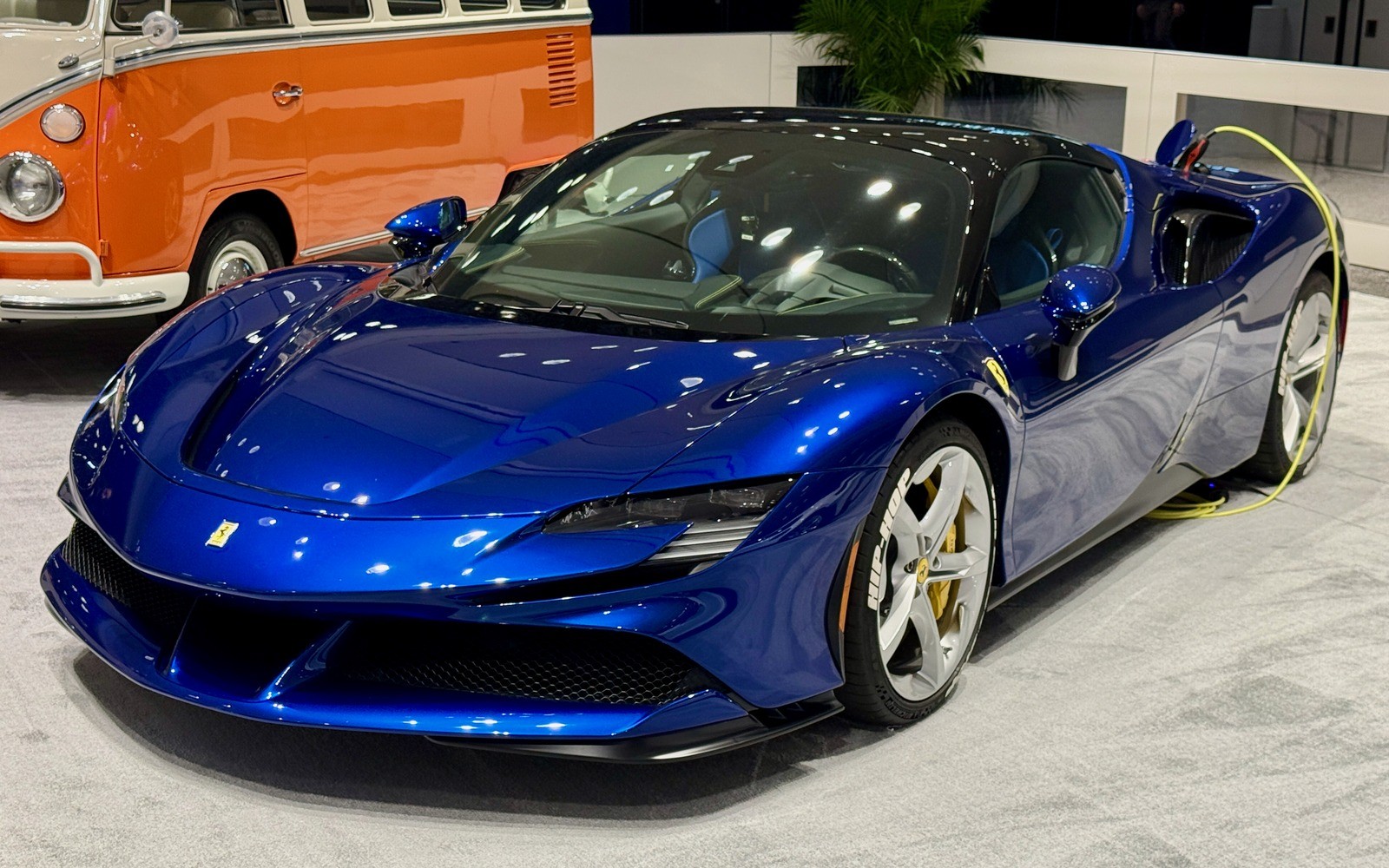
On 11 November a blue 2022 Ferrari SF90 Stradale with 357km on the clock sold at an online auction in Johannesburg for R10.1m, about $610,000. The seller was not the owner. It was a curator appointed by South Africa's Special Investigating Unit (SIU), which had the car frozen in September 2025, and the case behind the seizure is undecided. Here is why states sell seized cars early, what this one fetched and how to bid.
Why sell before the verdict
The car belongs to the MHR Maumela Family Trust, linked to the businessman Hangwani Morgan Maumela. It was one of several luxury vehicles covered by a preservation order the Special Tribunal granted on 25 September 2025, in the SIU's investigation into alleged corruption at Tembisa Hospital, where about R2bn is alleged to have been looted. The SIU's main application is still pending.
A parked supercar still costs money. The SIU put storage at R5,000 a month and insurance at R8,333.33 a month. Ferrari South Africa, where the car is kept, offered R9.5m for it, taking into account a battery replacement costing R104,857 and an estimated R408,000 to reinstate the warranty. The curator, Jacobus Gideon Louw van Wyk, asked the tribunal for permission to sell. The Maumela side argued the car would appreciate.
The tribunal's president, Judge Bernard Ngoepe, found no evidence of rapid depreciation, but no sign of enough appreciation to cover the running costs either. On 13 August he authorised a sale for no less than R9.5m, with the proceeds held in an interest-bearing trust account. The Pretoria High Court later dismissed an urgent application by Maumela and the trust's trustees to stop the auction.
What R10.1m bought
Bidding opened at R8m on 6 November and closed at R10.1m five days later. Against the court record, that is close to a fair price, not a steal:
- Against the April 2022 purchase price of R11,126,662: 9.2 per cent lower, four and a half years on.
- Against the two valuations before the tribunal, R10.2m and R10.165m: 1.0 and 0.6 per cent lower.
- Against Ferrari South Africa's offer of R9.5m, which was also the legal floor: 6.3 per cent, or R600,000, higher.
- Against the higher of two written offers filed by the Maumela side in July, R10,999,995: about R900,000 lower.
Some local coverage cited a market value of about R14m. The tribunal's two valuers put it roughly R3.8m lower.
The auction terms add a 7.5 per cent buyer's commission plus VAT. If VAT is charged on the commission at South Africa's 15 per cent rate, that makes 8.625 per cent: about R871,000 on R10.1m, for a total of about R10.97m, within 1.4 per cent of the April 2022 purchase price. Registering to bid cost R100,000, and bidders had to supply identity documents under the Financial Intelligence Centre Act.
Waiting has a price too. Storage and insurance alone come to R13,333 a month, or R160,000 a year, about 1.6 per cent of the sale price. At those rates the 13 and a half months since the preservation order cost about R180,000.
How America does it
In the United States the Marshals Service sells property forfeited in Department of Justice cases, from cars, boats and aircraft to jewellery, art and cryptocurrency. It runs hundreds of public online and live auctions a year through contracted auction houses. In fiscal 2025 it took in 9,973 assets and disposed of 12,381, ending the year with 24,179 on hand, and it paid $475m to victims of crime and other claimants.
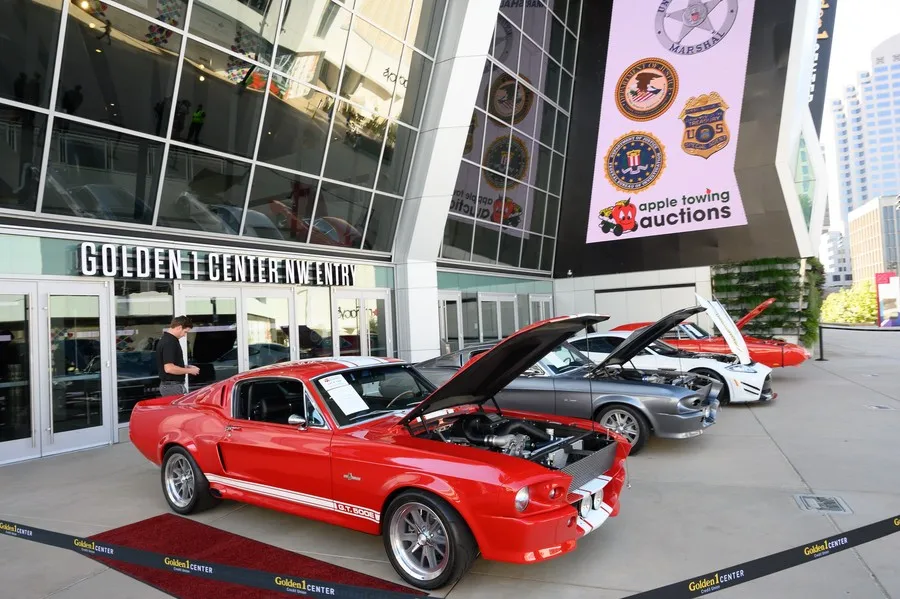
The closest parallel to the Ferrari is DC Solar. In October 2019 the Marshals auctioned 148 luxury and collector cars belonging to the company's owners, Jeff and Paulette Carpoff, in Woodland, California, for about $8.2m, an average of roughly $55,600 a car. At the time the owners had not been charged and had agreed to the sale because the cars were expensive to store. Both later pleaded guilty, and in November 2021 Jeff Carpoff was sentenced to 30 years in prison for what prosecutors called a billion-dollar Ponzi scheme, about two years after his cars were sold.
Britain's route: a bill, not a car
England, Wales and Northern Ireland lean on a different tool. After a conviction, the Crown Court can make a confiscation order: a sum the defendant must pay, usually within six months, from frozen assets or anything else they own, on pain of extra prison time. Separate civil powers let HMRC officers, police and others ask magistrates to forfeit cash, bank balances and certain listed assets without a conviction.
In the year to March 2026 these routes recovered £345.3m, of which £150.9m came from confiscation orders. Under the Asset Recovery Incentivisation Scheme, a share of what is recovered goes back to the agencies that recovered it.
How to bid
- Find the sale. The Marshals list their contract auctioneers on usmarshals.gov. In South Africa, court-ordered sales go through appointed auctioneers such as Bidders Choice.
- Expect checks. US buyers sign Form USM-621, certifying that they are not acting for the person the property was taken from. Defendants, most Justice Department staff and officers involved in the seizure are barred from bidding.
- Read the fees. Apple Auctioneering, one of the Marshals' contractors, charges no buyer's premium. The Ferrari's auctioneer charged 7.5 per cent plus VAT.
- Have the money ready. Apple requires payment in full within 48 hours by wire or cashier's cheque, and collection within 14 days. Miss either and the buyer forfeits car and money.
- Inspect first. Cars are sold as is, where is, with no warranty. The Ferrari had a single viewing day, on 10 November.
Our take
The headline price is the least surprising number here. The Ferrari did not go cheap: it fetched within about 1 per cent of two independent valuations and well above its legal floor. Seized does not mean half price.
The more important point is timing. Selling early protects the money, whoever wins. A car that costs R160,000 a year to store and insure, and whose warranty needs reinstating, loses value either way, while cash in a trust account earns interest. DC Solar followed the same logic: the cars were sold before any charge, and the money waited for the outcome.
The weak spot is price discovery. A Ferrari with 357km sold in a five-day online auction for about R900,000 less than a written offer filed in July. If the Maumela side wins its case, expect that gap to be argued over.
For buyers, any edge at these sales comes from friction rather than generosity: tight payment windows, no warranty, registration fees, identity checks and short viewing slots. That suits bidders who can inspect in person and wire the money within two days.
What to watch next: whether the curator sells the other preserved vehicles the same way, and how the SIU's main case ends.
Sources
- Special Investigating Unit, SIU welcomes Special Tribunal order authorising sale of Ferrari SF90 Stradale linked to Tembisa Hospital looting, via gov.za, 17 August 2026
- Special Tribunal, Van Wyk NO v Maumela Syndicate and others, GP 25/2025 B, 2026 ZAST 50, judgment of 13 August 2026
- Bidders Choice, Ferrari SF90 Stradale (2022), curator bonis instruction auction, auction listing and terms
- US Marshals Service, Asset forfeiture
- Apple Auctioneering, US Marshals general terms and conditions
- US Attorney's Office, Eastern District of California, DC Solar owner sentenced to 30 years in prison for billion-dollar Ponzi scheme, 9 November 2021, via FDIC Office of Inspector General
- Home Office, Asset recovery statistics, financial years ending 2021 to 2026: summary and user guide
- South African Revenue Service, Value-added tax
- European Central Bank, Euro foreign exchange reference rates, 11 November 2026 (rand-dollar conversion)
- SABC News, Hangwani Maumela's luxury Ferrari auctioned for R10million, 11 November 2026
- eNCA, Going, going sold: Maumela's Ferrari sells for R10m, 11 November 2026
- CBS Sacramento, Feds net more than $8M in auction of nearly 150 classic, luxury cars, October 2019
- Percentages, costs, averages and dollar conversions are The Graze's calculations from the figures above.