Pentagon denies its deputy steered weapons firms to a Goldman banker
Spokesman Sean Parnell said any claim that Deputy Secretary Steve Feinberg directed Lockheed Martin or RTX to use Goldman Sachs was 'categorically false', after a Bloomberg account said both companies hired his longtime banker.
By The Graze · November 17, 2026 · 6 min read
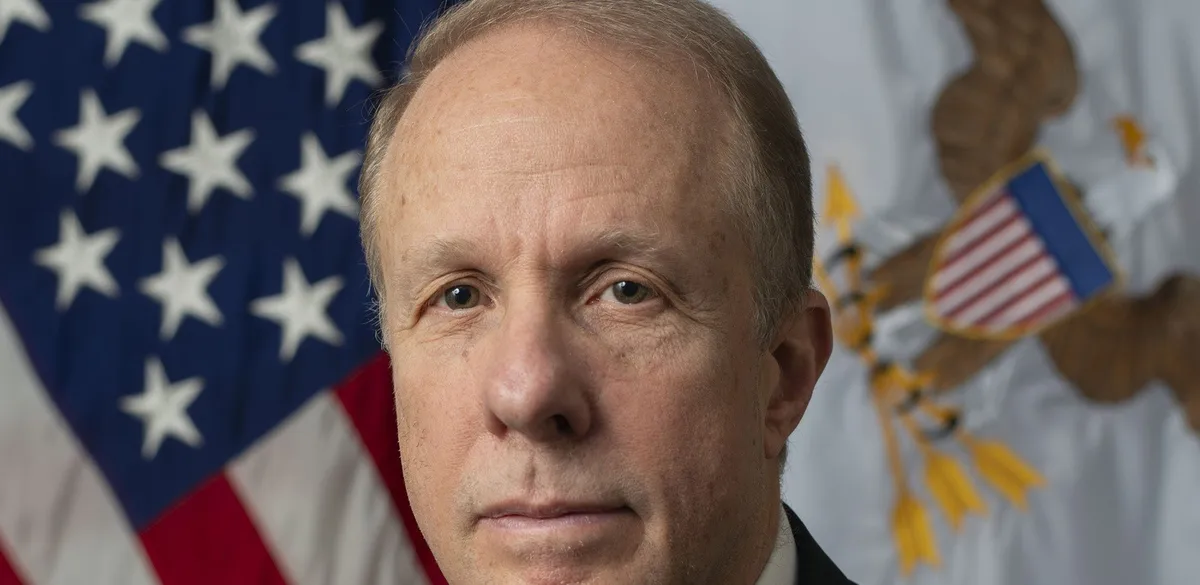
The Pentagon has called it "categorically false" that Steve Feinberg, the deputy secretary of war, directed Lockheed Martin or RTX to use a Goldman Sachs banker with whom he had longstanding ties. The denial was given to Al Jazeera on 16 November, after a Bloomberg account said both companies hired that banker during talks on some of the department's largest munitions awards.
The department's response
In a statement sent to Al Jazeera, Pentagon spokesman Sean Parnell said: "Any claim that the Deputy directed companies to use Goldman Sachs is categorically false. He worked with financial firms across the industry throughout his entire career." He added: "He has no favorites, and neither does the Department of War."
Deputy press secretary Jacob Bliss accused Bloomberg of preferring a "baseless smear" to the facts. "Despite the Department's categorical denial, Bloomberg appears more interested in advancing a baseless smear than establishing the facts. Your sources are playing you, and Bloomberg should know better," he told Al Jazeera. "The Deputy is a man of honor and integrity. Unfortunately, some would rather see him fail than succeed."
The denial does not appear to have been posted as a departmental release on the Department of War's site on 16 November, when the day's notices included routine contract announcements. The quotes above are from the statement as published by Al Jazeera.
What the account said
Al Jazeera, setting out the Bloomberg story, said Feinberg had guided Lockheed Martin and RTX towards Jim Donovan, a Goldman Sachs banker, during negotiations with the Pentagon, and that both companies hired Donovan after that suggestion. It said Bloomberg described Donovan as a longtime banker to Feinberg who had previously worked for Cerberus Capital Management, the investment firm Feinberg founded.
Those points, about a suggestion, a hiring and a prior working relationship, come from Bloomberg's anonymous sources as relayed by Al Jazeera. They are not in the official contract announcements opened for this piece. The Pentagon's statements deny that Feinberg directed companies to use Goldman Sachs. They do not, in the text published by Al Jazeera, say whether Lockheed Martin or RTX hired Donovan, or describe any past relationship between Feinberg and the banker.
The awards, in official figures
The size of the underlying munitions awards is a matter of public record.
On 29 July 2026 the US Army announced a modification to Lockheed Martin's Patriot Advanced Capability-3 Missile Segment Enhancement contract. The change, for $53,859,843,289, replaced a one-year undefinitized contract action with a seven-year one covering fiscal years 2026 to 2032, and raised the not-to-exceed ceiling to $58,620,843,289. No funds were obligated at the time of that award, the Army said. Lockheed's own statement the same day put the modification at up to $53.86 billion and the total multiyear value at $58.62 billion, including a $4.7 billion year-one award in April.
Raytheon, an RTX business, has also received a series of official munitions awards this year. On 17 August the Department of War announced a $22.9 billion US Navy contract to accelerate production of the Tomahawk missile. On 25 September it awarded a five-year contract, with two option years, valued up to $20.7 billion for AMRAAM missiles, in a release dated 28 September. On 1 October it announced a Navy award of $24.4 billion for Standard Missile-6 interceptors, again a five-year agreement with two option years. RTX's statement that day described the SM-6 figure as "valued up to $24.4 billion."
The official releases name the missiles, the ceilings and the dates. They do not name an outside banker.
Official munitions awards
| Award | Date | Official figure |
|---|---|---|
| Lockheed Martin, PAC-3 MSE, not-to-exceed ceiling | 29 July 2026 | $58,620,843,289 |
| Lockheed Martin, PAC-3 MSE, July modification | 29 July 2026 | $53,859,843,289 |
| RTX / Raytheon, Tomahawk | 17 August 2026 | $22.9 billion |
| RTX / Raytheon, AMRAAM, up to | 25 September 2026 | $20.7 billion |
| RTX / Raytheon, Standard Missile-6 | 1 October 2026 | $24.4 billion |
Who Feinberg is
Feinberg is the Department of War's chief operating officer. He was sworn in on 17 March 2025 as the 36th deputy secretary of defense, the official biography says, before the department's name was changed to the Department of War on 5 September 2025. The Senate had confirmed him three days earlier, on 14 March, by 59 votes to 40, with one senator not voting, according to the official roll call (vote 126 of the 119th Congress, first session).
He founded Cerberus Capital Management in 1992. Both his official biography and the firm's own site put its assets at approximately $70 billion. The biography says that, over the past decade, he led Cerberus to focus on the US defence industry and on investments that strengthen supply-chain integrity. From 2018 to January 2021 he chaired the President's Intelligence Advisory Board.
Our take
The denial is unusually blunt, and it is narrowly drawn. Parnell rejected the claim that Feinberg "directed" companies to use Goldman Sachs. A direction is a stronger thing than a suggestion. The Bloomberg account, as Al Jazeera set it out, was that Feinberg had guided or suggested, and that the companies then hired the banker. Those are different sentences. The departmental statements do not say whether Lockheed Martin or RTX did hire Donovan, which would be a fact about a commercial mandate, or whether Feinberg and Donovan had worked together at Cerberus. Leaving those points unaddressed lets a categorical denial sit beside an untested set of particulars.
The contracts themselves are public, and they are huge, but they are also less cash-in-the-door than a rounded headline can imply. The Army's PAC-3 action raised a not-to-exceed ceiling and obligated no funds at the moment it was announced. The AMRAAM award, and RTX's own description of the SM-6 deal, are "up to" figures on multi-year vehicles with option years. That does not make them small. It does mean the interesting question is less the rounded total than who sits in the room while those ceilings are negotiated, and on whose advice.
A Pentagon that answers a procurement story only in a statement to one outlet, and not on its own site, is asking the public to take the denial on trust. On awards of this size, the cleaner course would be to say, plainly, whether the companies used the banker and whether the deputy recused himself from any discussion that touched that relationship. Until that is on the record, the reader is left with a hard no to one verb, and silence on the rest.
Sources
- US Department of War, Steve Feinberg, Deputy Secretary of War (official biography)
- US Senate, Roll Call Vote 126, 119th Congress, 1st Session (14 March 2025)
- US Army, via DVIDS, U.S. Army Awards replacing a 1-Year Undefinitized Contract Action with a 7-Year Undefinitized Contract Action (29 July 2026)
- US Department of War, Department of War and RTX Accelerate Critical Munitions Production Through Navy Tomahawk Award (17 August 2026)
- US Department of War, Department of War and RTX Accelerate Advanced Medium-Range Air-to-Air Missile Production Through $20.7B Award (28 September 2026; contract awarded 25 September 2026)
- US Department of War, DoW and U.S. Navy Announce Contract With Raytheon to Accelerate Standard Missile-6 Production (1 October 2026)
- Lockheed Martin, Department of War Awards Lockheed Martin $58.62B for Multiyear PAC-3 MSE Production to Strengthen the Arsenal of Freedom (29 July 2026)
- Cerberus Capital Management, cerberus.com (firm description of assets)
- Al Jazeera, US Pentagon rejects allegations linking deputy to a Goldman Sachs banker (16 November 2026)