A Michelin chef defends McDonald's. Why the €4 burger is the hard problem
The chef who closed elBulli says a €4 hamburger is harder than a €20 wagyu one. McDonald's bought more than $6.4bn of US ingredients in 2023.
By The Graze · November 15, 2026 · 4 min read
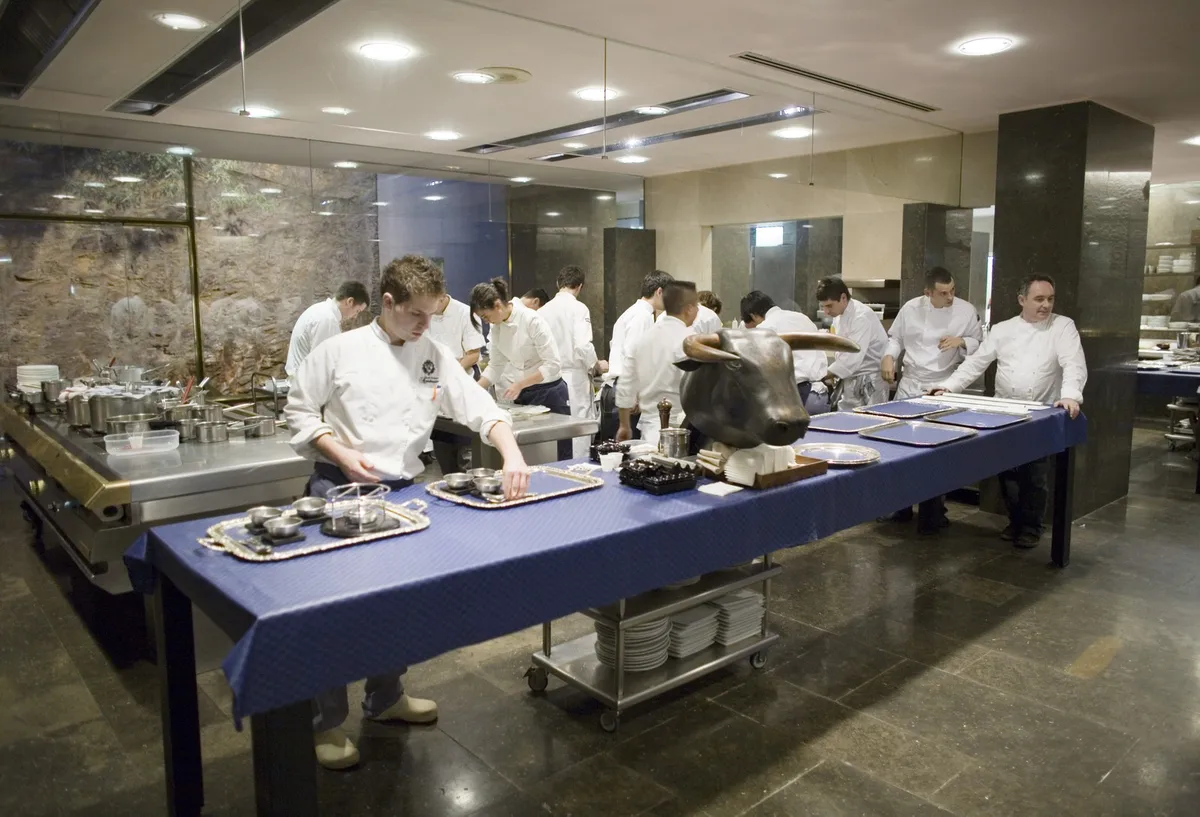
Ferran Adrià does not like McDonald's. He said so plainly, in a podcast recorded this month, 15 years after he closed elBulli, the three-star restaurant on the Catalan coast that was repeatedly named the best in the world. What he said next is the interesting part. He could not, at €4, make a better hamburger. A wagyu burger at €20 is easy. "Give me €20 to sell a hamburger," he said, "and I'll make you whatever you want." The clever ones who criticise should go and try it at four.
The hard problem is the price
The interview was with Fuera de Carta, an Argentine food podcast, and it has been circulating this month. Adrià was not delivering an endorsement. He was drawing a line that serious kitchens often blur: between what is difficult at a tasting-menu price and what is difficult when almost everyone has to eat.
"In Spain, I don't know about Argentina, but in Spain 95 per cent of people do not get to the end of the month in good shape," he said. "You cannot be populist." That 95 per cent is his figure, not a statistic from the national statistics office, and it is doing rhetorical work. The point underneath it does not need the number. Most people do not eat at restaurants that once held three Michelin stars. They eat where a meal costs what a meal can cost.
elBulli's official chronology records the third Michelin star in 1997 and the last dinner service on 30 June 2011. Restaurant Magazine, now the World's 50 Best, named it the world's best restaurant five times. Adrià did not spend those years making cheap hamburgers. He spent them inventing a way of cooking — foams, spheres, a menu of many small plates, a kitchen that closed for months to invent the next year's food — and then walked away at the top. It is that career, not a taste for fries, that makes his remark land.
He also likes, or at least respects, the fries. He knows they are frozen. He still finds them better than the fresh chips in places where the oil is tired and the potatoes come out greasy. "I have a lot of respect for them, truly," he said.
What it takes to taste the same
That is a technical compliment, and it is aimed at a machine built for sameness. McDonald's official account of its American fries is not romantic. The potatoes are real — Russet Burbank, Ranger Russet, Umatilla Russet and Shepody, the company says — peeled, cut and blanched by suppliers, then dried, partly fried and frozen. In the restaurants they are finished in a canola-blend oil, and salted. When the suppliers do the first fry, the oil blend contains beef flavouring, which is why the fries taste the way they do. Cook time and the amount of salt, a company fact sheet says, are carefully measured, "so they always taste hot and delicious."
The volumes behind that sentence are the real story. In 2023, according to the same official sheet, McDonald's bought more than $6.4bn of ingredients in the United States: 719 million lb of beef, 133 million lb of cheese, 2.6 billion lb of potatoes and nearly 2 billion eggs. It serves about 3.6 billion portions of fries a year in America, more than 1.6 billion lb of them. The 100 per cent beef patties have, the company says, been seasoned with salt and pepper since 1955.
| Item | Official figure |
|---|---|
| Ingredients bought in the US, 2023 | more than $6.4bn |
| Potatoes, 2023 | 2.6 billion lb |
| Beef, 2023 | 719 million lb |
| Cheese, 2023 | 133 million lb |
| Eggs, 2023 | nearly 2 billion |
| Fries served in the US, a year | about 3.6 billion portions |
Compiled by The Graze from McDonald's US Food Quality Fact Sheet, 2025. Figures are as published by the company.
This is not cuisine in the elBulli sense. It is process control: potato variety, blanch, fry, freeze, fry again, salt, repeat, tens of millions of times a day. Adrià's career was also process control, pointed at a different target. That is why a chef who built the most elaborate restaurant of his generation can look at a frozen chip and recognise the work.
Our take
The clip is being shared as if a high priest had blessed a burger. He did not. He said he does not like McDonald's, and then he said something more useful: that the hard problem is not the expensive hamburger. Anyone with wagyu and a €20 selling price can make a good one. The hard problem is a €4 hamburger that is edible, the same, and profitable in thousands of rooms at once.
Respect is the right word, and it is not the same as love. Frozen fries beaten in oil that is kept at the right temperature will often beat "fresh" fries cooked in oil that has been reused all afternoon. That is not a paradox. It is kitchen hygiene dressed up as a culture war.
Adrià is allowed to find the industrial fryer more impressive than the rustic one. He spent decades obsessing over process. The mistake is to treat the remark as a vibe, or as a lecture about how most Spaniards live. The 95 per cent line is a flourish. The €4 test is the thought worth keeping. If you cannot do it at that price, you do not get to be quite so sure you are better.
Sources
- Fuera de Carta, FERRAN ADRIÀ | El Bulli: The chef who closed the best restaurant in the world (4 November 2026)
- elBullifoundation, Chronology
- McDonald's, US Food Quality Fact Sheet (2025)
- McDonald's, Snacks and Sides FAQs
- La Vanguardia, Ferran Adrià: "No me gusta McDonald's pero le tengo mucho respeto: a 4 euros no sabría hacerlo mejor" (5 November 2026)
- ABC, Ferran Adrià, sobre McDonald's: "No me gusta pero tengo mucho respeto, porque yo a cuatro euros no sabría hacerlo mejor" (9 November 2026)