Airlines once sold first class for life. The buyers won the bet
In 2019 Tom Stuker took 373 flights and covered 1.46 million miles on United Airlines. Bought for cash, those tickets would have cost about $2.44 million. He paid no fare for any of them, because in 1990 he had bought the right to fly first class for the rest of his life.
Stuker is the best-known holder of a product airlines no longer sell: "forever", paid for up front. How those deals played out is unusually well documented, because one of them ended up in federal court.
How an airline sells forever
American Airlines went first. In 1981 it launched the unlimited AAirpass, which gave its holder first-class travel on any American flight for life for $250,000. A companion feature, letting the holder bring one person on every flight, cost another $150,000.
The buyers were not the ones American had in mind. Robert Crandall, who ran the airline, later told The Hustle that the idea was for firms to buy the passes for their top performers. "But, as usual, the public is way smarter than any corporation," he said. "People immediately figured out we'd made a mistake pricing-wise." Michael Dell and Willie Mays were among the holders. American sold only 65 or so unlimited passes in all.
Then the price climbed. A pass with a companion cost $600,000 by 1990 and $1.01 million by 1993. In 1994 American stopped selling them. It tried once more, in the 2004 Neiman Marcus Christmas catalogue, at $3 million. Nobody bought one.
United sold its own version. Stuker, a car-dealership consultant, paid $290,000 for a lifetime first-class pass in 1990 and soon added a companion pass, taking his outlay to roughly half a million dollars. He has called it the best investment of his life.
The flyer United named a jumbo after
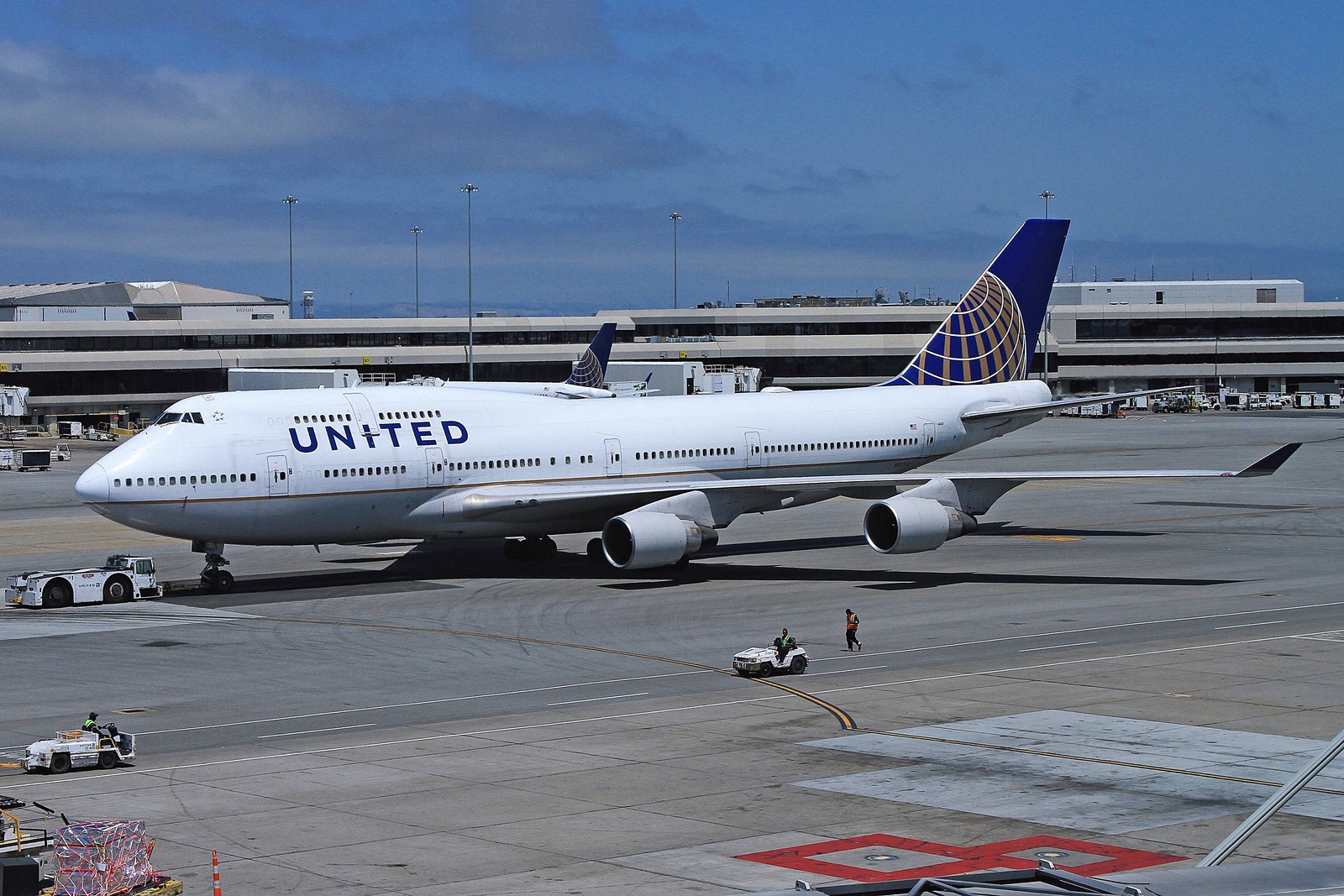
United treated Stuker as a trophy. In July 2011 he became the first customer to fly 10 million miles in its Mileage Plus programme, which he had joined in 1982. By United's count he had taken 5,962 flights by then. Its chief executive met him off the plane at O'Hare, and the airline gave him the first Titanium Mileage Plus card and named a Boeing 747-400, registration N127UA, after him.
He kept going. On 17 May 2024 a Newark to San Francisco flight took him past 24 million miles. The frequent-flyer miles he earned along the way, under the old distance-based rules, paid for hotel suites, cruises, $50,000 of Walmart gift cards in a single day and a background part in an episode of Seinfeld, won at a charity auction with a bid of 451,000 miles. United now awards miles by fare paid rather than distance flown, so his pass flights are reported to earn him none. Whether the pass is still in use today is not on the public record, and The Graze could not confirm it.
The flyer American fought in court
Steven Rothstein, a financier, bought his AAirpass in 1987 for $250,000 and added the companion feature two years later for $150,000. For more than 20 years he was one of American's most frequent flyers, accumulating more than 30 million miles.
American's view of such customers changed. An internal investigator concluded that Rothstein and a few other heavy users were costing it more than $1 million a year. On 13 December 2008 the airline terminated Rothstein's pass, and in March 2009 he sued.
The court record shows why he lost. Rothstein admitted booking companion seats under invented names, such as "Steven Rothstein, Jr." and "Bag Rothstein", so that he could sit beside an empty seat. The record says he used the first name at least 41 times between December 2003 and April 2004, when American warned him he was not entitled to book an empty seat. Paragraph 12 of his contract let American revoke a pass, without refund, if it determined the pass had been "fraudulently used".
On 30 June 2011 Judge Virginia Kendall of the federal court in Chicago granted American summary judgment. The clause was one-sided, she wrote, but "not grossly one-sided or oppressive". Rothstein was an experienced businessman who had negotiated other terms of the deal and could have insisted that any fraud accusation go to an independent arbitrator.
The numbers, worked through
The table restates each price in today's money using the US consumer price index: the annual average for the year of purchase against October 2026.
| Pass | Year | Price | In October 2026 dollars |
|---|---|---|---|
| AAirpass at launch | 1981 | $250,000 | about $928,000 |
| Rothstein's AAirpass and companion | 1987 and 1989 | $400,000 | about $1.15 million |
| AAirpass with companion, list price | 1990 | $600,000 | about $1.55 million |
| Stuker's United pass and companion | 1990 | about $500,000 | about $1.29 million |
| AAirpass with companion, list price | 1993 | $1.01 million | about $2.36 million |
| AAirpass in the Neiman Marcus catalogue | 2004 | $3 million | about $5.4 million, no buyer |
Now take Stuker's 2019. $2.44 million across 373 flights is about $6,500 a flight, or $1.67 a mile, on trips averaging about 3,900 miles, roughly Chicago to London. That one year was worth almost five times what he paid for the pass and companion.
Count all 24 million of his United miles, including those flown before 1990, and the pass cost him about two cents a mile in 1990 money. Even if only half of those miles were flown on the pass, it would be about four cents.
Our take
A lifetime pass is an insurance policy written backwards. The seller collects the premium once and pays out for decades, and the customers keenest to buy are the ones who expect to use it most. Economists call that adverse selection. American's price list, which had reached $1.01 million with a companion by 1993 before it gave up, is what that looks like in practice.
Time worked against the airlines too. They were paid once, at the price of the year of sale, while each pass went on filling first-class seats for decades.
The Rothstein case adds the clause buyers forget. "Lifetime" meant the life of the contract, and the contract let the seller decide what counted as fraud. The court enforced it, noting that an experienced businessman had signed it.
The lesson travels beyond airlines. Anyone offered a lifetime membership, whether a lounge, a club or a software licence, should judge it by the termination clause and the seller's balance sheet, not by the word "lifetime". The best deal in the world is worth exactly as much as the seller's willingness to keep honouring it.
Sources
- US District Court for the Northern District of Illinois, Rothstein v. American Airlines, Inc., No. 09 C 2770, memorandum opinion and order (30 June 2011), via GovInfo
- United Airlines, United Airlines customer Tom Stuker to fly 10 millionth mile this Saturday (8 July 2011), PR Newswire
- US Bureau of Labor Statistics, Consumer price index for all urban consumers, all items (CUUR0000SA0)
- The Guardian, New Jersey man flies 23m miles with lifetime United pass (25 June 2023)
- The Guardian, My father had a lifelong ticket to fly anywhere. Then they took it away (20 September 2019), with Narratively
- Simple Flying, American Airlines' AAirpass: the unlimited flight pass that didn't work (April 2020)
- ABC News, Unlimited travel: deals too costly for airlines? (7 May 2012)
- One Mile at a Time, Tom Stuker, United Airlines' most frequent flyer, hits 24 million miles (May 2024)
- Live and Let's Fly, Tom Stuker surpasses 24 million miles on United Airlines (18 May 2024)
- Global Traveler, Talking Travel with Tom Stuker (July 2023)
- AirlineReporter, United Airlines frequent flyer hits 10 million miles (July 2011)
- Table: The Graze, calculated from the BLS index and the prices above