
Ask a chatbot where to invest and it says buy the index fund. Investors are listening
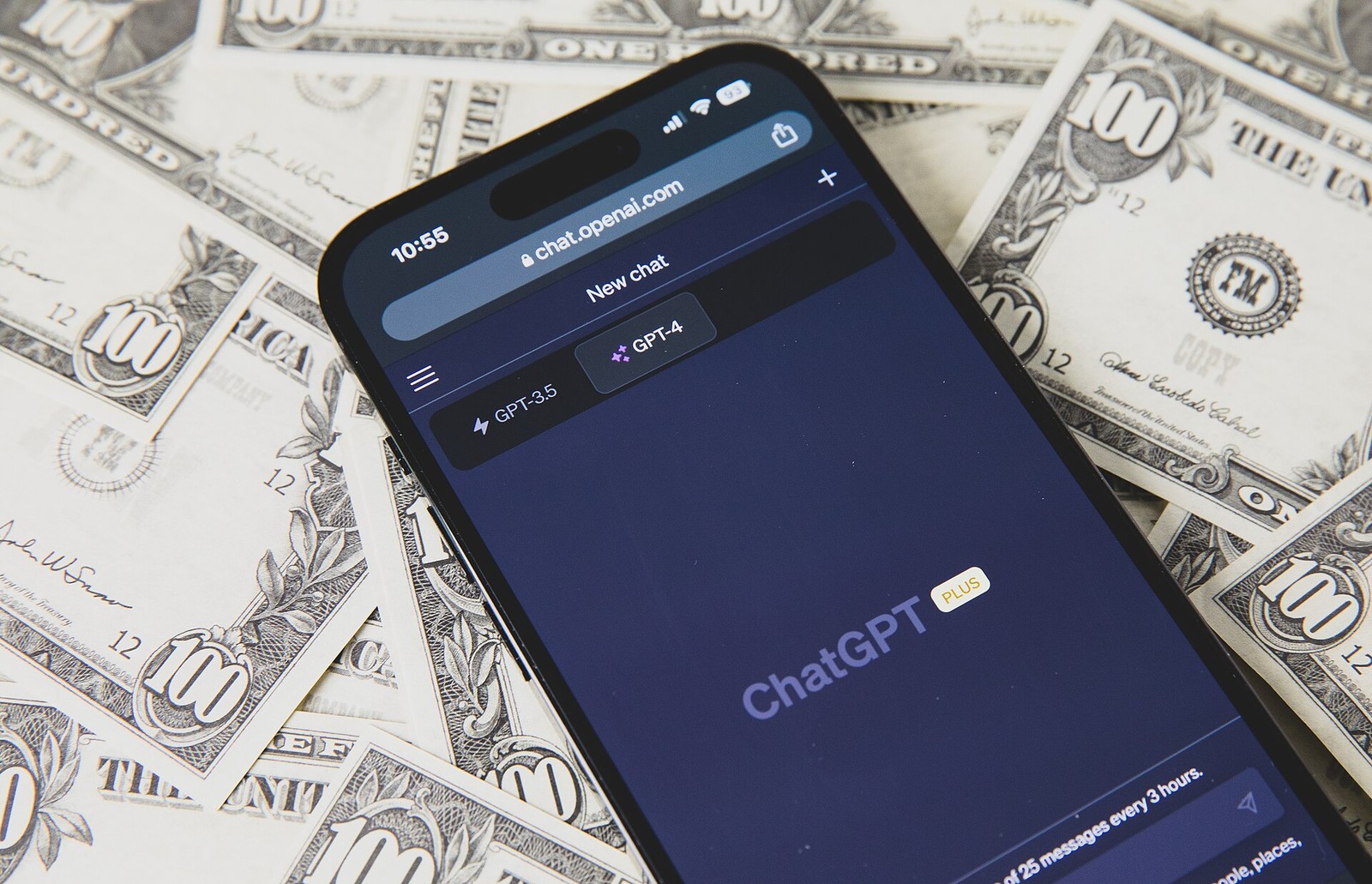
Ask a chatbot what to do with your money and it tends to give the same answer: buy a broad, cheap index fund. A new study of real brokerage records finds that investors do as they are told, and end up with better diversified portfolios.
What the study measured
Valerie Baldinger, a finance PhD student at New York University's Stern School of Business, worked with de-identified data from Mezzi, a US wealth-management app that added an AI assistant in November 2024. Questions typed into the app are answered by OpenAI's ChatGPT and Google's Gemini models, and because customers link their brokerage, retirement and bank accounts, every question and answer can be matched to the trades that followed. Her working paper, dated 8 November 2026, covers 1,854 equity-owning investors and 69,598 prompts, with data running to July 2026.
These are not typical savers. The median portfolio in the sample is about $556,000, against $155,000 for stock-owning households in the Federal Reserve's 2022 Survey of Consumer Finances. Three in four hold more than one individual stock, and the median stock picker owns 13 names.
What the chatbots said
The machines pushed funds far harder than the people asking. Investors raised buying an ETF or mutual fund in 3.5% of their prompts; 18% of the AI answers recommended buying one. Of the investors who received any buy advice, 96.9% were told at least once to buy a fund, while 48% were ever told to buy a single stock.
The advice was also strikingly uniform. Across seven ChatGPT and Gemini models, each model's ten most recommended tickers reached, on average, 71.5% of the investors who got a ticker-level suggestion. Vanguard's Total Stock Market ETF, ticker VTI, was the most widely recommended name for six of the seven models. Within its fund category, VTI drew 53.9% of the recommendations but holds 15.8% of the category's assets.
What investors did
They listened. In 36.2% of the answers containing buy advice, the investor bought something recommended within ten trading days. Comparing investors before and after they started using the assistant, the paper finds that adoption raised the passive-fund share of new investment by 7.6 percentage points and of month-end holdings by 2.73 points. There was no sign that people offset the shift by buying riskier stocks, and the funds they bought carried lower fees.
The strongest lever was personalisation. Answers that drew on the investor's own holdings were followed more often: a one-standard-deviation rise in portfolio personalisation lifted implementation by 11.9 percentage points.
The numbers, worked through
The paper scores portfolios by "return loss", a measure from Calvet, Campbell and Sodini: the expected return an investor gives up by holding their portfolio instead of an efficient one with the same risk. Before using AI, the sample's average return loss was 2.36% a year. Adoption cut it by 0.43 points on average, and by 1.01 points for the less diversified half, whose starting figure was 4.07%.
Applied to a $556,000 portfolio, the sample median, as an illustration:
| Investors | Return loss before AI | Change after AI | Expected return forgone on $556,000 a year |
|---|---|---|---|
| All adopters | 2.36% | -0.43 points | About $13,100 before, about $2,400 a year less after |
| Less diversified half | 4.07% | -1.01 points | About $22,600 before, about $5,600 a year less after |
These are expected returns lost to under-diversification, not realised gains, and the second row applies the median of the whole sample to one half of it.
How it compares
The paper sets its results against earlier studies of other technologies that reached household investors:
| Technology | Change in fund share of holdings | Change in return loss | Change in Sharpe ratio |
|---|---|---|---|
| Broadband internet (Norway) | +3.08 points | -34 bp a year | +0.0025 |
| Smartphone trading (two German banks) | Not measured | Not measured | -0.142 |
| Vanguard robo-adviser | +35 points | Not measured | +0.053 |
| Generative AI (this study) | +2.73 points | -43.2 bp a year | +0.0068 |
The paper places the chatbot effect between those of broadband internet and a full robo-adviser. Unlike a robo-adviser, the chatbot executes nothing; the investor has to place every trade.
The advice the bots give is also what the data support. In S&P Dow Jones Indices' latest scorecard, 67% of actively managed large-cap US funds trailed the S&P 500 in the first half of 2026, after 79% did so in 2025. Arpit Gupta, the NYU Stern finance professor who chairs Baldinger's committee, put the history bluntly: "For decades, we finance professors have tried to get the public to invest in diversified index funds rather than pick and choose individual stocks. The profession has had limited success, to put it mildly."
Our take
The surprise is not that chatbots recommend index funds. That advice has been free on every personal-finance page for decades. The surprise is that people act on it when it arrives wrapped in their own numbers. Personalisation, not wisdom, did the persuading here, and that should worry as much as it reassures. The same engine that talked these investors out of their 13-stock portfolios would sell a bad idea just as smoothly if the model, or the company tuning it, leaned the other way.
Second, uniform advice moves money in one direction. If millions of people ask the same few models and hear "buy VTI", retail cash herds into a handful of tickers, on top of the shift to passive investing that is already under way. Good for each saver, less obviously good for how markets set prices.
Third, read the caveats. The sample is wealthy and active and comes from one app. The author discloses that she was an unpaid contractor for Mezzi, with no financial interest. And Mezzi's homepage already advertises "15% better risk-adjusted returns" from an "NYU study". Its own footnote says that figure is worked out from numbers in an August 2026 working paper by the same author, is not a separately reported estimate and is not a claim about members' actual returns. Read the paper, not the banner.
Regulators' advice still stands: the SEC, FINRA and NASAA, the association of state securities regulators, warn investors not to rely solely on AI-generated information, which can be faulty or "completely made up". What to watch: whether the big brokers build this into their own apps, and how the paper fares in peer review.
Sources
- Valerie Baldinger, Generative AI and retail investment, working paper, NYU Stern School of Business, 8 November 2026
- Calvet, Campbell and Sodini, Down or out: assessing the welfare costs of household investment mistakes, NBER working paper 12030
- S&P Dow Jones Indices, SPIVA U.S. Mid-Year 2026, 17 September 2026
- SEC Office of Investor Education and Advocacy, NASAA and FINRA, Artificial intelligence (AI) and investment fraud: investor alert, 25 January 2024
- Mezzi, homepage and study disclosure
- Arpit Gupta, Your portfolio on AI, Arpitrage, 9 November 2026
- Tables: The Graze, from the paper's Tables 7, A.1 and G.1 and the sources above