One man has eaten more than 35,000 Big Macs since 1972. What his burger says about inflation
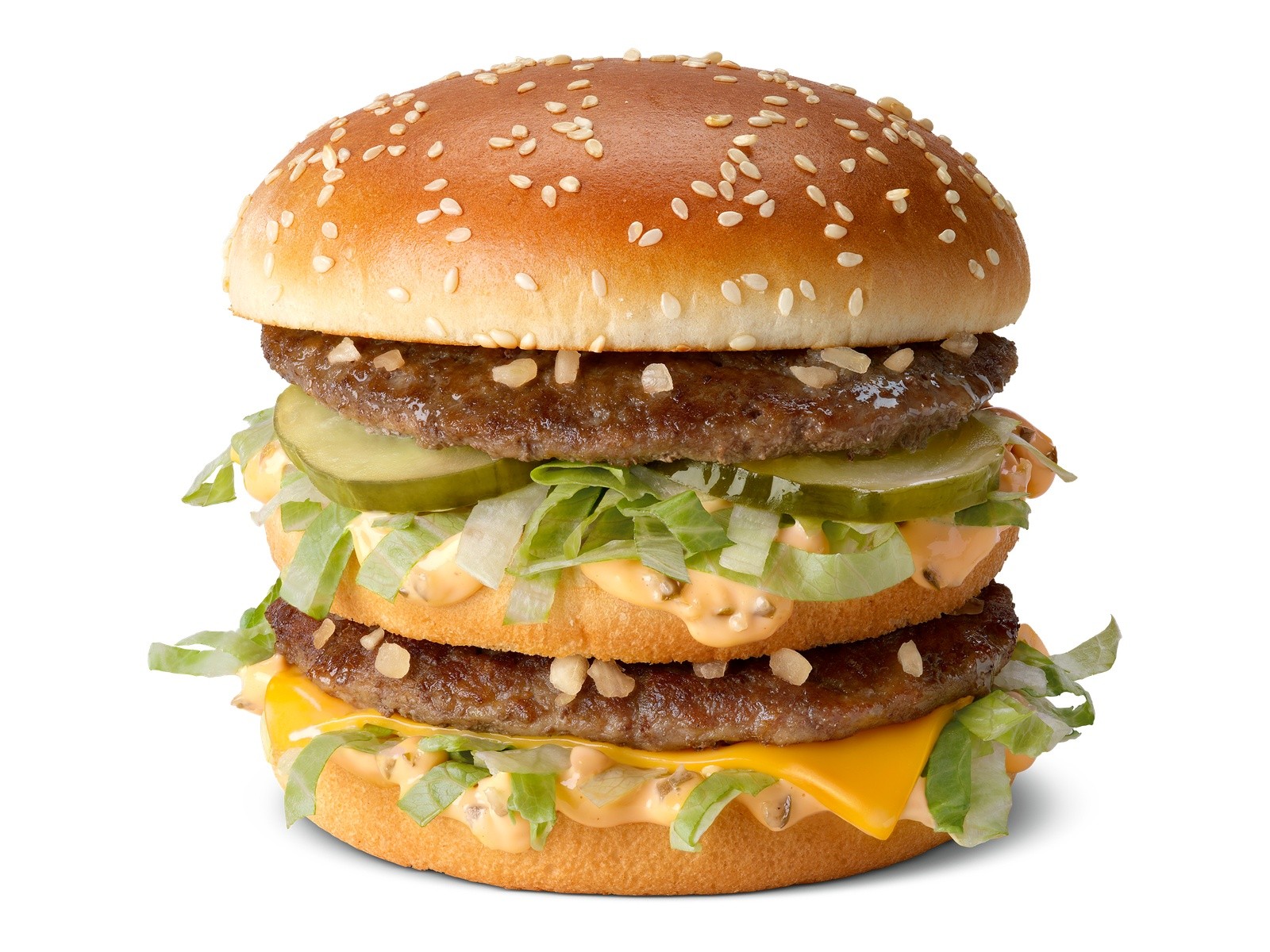
On 17 May 1972, a young man in Fond du Lac, Wisconsin, bought his first Big Macs, threw the cartons on the back seat and started counting. Don Gorske has not stopped. Guinness World Records lists him as the holder of the record for the most Big Macs eaten in a lifetime, and in March he told the Guardian his tally stood at 35,746.
More than half a century of the same order makes him an accidental price index. His habit raises the question that comes back every time a fast-food bill goes viral: has the Big Mac really become expensive, or has the dollar simply shrunk?
The man and the count
Guinness first recognised Gorske in 1999 and certified 35,000 Big Macs as of 15 March 2025. Its February 2024 update had him at 34,128, after 728 in 2023, or about two a day. He told Guinness he once ate up to nine a day; now it is one for lunch and one for dinner, bought twice a week in batches and reheated at home. From 1973 to 1981 he ate one meal a day that was not a Big Mac, a promise to his worried mother.
He keeps the cartons and the receipts. The cartons filled his attic by 2006 and now fill his basement, he told the Guardian. Worked through, 35,746 Big Macs over the 19,668 days from his first to that interview comes to 1.82 a day.
What a Big Mac cost in 1972
There is no single national price to look up. McDonald's franchisees set their own menu prices, which is why the company talks about averages. Accounts from 1972 put a Big Mac at 57 to 65 cents: 65 cents in a newspaper columnist's list of spring 1972 McDonald's prices, and 57 cents in the memory of a writer who worked a McDonald's counter in 1971 and 1972.
The Bureau of Labor Statistics consumer price index stood at 41.6 in May 1972 and 337.511 in October 2026. On that measure, 57 to 65 cents is $4.62 to $5.27 in today's money.
The modern figures come from two places. In May 2024, McDonald's USA published its own averages to rebut viral claims that prices had doubled: a Big Mac averaged $4.39 in 2019 and $5.29 in 2024. The Economist's Big Mac index, which since July 2022 uses a price supplied by McDonald's and includes tax, put the US Big Mac at $6.22 in July 2026.
The Big Mac against inflation and wages
The table converts each price into October 2026 dollars and into minutes of work at the BLS average hourly wage for production and nonsupervisory workers at the time.
| Date and source | Price then | In October 2026 dollars | Minutes of work |
|---|---|---|---|
| Spring 1972, menus as recalled | 57 to 65 cents | $4.62 to $5.27 | 9 to 10 |
| 2019, McDonald's US average | $4.39 | $5.80 | 11.2 |
| January 2020, Big Mac index | $4.82 | $6.31 | 12.1 |
| 2024, McDonald's US average | $5.29 | $5.68 | 10.6 |
| July 2026, Big Mac index | $6.22 | $6.29 | 11.5 |
The hourly wages used are $3.88 for May 1972, $23.51 for 2019, $23.91 for January 2020, $29.97 for May 2024 and $32.42 for July 2026.
Over 54 years the burger has run modestly ahead of the dollar: by 8% to 36% in real terms, depending on which then-and-now prices you pair. Measured in work, it has barely moved, from 9 or 10 minutes of pay in 1972 to between 10.6 and 11.5 minutes in 2024 and 2026. The 1972 accounts do not say whether tax was included; the index price does include it. By McDonald's own averages, the Big Mac was slightly cheaper in real terms in 2024 than in 2019.
Where the price rises went
From January 2020 to October 2026 the overall consumer price index rose 30.8%. Food away from home rose 38.6%, and limited service meals and snacks, the BLS category that includes fast food, rose 41.4%. The Big Mac index price rose 29% between January 2020 and July 2026, almost exactly in line with overall inflation over the same months, though the index changed its US price source in 2022.
McDonald's 2024 document shows where the rest went. Between 2019 and 2024 the Big Mac rose 21%, but a medium fries went from $2.29 to $3.29, up 44%, and a Big Mac meal from $7.29 to $9.29. The company also wrote that "the average price of McDonald's menu items is up ~40% over the past five years", in line with crew wages up about 40% and food and paper costs up about 35%.
Visits are the weak spot. In the third quarter of 2026, McDonald's US comparable sales fell 0.2%, as fewer visits were largely offset by bigger bills. Chris Kempczinski, the chief executive, said the company was "encouraged by improvement as the quarter progressed following our intervention on value". Its value menu had already been expanded, with an Under $3 Menu from 21 April offering at least ten items such as the McChicken, McDouble and small fries, alongside $5 and $6 meal deals at participating restaurants.
The index, briefly
The Economist invented the Big Mac index in 1986 as "a lighthearted guide" to whether currencies are at their correct level. In July 2026 the priciest Big Mac in its data was in Switzerland, at $9.04, and the cheapest in Indonesia, at $2.38. The magazine itself says "burgernomics was never intended as a precise gauge" of currency misalignment.
Our take
The Big Mac is the most-watched price in fast food, and the numbers show it. It is the burger on The Economist's index, in the viral posts and in the figures McDonald's chose to publish in 2024. Over 54 years it has tracked the dollar closely, and it costs only a minute or two more of work than it did in 1972.
The squeeze since 2020 is real, but it sits elsewhere: in fries, meals and the menu as a whole, which McDonald's says rose about 40% in five years while its signature burger rose 21%. Whether by design or not, that is a familiar retail pattern. Keep the price everyone checks steady and recover costs on the items fewer people compare.
Gorske's own habit makes the point. Two Big Macs a day, his usual now, would have cost about $475 a year at 65 cents in 1972, or roughly $3,850 in today's money. Two a day at the index's $6.22 comes to about $4,540. His burger bill has risen in real terms, but by far less than a viral receipt suggests.
What to watch: visit counts. The third quarter showed fewer customers paying more per visit, which is not a pattern a chain can sustain for long. If the Under $3 Menu brings traffic back without the Big Mac price moving much, the anchor holds. If it does not, the pressure may move to the burger itself.
Sources
- Guinness World Records, Most Big Mac burgers eaten in a lifetime (35,000 as of 15 March 2025)
- Guinness World Records, Sanj Atwal, 70-year-old Don Gorske extends record after eating 34,000th Big Mac (29 February 2024)
- McDonald's USA, U.S. pricing: myths vs. facts (29 May 2024)
- McDonald's Corporation, McDonald's reports third quarter 2026 results (4 November 2026)
- McDonald's USA, McDonald's USA introduces new Under $3 Menu and $4 Breakfast Meal Deal to the McValue Menu (2 April 2026), via PR Newswire
- The Economist, The Big Mac index (updated 30 July 2026) and the index data and methodology
- US Bureau of Labor Statistics, consumer price index for all urban consumers: all items, food away from home and limited service meals and snacks; average hourly earnings of production and nonsupervisory employees (data read 12 November 2026)
- The Guardian, Ramon Antonio Vargas, Record-setting Big Mac eater underwhelmed by McDonald's new Big Arch burger (23 March 2026)
- The Guardian, Ramon Antonio Vargas, Meet the US man who has eaten a record-extending 35,000 burgers (26 March 2025)
- Restaurant Dive, McDonald's disputes claims prices have risen 100% (30 May 2024)
- Muddy River News, Steve Eighinger, Where were you in '72, or once upon a time when a Big Mac was 65 cents (23 March 2022)
- HumbleDollar, Larry Sayler, Fries with that? (7 May 2022)
- Table and worked figures: The Graze, calculated from the prices, price indexes and wages above