Audi says touchscreens have gone as far as they'll go. Buttons are coming back
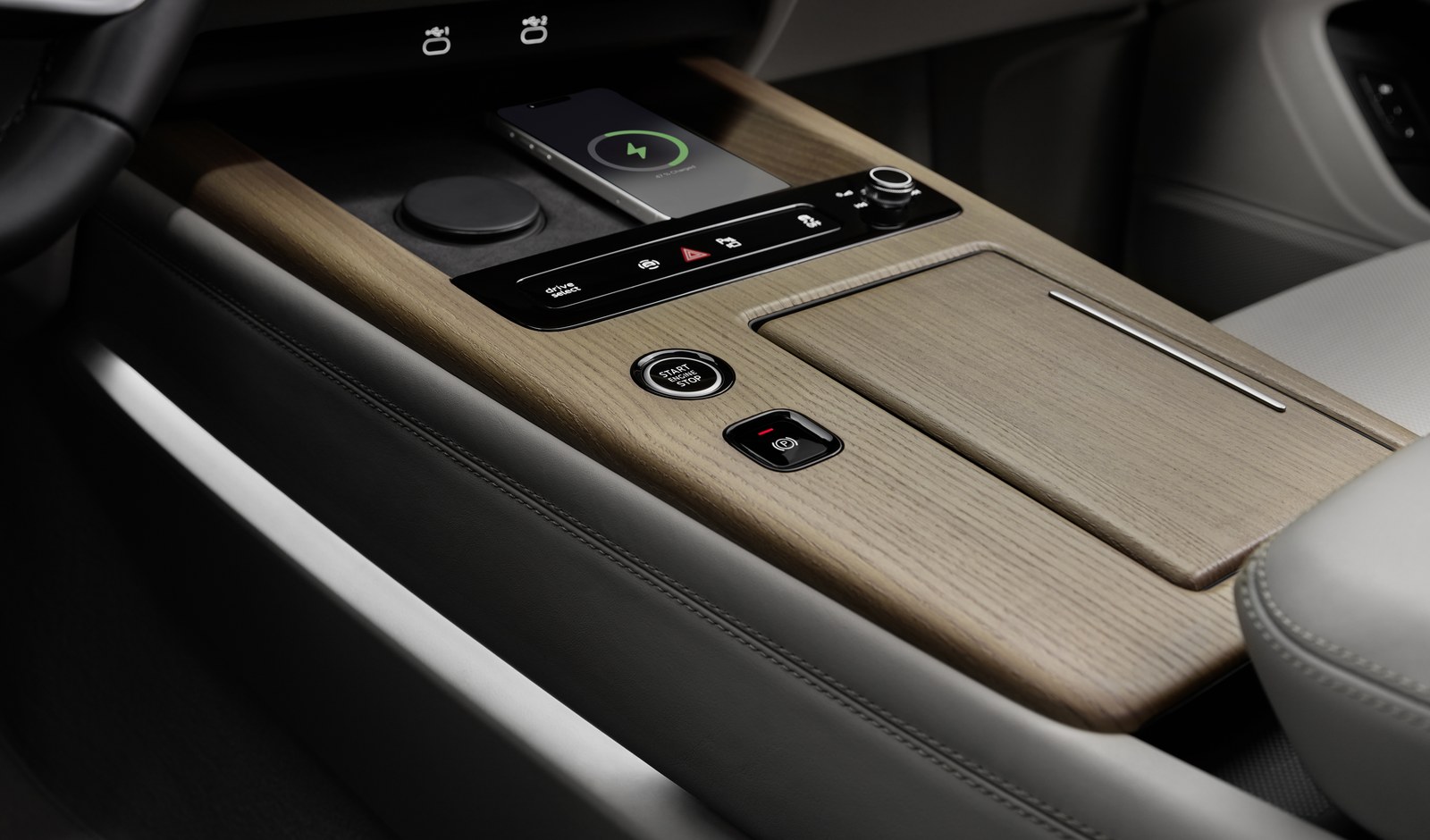
Audi of America's product chief says the company has taken touchscreens as far as they will go, and that mechanical controls are coming back. That is not only a mood. Euro NCAP's 2026 tests now reward cars that put basic functions on buttons and stalks, and the new Audi Q7 scored full marks for those essential controls.
What Audi of America said
Filip Brabec, senior vice president of product management at Audi of America, was speaking on The Drivecast, the podcast of The Drive, when he was asked whether screens in cars had peaked and whether real controls would return. "I think we've again gone as far as we will possibly go," he said. "I think that we will see some correction in that trend."
The "again" matters. Audi, like much of the Volkswagen Group, has spent years moving climate, volume and even some door functions onto screens, a shift Brabec linked in part to China, electric cars, and the fact that Audi of America "don't always have the strongest voice depending on what car is going where." The direction from here, he said, is the other way. "The general tendency is definitely to more mechanical controls. We absolutely view that as the right thing."
Some of that hardware is already in current cars. "The rollers on the steering wheel are maybe only the beginning, you're gonna see more." The next generation of design, which he called Radical Next, is being developed with Massimo Frascella and is meant to put "the right placement of the right controls" and "go back to basics and to clarity." A related interior philosophy, Interior Next, is supposed to make the technology "almost in the background." Brabec said the company is looking at more climate-control buttons and at door controls, and that principles already being applied on the Q7 and the Q9 will be added to existing interiors "in a very, very near future," not only on the centre console. He did not give a date or a full list of models.
The Drive's write-up ties the long-term look to two show cars, the Concept C and the Nuvolari. Those are design studies, not a catalogue of 2027 buttons.
Why the testers are pushing the same way
Euro NCAP, the European crash-test body, made the point official in its 2026 protocols. Under the Safe Driving section, indicators, wipers and washer, hazard lights, the horn and the eCall emergency button are supposed to be operated by a direct physical control, not buried in a touchscreen menu. In a November round of results, the organisation said some manufacturers "are making a steady return in favour of buttons and switches for basic functions." The new Audi Q7 scored 90 percent overall for driving controls: 100 percent for essential tasks and 80 percent for comfort and infotainment. Euro NCAP described the Q7's buttons and stalks as "clearly visible and ergonomically sited," and said Audi, "which has previously been criticised for doing away with buttons and switches," had "taken the initiative to reinstate physical buttons." The Kia EV2 also scored well. The XPENG X9, by contrast, scored only 20 percent for primary driving controls because it leans on a central screen. All three cars still earned five stars overall.
The rationale is distraction. Euro NCAP says the change is "partly in response to consumer criticism of too many day-to-day driving controls being embedded within touchscreen menus, which can be needlessly fiddly, and which research has shown has a higher distraction potential for a driver compared to physical buttons." In a statement issued with the results, the organisation said it applauded Audi and Kia "for taking a more common-sense approach."
Our take
This is a rare case of a car company, a magazine interview and a safety body pointing in the same direction. Brabec is not promising a return to a 1990s dashboard tomorrow. He is saying the screen era has hit a limit, that steering-wheel rollers are a start, and that climate and door controls will get a more mechanical treatment, first on newer models and then, he says, on some cars already on sale. Euro NCAP has given that instinct a score. The Q7's perfect mark for essential controls is the evidence that Ingolstadt has already moved, at least on one important model.
The caveat is the one Brabec offered himself. Audi of America is part of a global product plan, and it does not always win the argument about what a given car gets. A philosophy called Interior Next is still a slogan until it is a row of buttons you can find in the dark. If the company means it, the next interiors will be less of a tablet on wheels and more of a car again. Drivers have been asking for that for years. The testers have now made it worth points.
Sources
- The Drive, Audi Says Touchscreens Have Gone as Far as They'll Go. Buttons Are Coming Back (November 2026), quoting Filip Brabec on The Drivecast
- Euro NCAP, Buttons are back for basic functions (2026), including the Audi Q7's driving-control scores
- Global NCAP, Keep it simple: Buttons back for basic functions (2026)