
Alphabet is burning cash and selling shares. What the AI building boom is costing the tech giants
Alphabet's free cash flow was negative in the second and third quarters, and it has raised more than $140bn from shares, preferred stock and bonds this year while halting buybacks. Amazon and Meta are borrowing too.
By The Graze · November 15, 2026 · 5 min read
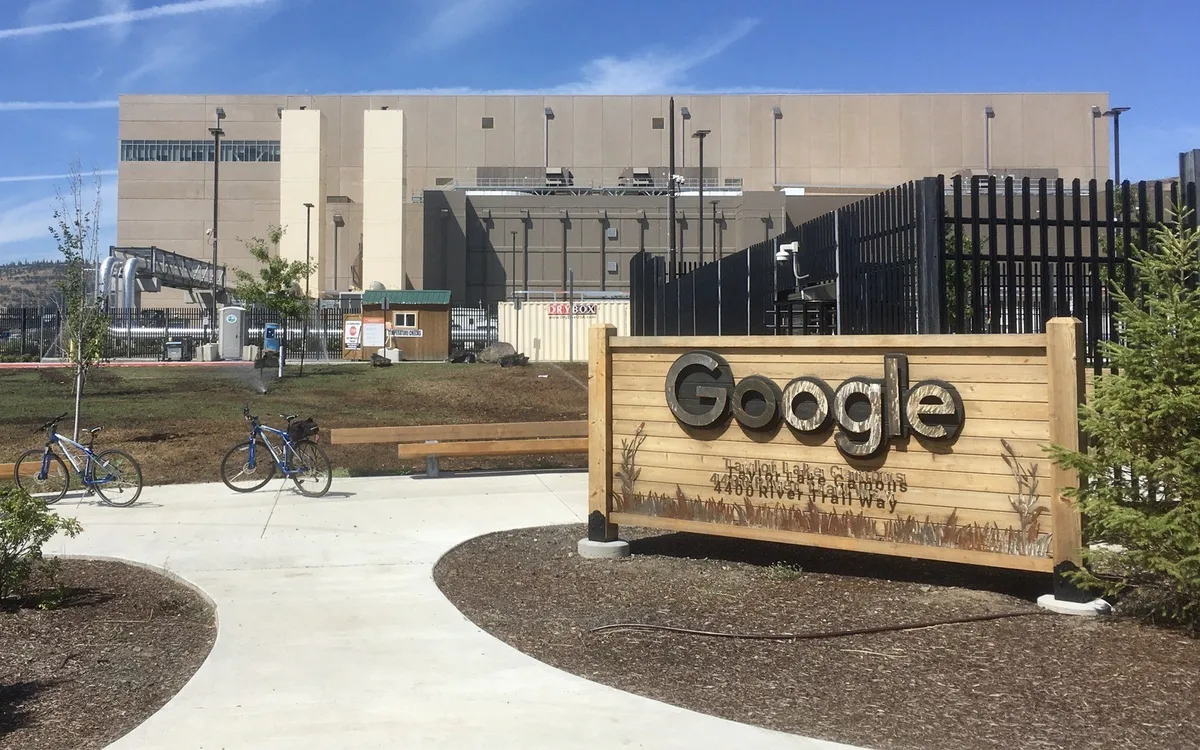
For years Google was a machine for turning advertising into spare cash, and from 2020 to 2025 Alphabet handed $310bn of it back to shareholders through share buybacks alone. In 2026 that flipped. The company is now spending more on data centres and chips than its business brings in, and it has been selling shares and bonds to cover the gap.
Two quarters in the red
Alphabet's own figures show the turn. In the third quarter it made $42.3bn of cash from operations and spent $51.4bn on property and equipment, leaving free cash flow of minus $9.1bn. The second quarter was minus $5.9bn. The Graze checked every quarter in the company's machine-readable filings back to 2008 and found no other quarter below zero since the middle of 2008.
Finance chief Anat Ashkenazi told analysts the third-quarter shortfall was "driven by our investments in CapEx", and also by inventory built up for sales of its own AI chips, called TPUs, and a $5.2bn payment of a 2018 European Commission fine. She kept 2026 capital spending guidance at $195bn to $205bn and said spending would "increase significantly in 2027", with details due on the fourth-quarter call. Through September, Alphabet had already spent $132.0bn, more than double the $63.6bn of a year earlier.
The commitments run further out. The latest quarterly filing lists $130.5bn of future payments on leases, mostly for data centres and energy, that have been signed but have not yet started.
From buying back shares to selling them
In June Alphabet raised equity on a scale few companies ever attempt. It sold about 58m new shares to the public for $20.5bn after costs, and $10bn more to an affiliate of Berkshire Hathaway in a private placement. A day later it sold mandatory convertible preferred stock, paying a 6.25 per cent dividend and due to turn into ordinary shares around May 2029, for another $19.0bn. It also set up a programme to sell up to $40bn of shares into the market over time. That programme is meant mainly to cover tax on staff share awards; it raised $12.4bn in the third quarter.
Bonds did the rest. Alphabet's long-term debt was $125.1bn at the end of September, against $46.5bn at the end of 2025 and $21.6bn a year earlier. On 5 November it added €6bn of euro notes due between 2028 and 2045.
The money stopped flowing the other way. Alphabet bought back $39.8bn of its own stock in the first nine months of 2025 and none in the same period of 2026, although $69.5bn of a board authorisation is still unused. It still pays a quarterly dividend, $0.22 a share in the third quarter.
Alphabet's cash, first nine months ($bn)
| Item | 2025 | 2026 | Change |
|---|---|---|---|
| Cash from operations | 112.3 | 127.1 | 14.8 |
| Spent on property and equipment | 63.6 | 132.0 | 68.4 |
| Free cash flow | 48.7 | –4.8 | –53.5 |
| Share buybacks | 39.8 | 0.0 | –39.8 |
| Dividends paid | 7.5 | 8.2 | 0.7 |
| New debt raised | 38.0 | 85.2 | 47.2 |
| New shares and preferred stock sold | 0.0 | 61.9 | 61.9 |
The count of shares tells the same story from the other side. Alphabet had 12,088m shares outstanding at the end of 2025 and 12,294m at the end of September, an increase of 206m, or 1.7 per cent. Buybacks had cut the count from 13,242m at the end of 2021. When the preferred stock converts in 2029, by The Graze's arithmetic from the conversion terms, it will add roughly 44m to 54m more, depending on the share price then. Alphabet paid $1.0bn for "capped call" contracts meant to limit that dilution.
The rest of Big Tech
Alphabet is not alone. Amazon's free cash flow for the 12 months to September was minus $42.4bn, by its own measure, and it raised $115.1bn of long-term debt in the first nine months of the year. Meta's free cash flow was minus $2.1bn in the third quarter. In late October it sold mandatory convertible preferred stock with a face value of $12.5bn and agreed to sell 40m shares through forward contracts. In November it followed with $15bn of dollar bonds, at coupons of 5.85 to 7.5 per cent, and €9bn in euros. Microsoft still makes more cash than it spends, but it too agreed to sell $25bn of bonds on 29 October.
The latest quarter, to 30 September 2026 ($bn)
| Company | Capital spending | Cash from operations | Free cash flow | Share buybacks |
|---|---|---|---|---|
| Alphabet | 51.4 | 42.3 | –9.1 | 0.0 |
| Amazon | 75.9 | 42.4 | –33.5 | 0.0 |
| Meta | 34.9 | 32.8 | –2.1 | 0.0 |
| Microsoft | 39.4 | 58.0 | 18.6 | 4.4 |
Our take
The headline number is not the story. A negative quarter at a company with $265bn of cash and marketable securities is a choice, not a crisis. What has changed is the direction of the money. A business that once bought back its own shares at the rate of tens of billions a year is now a seller of them, and of preferred stock, and of bonds in seven currencies.
That matters for anyone who owns these stocks, which, through index funds and pensions, includes many savers. For a decade, buybacks quietly raised each shareholder's slice of Google's profits. Now new shares are diluting it, and the bill for the AI build is being split between today's owners and bond investors. Meta's longest dollar bonds pay 7.5 per cent, and Alphabet's 2026 dollar notes up to 6.5 per cent, a sign of what lenders want from even the strongest names.
Alphabet's case is that the returns will come. Ashkenazi told analysts she expects returns on invested capital "meaningfully above our cost of capital", and Google Cloud's revenue more than doubled from a year earlier in the third quarter. Berkshire Hathaway was willing to buy $10bn of stock at about $350 a share.
The number to watch is the 2027 capital spending figure promised for the fourth-quarter call. If it rises again and cash from operations does not keep up, expect more share sales, more bonds, and no buybacks for a while yet.
Sources
- Alphabet, Form 10-Q for the quarter ended 30 September 2026 (cash flows, debt, leases, share issuance, buybacks, shares outstanding)
- Alphabet, third-quarter 2026 results release (quarterly free cash flow reconciliation)
- Alphabet, third-quarter 2026 earnings call (capital spending guidance, free cash flow remarks)
- Alphabet, equity capital raise announcement (1 June 2026)
- Alphabet, prospectus supplement for €6bn notes (November 2026)
- Amazon, Form 10-Q for the quarter ended 30 September 2026
- Meta Platforms, third-quarter 2026 results release, and Form 8-K filings on the preferred and share offering, dollar notes and euro notes
- Microsoft, first-quarter fiscal 2027 results release and Form 8-K on its notes offering
- CNBC, Samantha Subin, Alphabet sinks 10% as it holds 2026 capex unchanged (28 October 2026)
- CNBC, Yun Li, Berkshire Hathaway invests extra $10 billion in Alphabet (1 June 2026)
- Calculations by The Graze: nine-month and quarterly free cash flow (cash from operations minus capital spending); share count change (12,294m minus 12,088m); preferred conversion range (19.25m preferred shares times the minimum and maximum conversion rates); quarterly history from Alphabet's and Google's XBRL filings since 2008; buybacks of $310bn from 2020 to 2025 (annual totals from Alphabet's 10-K filings: $31.1bn, $50.3bn, $59.3bn, $61.5bn, $62.2bn and $45.7bn).