AI buyers are paying millions extra to skip the private-jet waitlist
Newly rich buyers from the AI boom are not waiting two years for a factory slot. Some are paying millions above the list price for a jet that is already built. In a few cases, the person who took delivery is flipping the aircraft before it has carried a single passenger.
A delivery slot is now an asset
Private jets usually fall in value the moment they leave the factory. That rule is slipping. Luxury Launches, drawing on Financial Times reporting and broker data, describes buyers who sell a newly delivered aircraft at a premium, sometimes before it has flown for them.
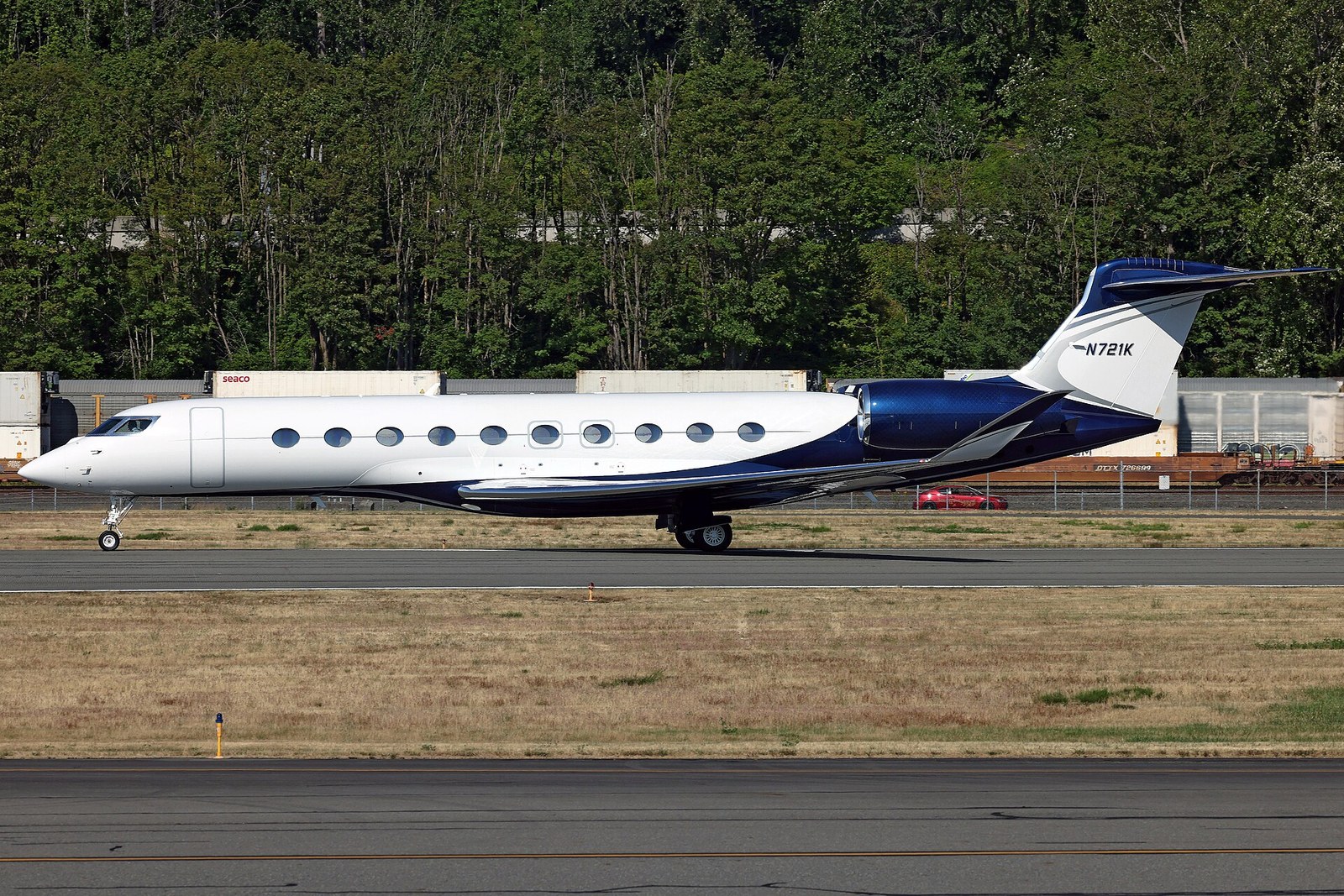
One publicly listed company, the newspaper found, sold an aircraft ordered for $77 million for $84 million; the jet was later offered off-market in the mid-$90 million range. Oliver Tebbit, an aviation lawyer at HFW, told the FT that anyone taking delivery of a new heavy jet is likely to find a ready resale market. On the Gulfstream G700, a flagship that typically costs around $80 million before customisation, Tebbit put the resale premium at about 10 percent, or roughly $8 million. The aircraft broker Gemcan, in an August 2026 market snapshot, listed G700 asking prices of about $84 million to $91 million against an indicative new-build range of $80 million to $85 million. Those are asking prices, not closed trades, but they show what immediate availability is worth.
The shortage sits in the order book. Jetnet recorded 818 large-jet resale transactions in the 12 months through September 2026, up 14.6 percent, against growth of only 1.8 percent across all business-jet categories. Four major manufacturers had a combined backlog of $61.6 billion, with Bombardier alone at $22.2 billion at the end of September. Waits of 18 to 26 months are common; some Gulfstream customers are looking at more than two years, and the most sought-after heavy jets have delivery positions running to 2029 or 2030.
US tax policy has added another nudge. The One Big Beautiful Bill Act allows 100 percent bonus depreciation on qualifying aircraft purchases, though eligibility and a later resale can change the actual benefit. It is not a clean buy-and-flip tax trade. Fractional flying is rising too: large-cabin fractional flights in North America were up 18.6 percent year on year in October, even as overall business-aircraft operations fell 2.7 percent.
The new buyers do not want to wait
The demand is being fed by people who made money in and around AI and do not fancy a two-year queue. A Financial Times feature, republished by CNA Luxury, described the same pattern. Flexjet's chief executive, Andrew Collins, said technology wealth had pushed the average age of his customers down by about a decade. One of the charter firm FlyVictor's newest clients is a data-centre builder who has been chartering jets in the United States and Europe while waiting for a long-range Bombardier to be delivered.
The new cohort books differently. Charles Robinson, founder of the charter marketplace EnterJet, said many prefer an app or WhatsApp and will lose interest "if it takes more than a few minutes to get quotes and confirm." Some want to pay in cryptocurrency. On board, Robinson said, the old standard of champagne on linen has given way to specific bottled waters and "health-conscious catering." They are flying for speed and privacy, "not to impress socially."
Mike Francis, Citi's head of aviation finance, put the flip economics in a single line: if someone has the chance to make $10 million with virtually no effort, why wouldn't they?
Our take
A factory waitlist that used to be a nuisance is now a market. The premium is not really for leather and range. It is for time. A G700 that exists today is worth more than the same aircraft promised for 2028, and the people who placed orders early are sitting on that spread.
AI wealth explains the urgency, not the entire backlog. Manufacturers were already late, and a tax change that lets a buyer write off a jet in year one makes the arithmetic even more tempting. The risk is obvious. Premiums built on a queue disappear if deliveries catch up, if residual values sag, or if the same buyers who will not wait decide they would rather keep chartering. Asking prices of $84 million to $91 million are not the same as sales.
For now, though, the inversion holds. A depreciating asset has a temporary habit of appreciating, and the winning move is sometimes to take the keys, then hand them to the next person in line.
Sources
- Luxury Launches, AI-rich buyers are paying millions of dollars extra just to skip the factory waitlist (November 2026), citing Financial Times reporting, HFW, Gemcan and Jetnet
- Stephanie Stacey, Financial Times, republished by CNA Luxury, How AI millionaires are rewriting the rules of luxury (2026)
- Bombardier, Third quarter 2026 results (November 5, 2026): order backlog $22.2 billion as at September 30, up $4.7 billion from year-end 2025