The samurai armour that turns a bare chest into a weapon
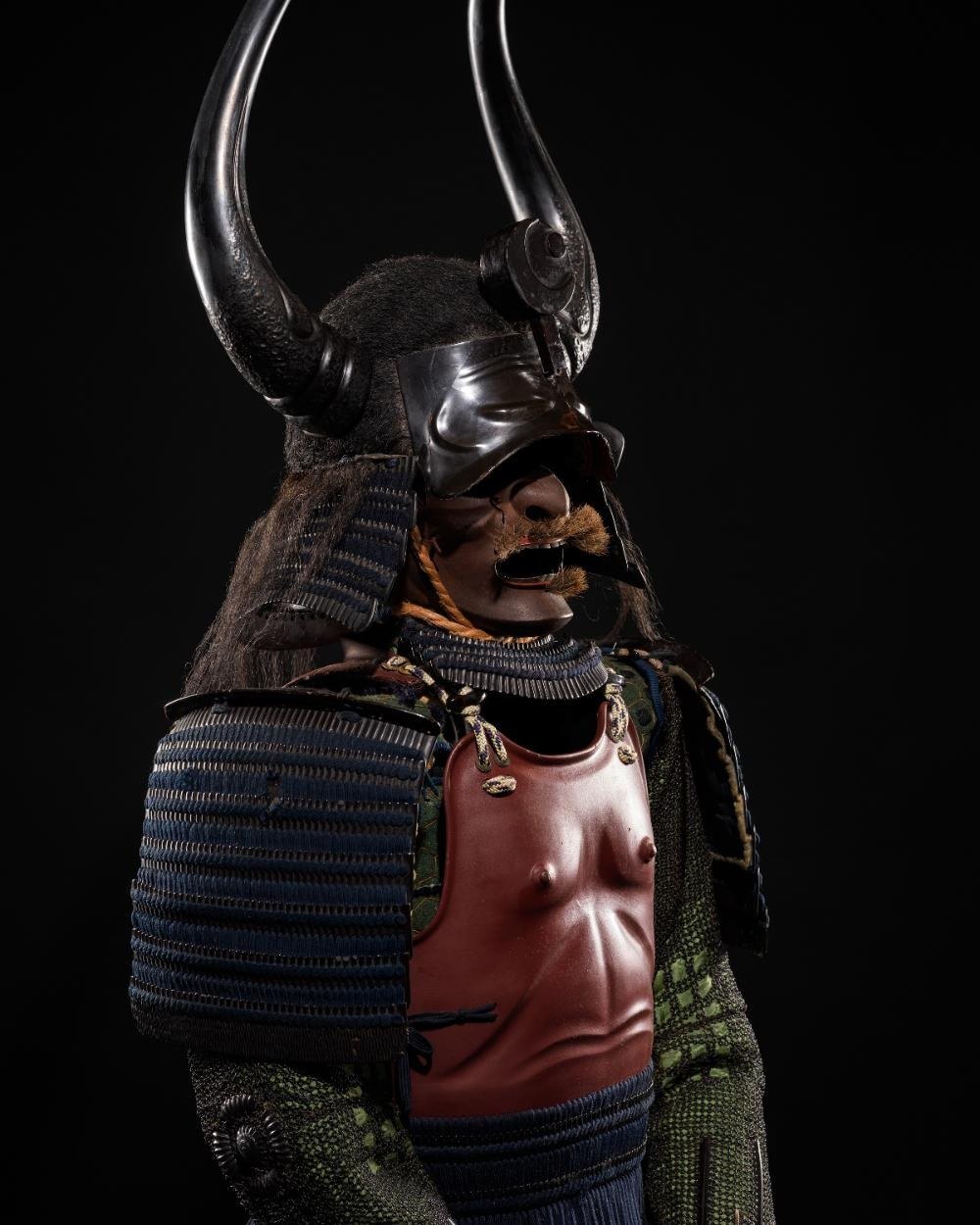
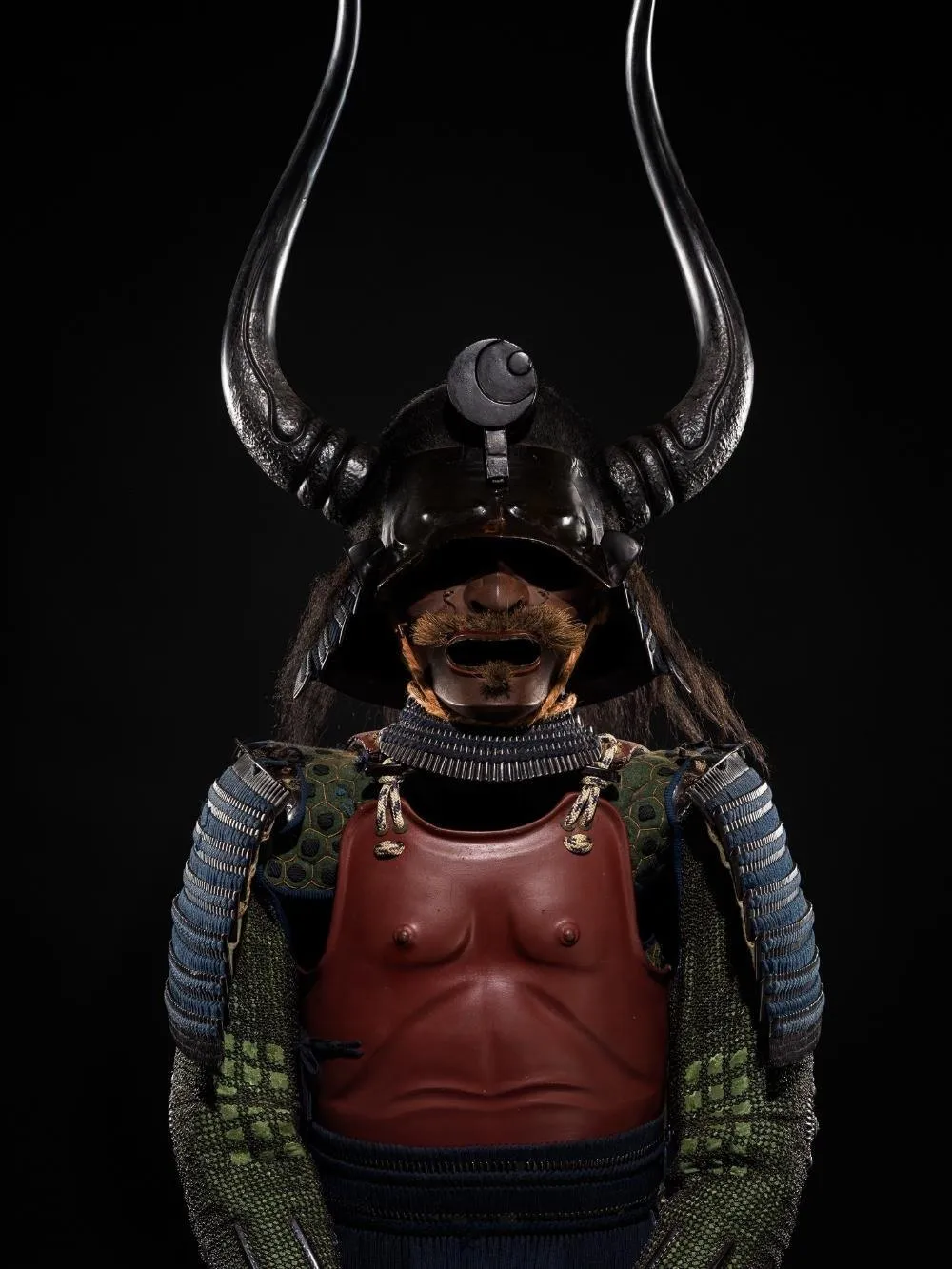
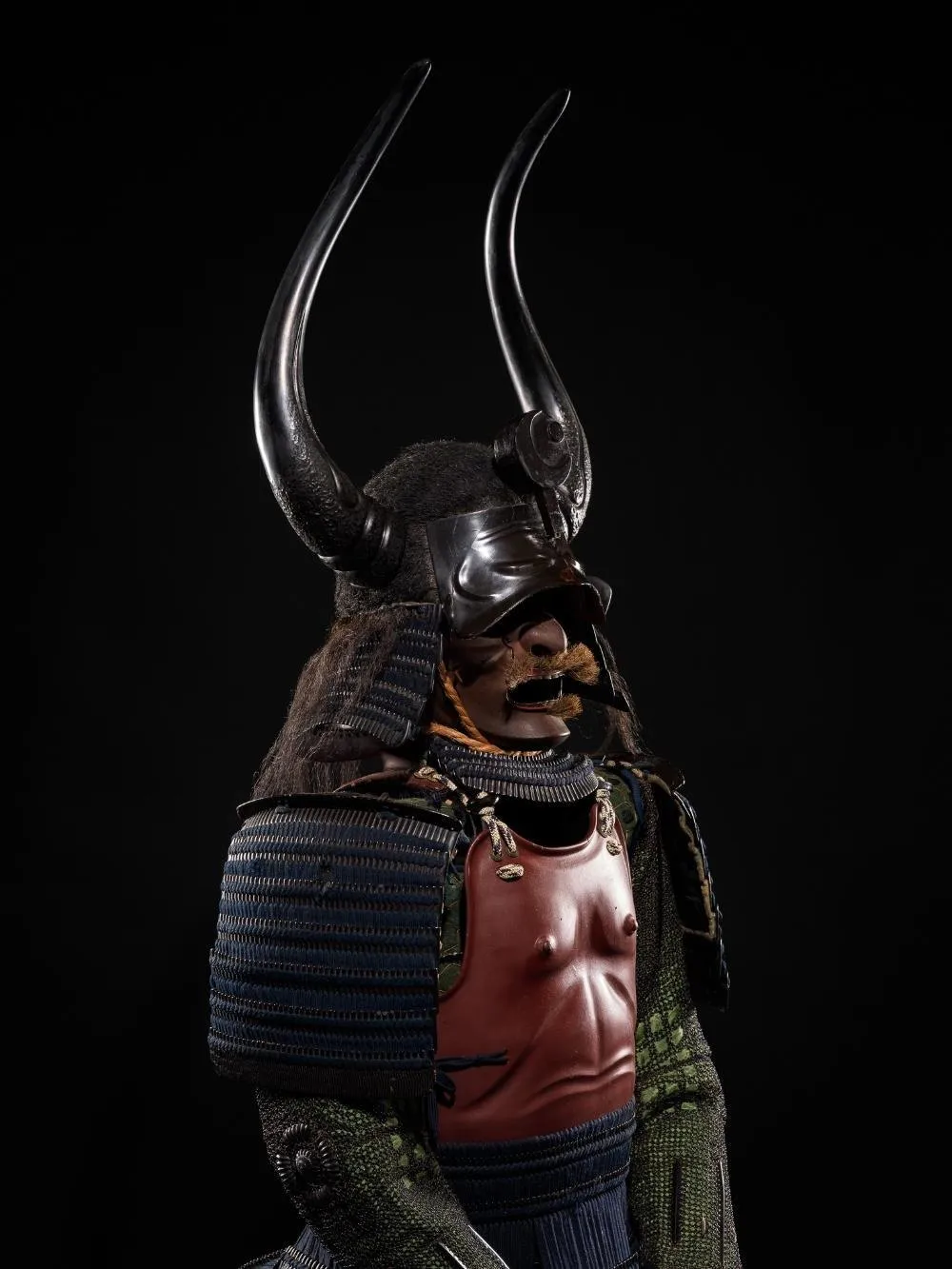
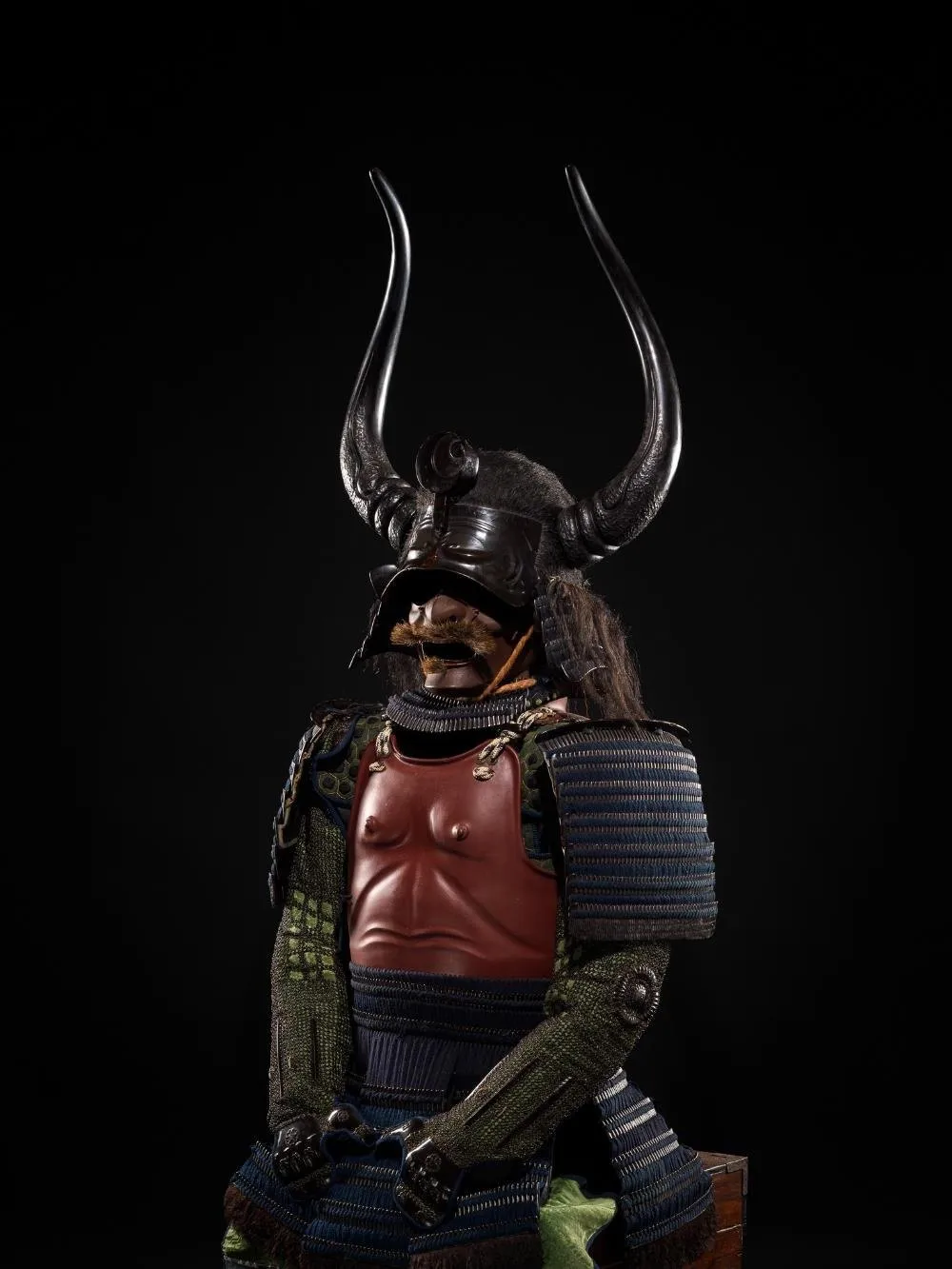
The exposed-torso effect is sculpted in rust-lacquered iron, not bare skin. Photo: Galerie Zacke / Invaluable.
The chest is bare. The wearer was not.
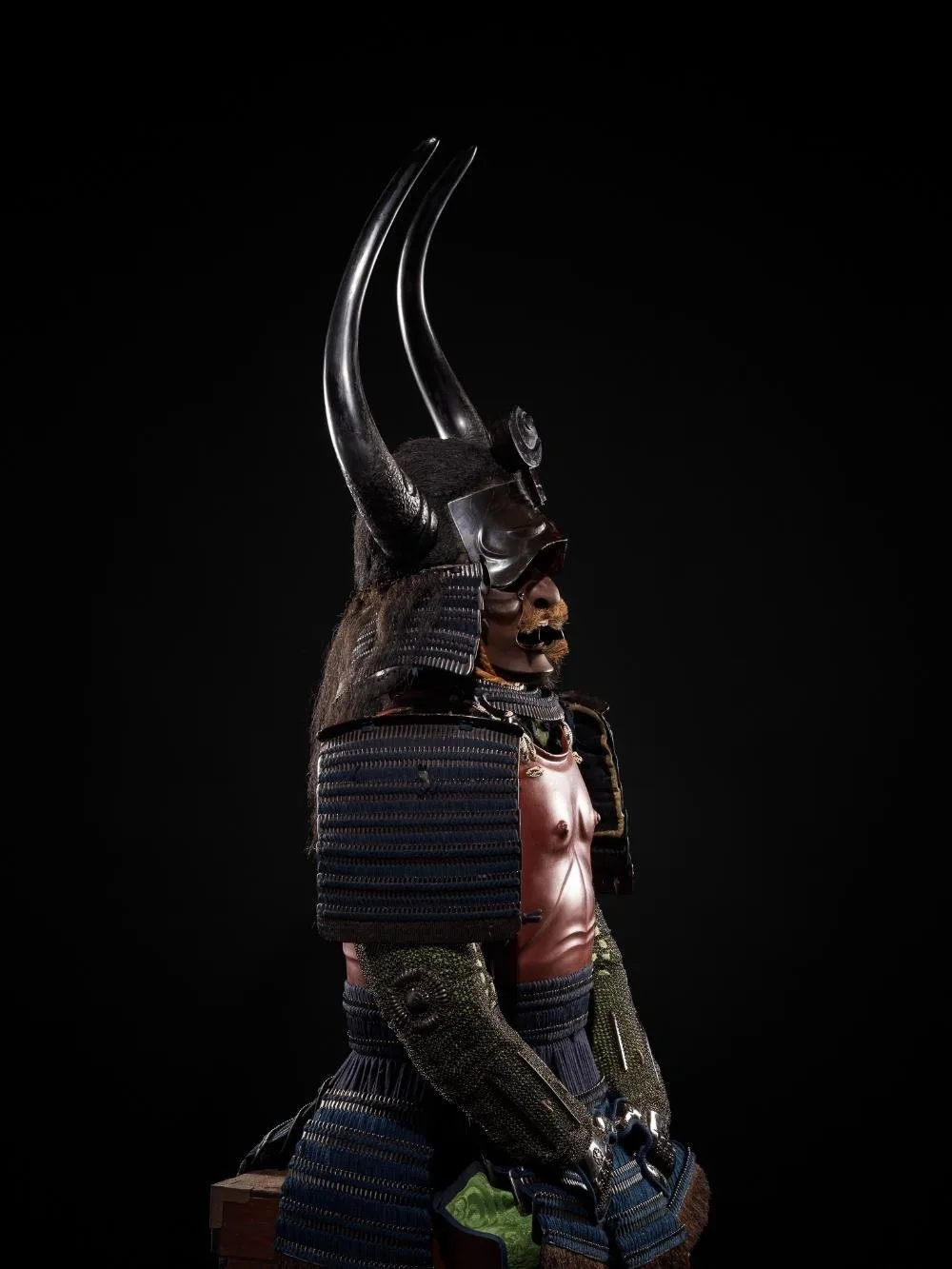
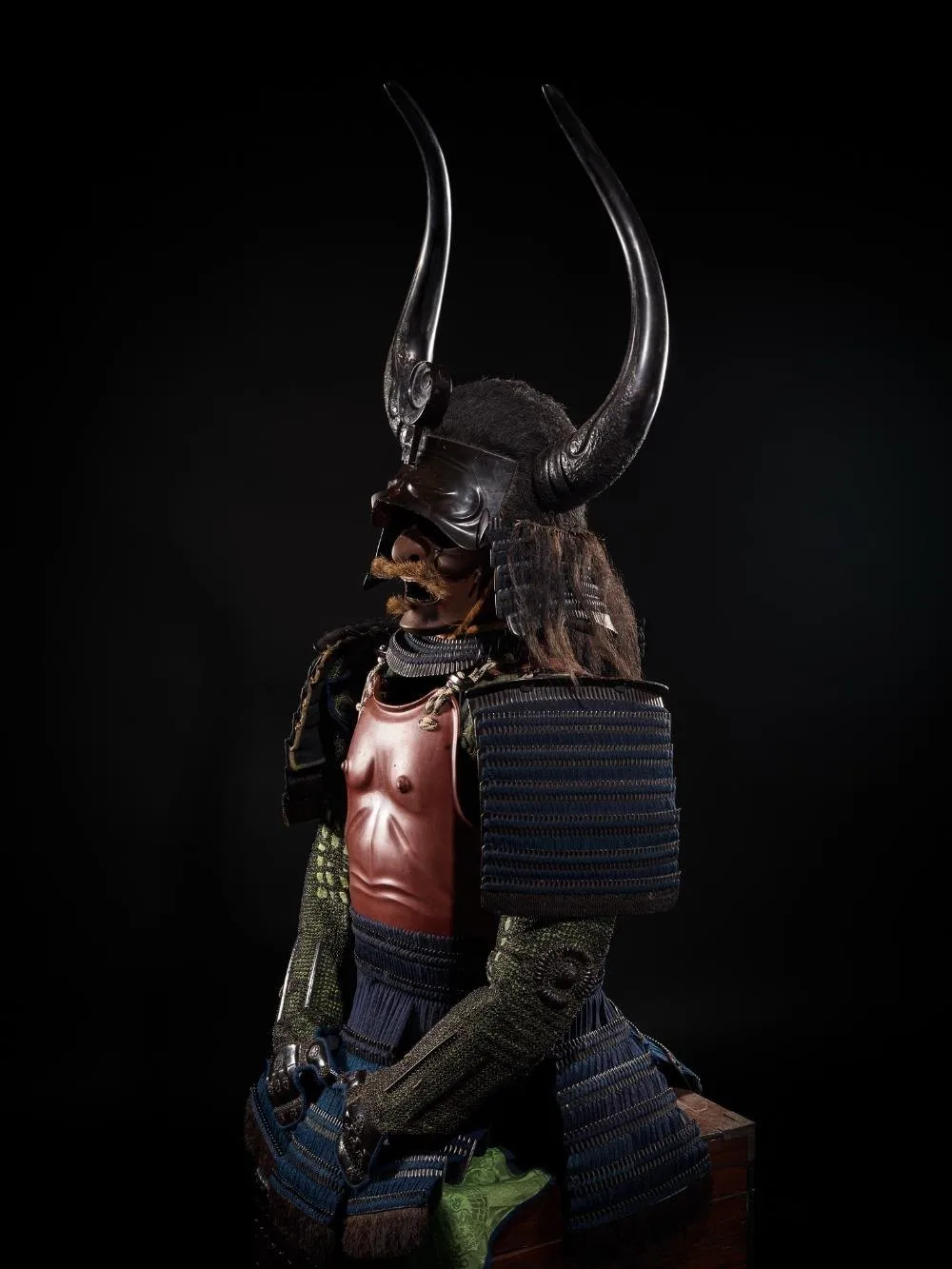
At Galerie Zacke's Fine Japanese Art sale in Vienna, lot 86 is a 17th-century suit of armour whose iron cuirass imitates an exposed human torso. There are nipples, pronounced upper-body musculature and ripples across the stomach. What appears, at first glance, to be a warrior's refusal to cover up is actually an elaborate piece of protection.
The house identifies it as a morohada-nugi-do gusoku and dates it to Japan's Edo period, specifically the 17th century. The estimate on Invaluable is €20,000–€40,000. The sale begins on December 4, 2026 at 6:00 AM CT. This is a preview of an auction lot, not a report of a completed sale.
What the name means
Gusoku refers to the armour ensemble; do is the torso defence or cuirass. Nugi-do describes armour that gives the appearance of an exposed body or partially discarded clothing. In the morohada form, the distinctive effect is a bare-chested torso rather than an ordinary smooth breastplate. The apparent flesh here is rust-lacquered iron.
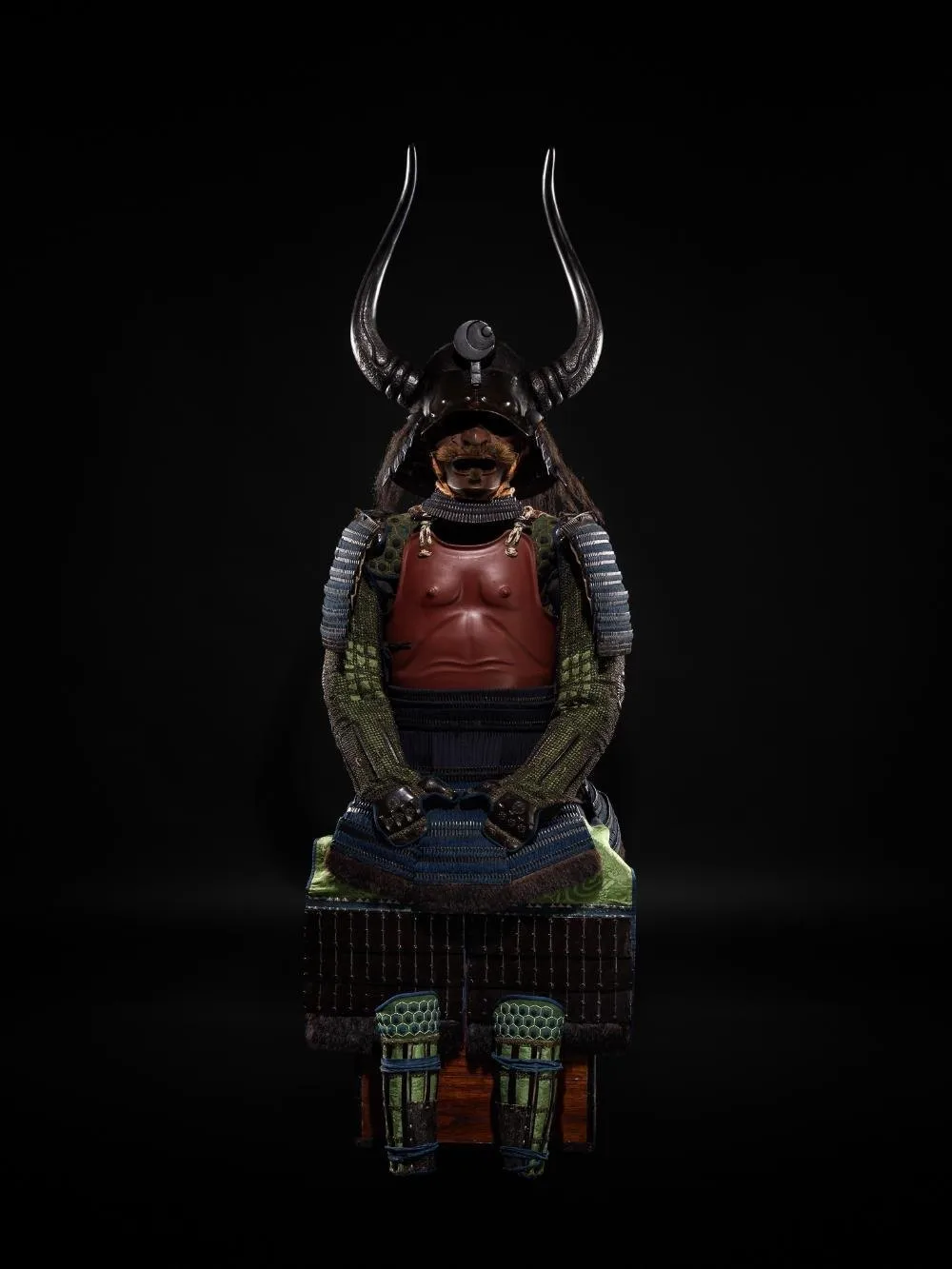
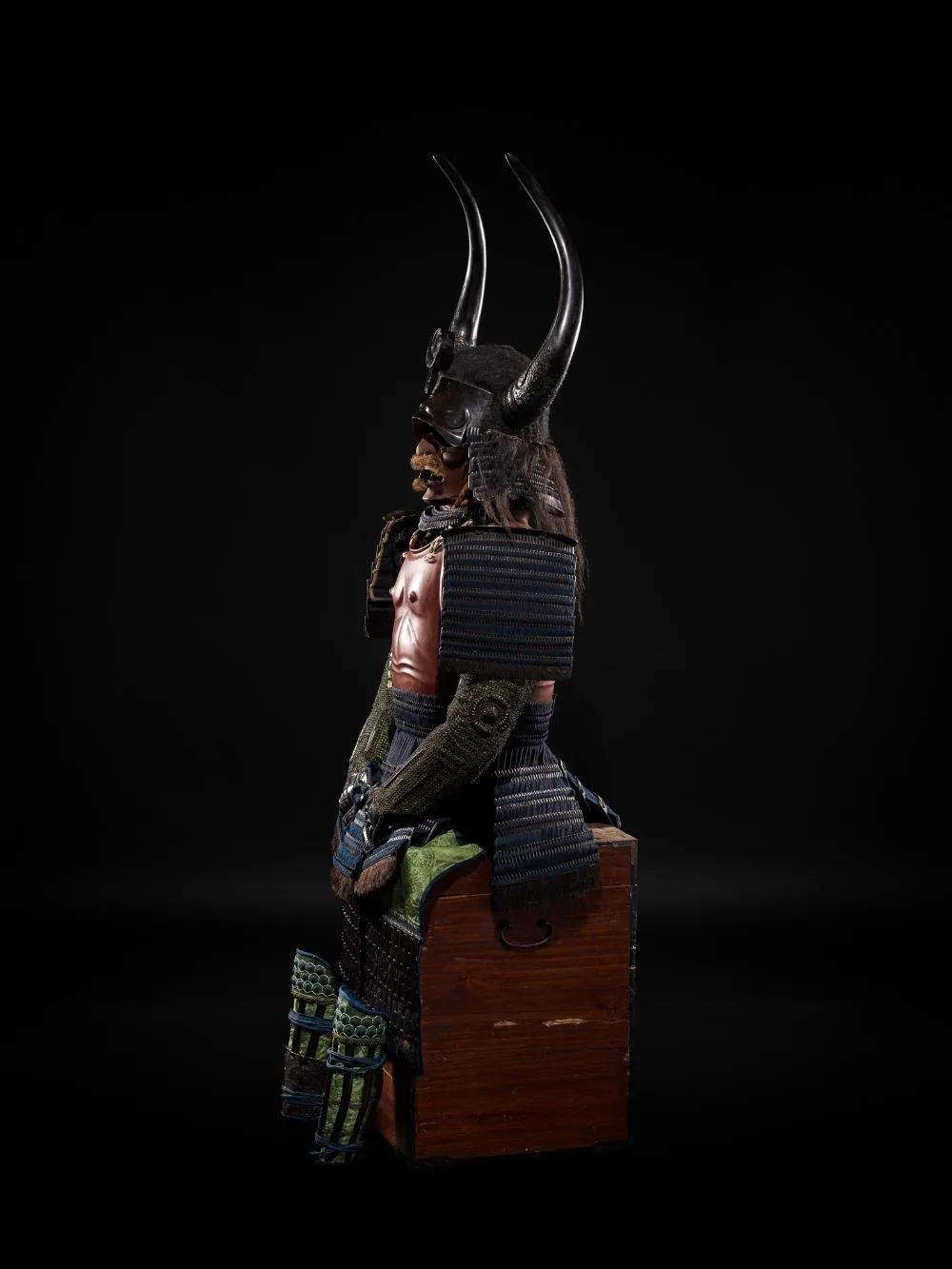
The anatomical treatment continues around the back. Zacke's description identifies fittings for a sashimono, the back-mounted banner used for identification. At the waist, six sections of five-lame skirt defences hang below the cuirass, with bearskin trimming on the last. The torso is the headline, but the object is a complete visual system: sculpted body, dramatic helmet, fierce face and carefully coordinated textiles.
Why it is unusual
Japanese armour had to answer changing military conditions during the 16th century, including firearms and larger armies. The broad category of tosei-gusoku, often translated as “modern armour”, reflects that transition. Modern, in this context, does not mean recently made.
Distinctive silhouettes could help a warrior be recognised amid a large force, while frightening features could project aggression. The bare-torso effect belongs to that world of visual identity. The Metropolitan Museum of Art describes its own 17th-century morohada-nugi-do ensemble as a rare example and explains the form in terms of recognition and intimidation.
That museum comparison supports the importance of the type. It does not establish that Zacke's lot belonged to a famous samurai, saw combat or has a documented connection to the Met's armour. The listing supplies no named original wearer, maker or clan, and none should be invented.
The helmet is almost as theatrical
The kawari kabuto — a helmet with an unusual, attention-catching form — is built around a three-panel, head-shaped iron bowl. Its covering includes bearskin, with cascading horsehair at the brim. Separately carved wooden ornaments imitate water-buffalo horns. The circular frontal crest depicts stars by the moon.
The mask below it has a detachable nose, an open mouth with gilt-lacquered teeth, a horsehair moustache and a goatee. These are not incidental flourishes. The helmet and face complete the psychological effect of the muscular breastplate: a carefully manufactured image of force.
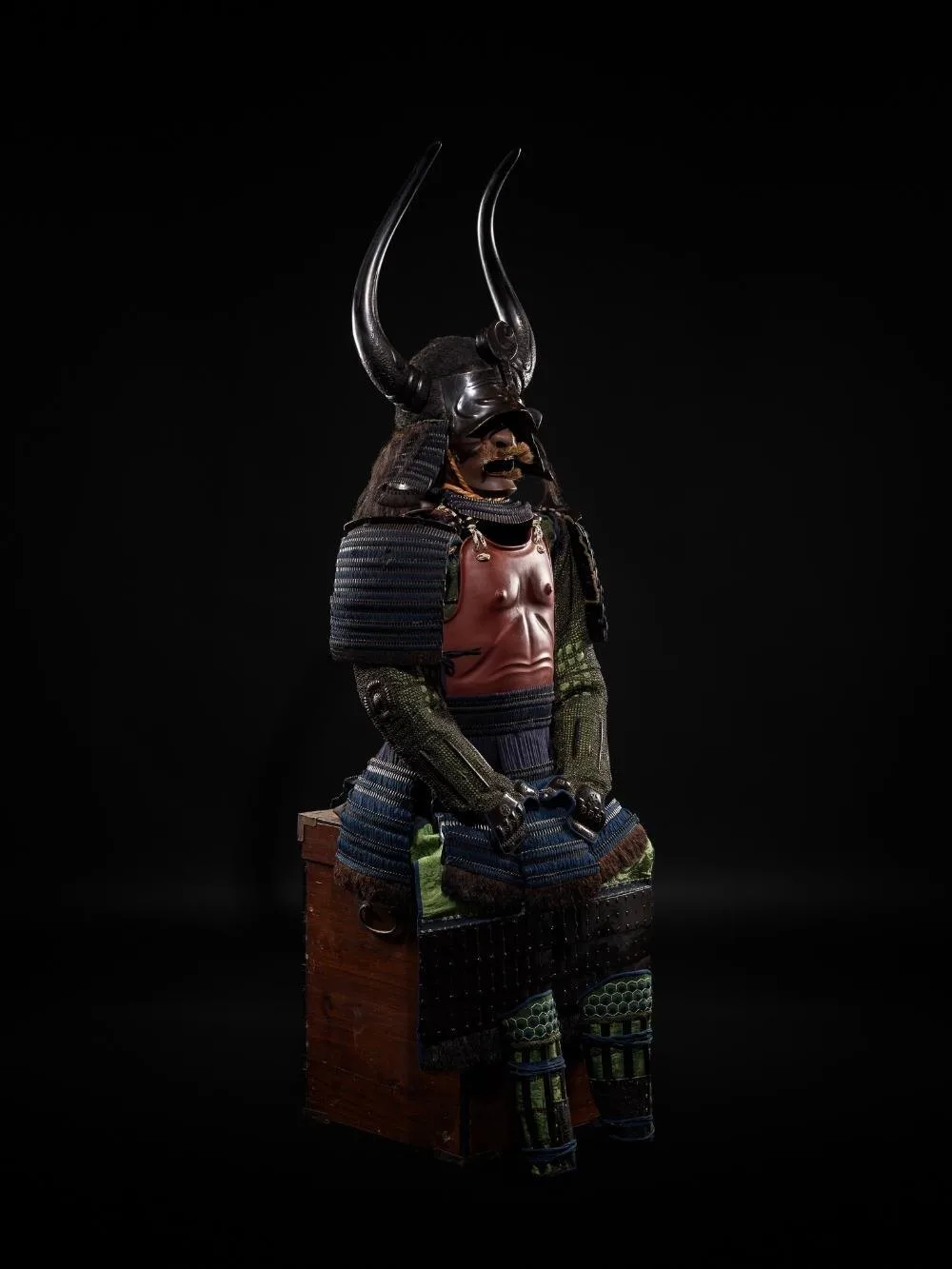
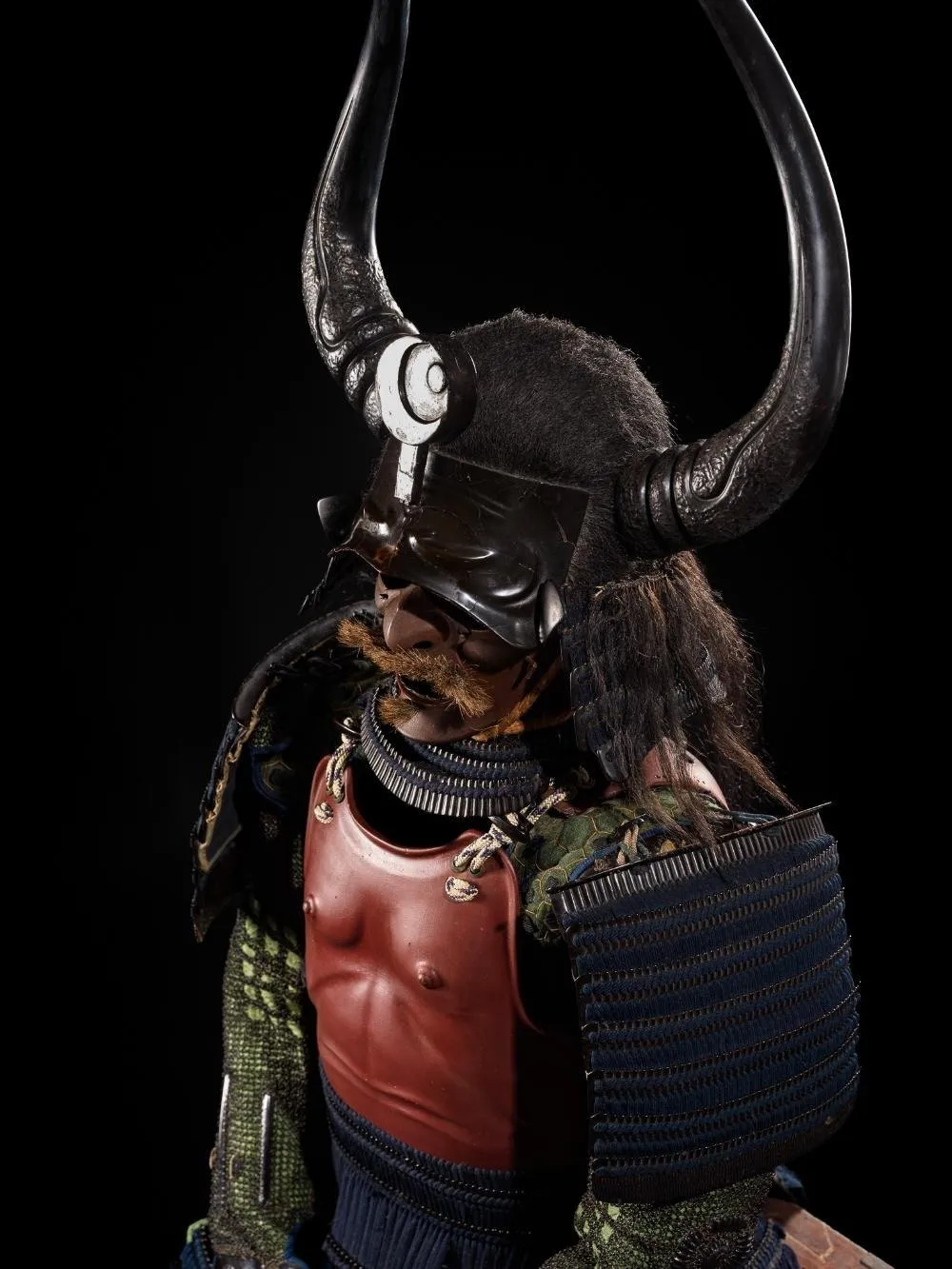
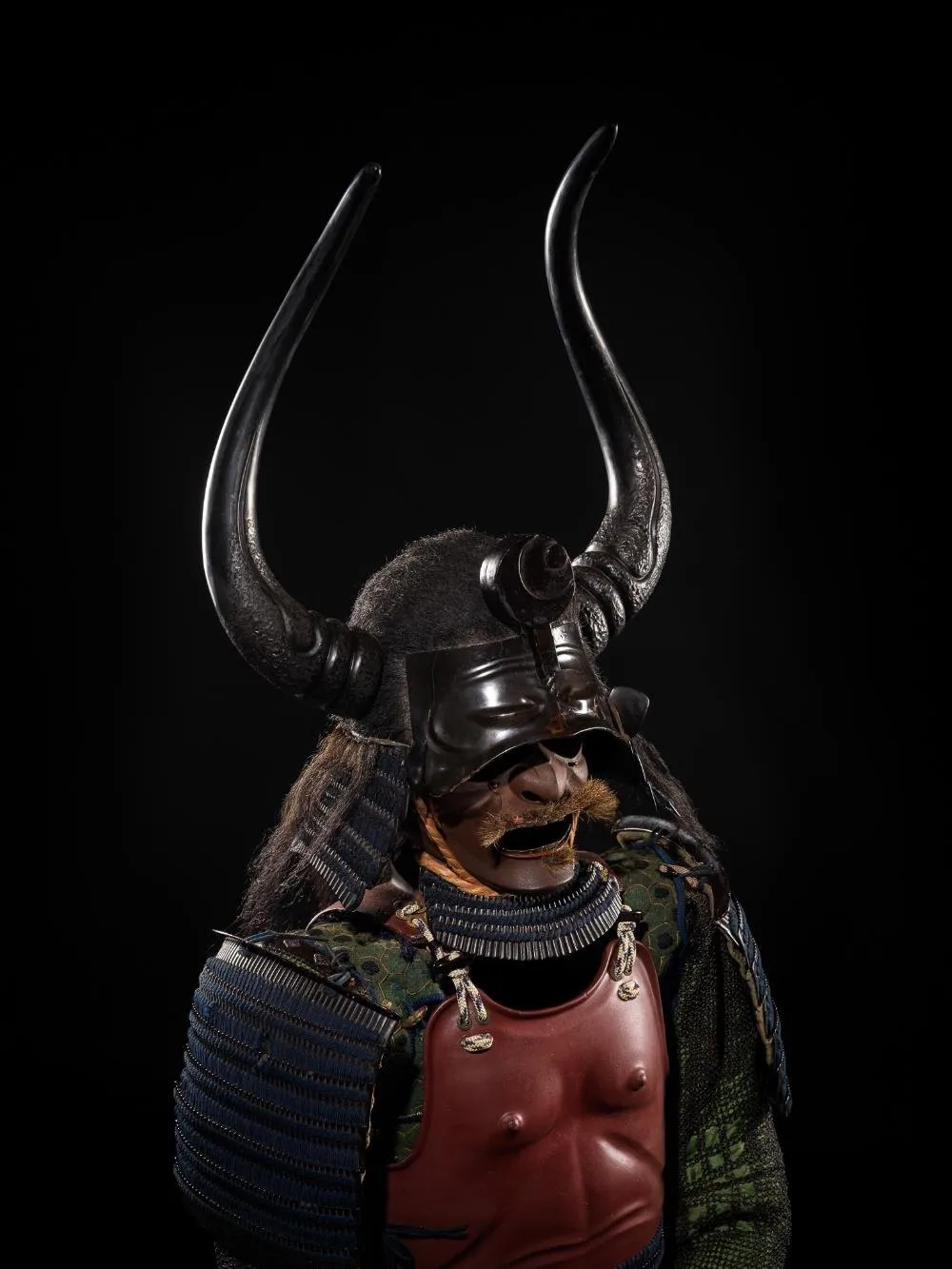
Under the visible surfaces is a more complicated protective construction. Blue-laced lacquered iron sits over light-green silk brocade; the fabric conceals a vest containing hexagonal armouring segments between layers. The sleeves and gauntlets combine iron with chain mail and carry floral metal fittings, including chrysanthemum, cherry blossom and Japanese bellflower motifs.
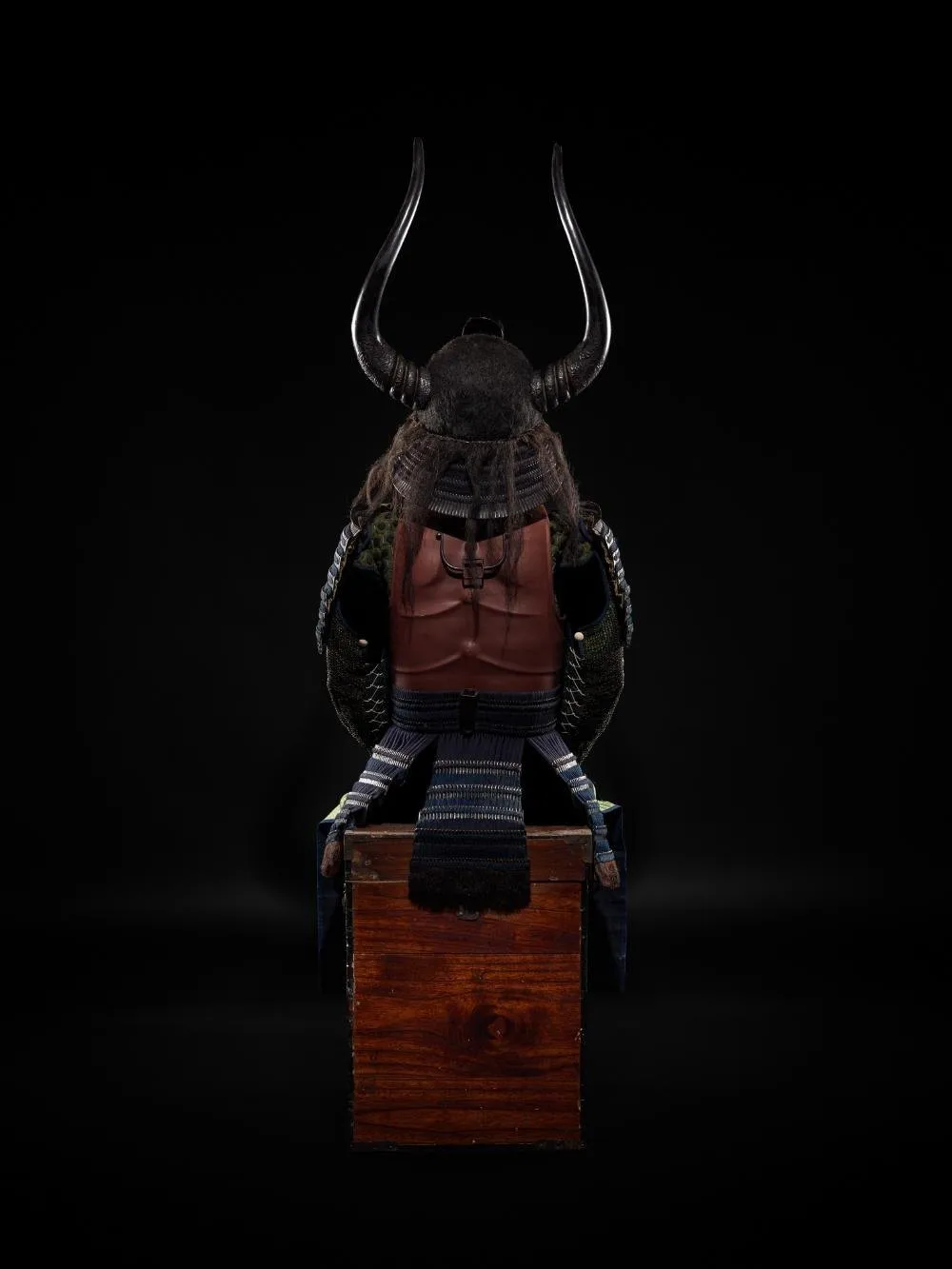
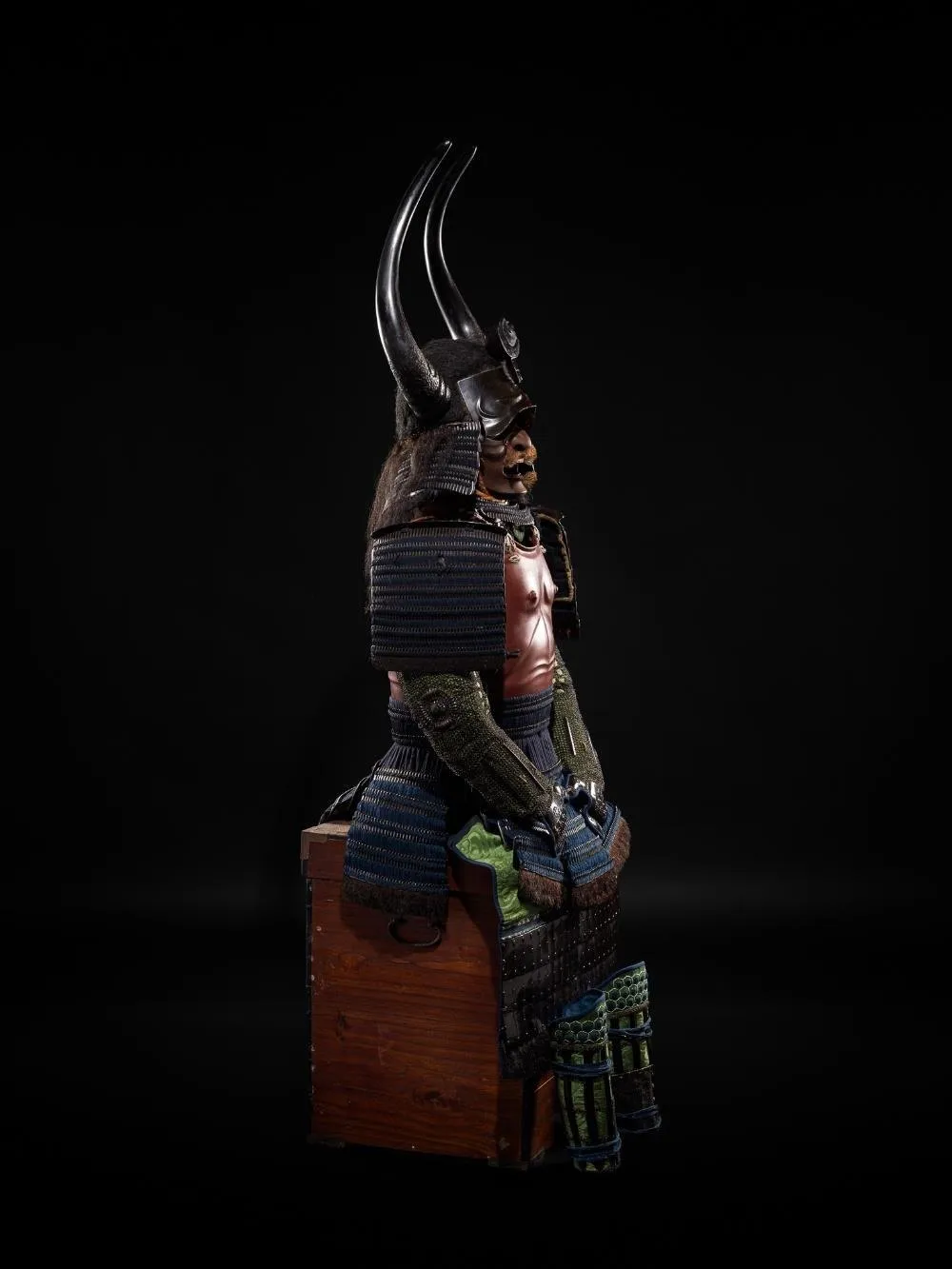
The ensemble also includes seven-lame shoulder guards, lacquered thigh protection and iron-and-mail shin guards. Reading it piece by piece makes the contrast clearer: the aggressive torso is only one element in a highly worked combination of metal, lacquer, textile, wood and hair.
The certificate and the condition
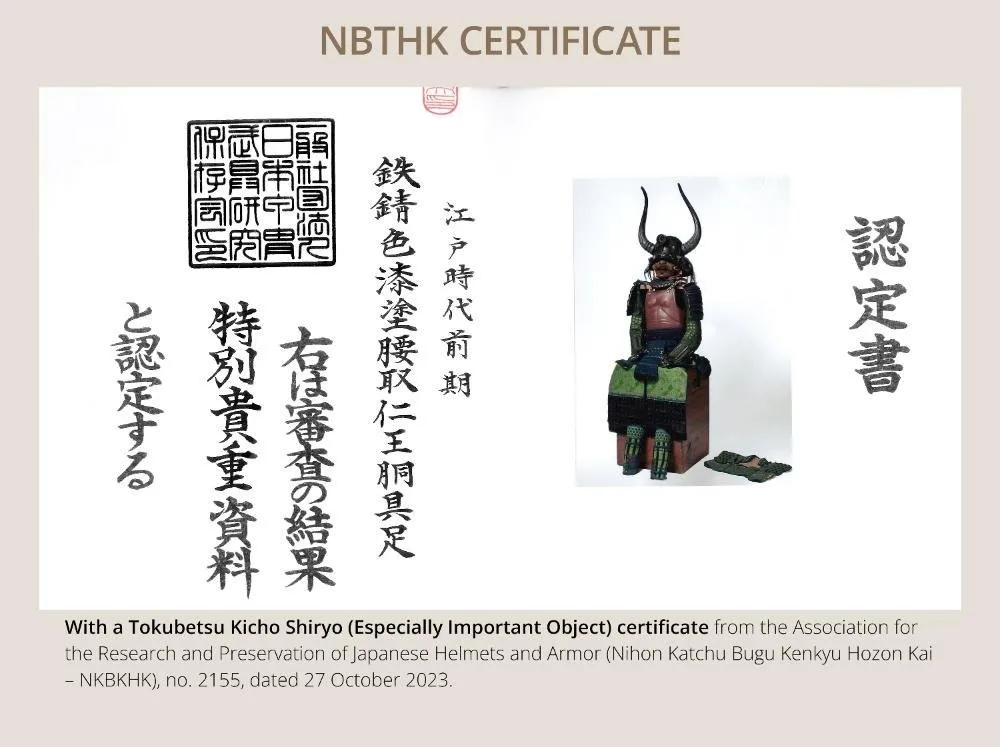
The lot comes with an NKBKHK Tokubetsu Kicho Shiryo certificate, which the house translates as “Especially Important Object”. It was issued by the Association for the Research and Preservation of Japanese Helmets and Armor, numbered 2155 and dated October 27, 2023. The written description names the armour association NKBKHK, but the heading on the reproduced catalogue certificate image says NBTHK. That discrepancy needs clarification before bidding; the listing should not be treated as evidence of a state designation.
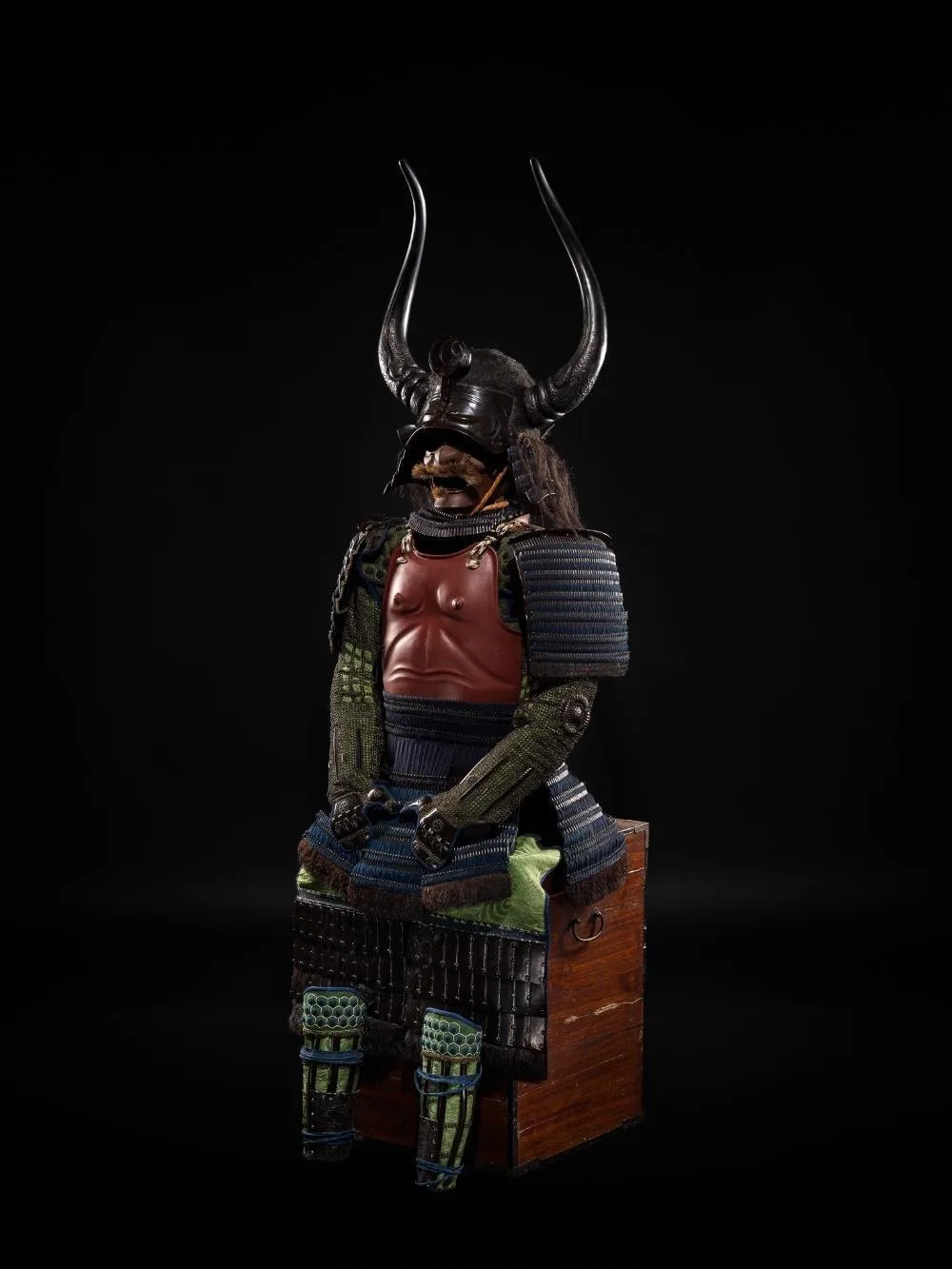
Zacke calls the condition very good with expected wear, while specifically recording lacquer flaking, losses and cracks on the helmet, plus losses and touch-ups to the fur. Those are material qualifications, not details to bury beneath the estimate. An armour stand and keyed wooden storage box are included.
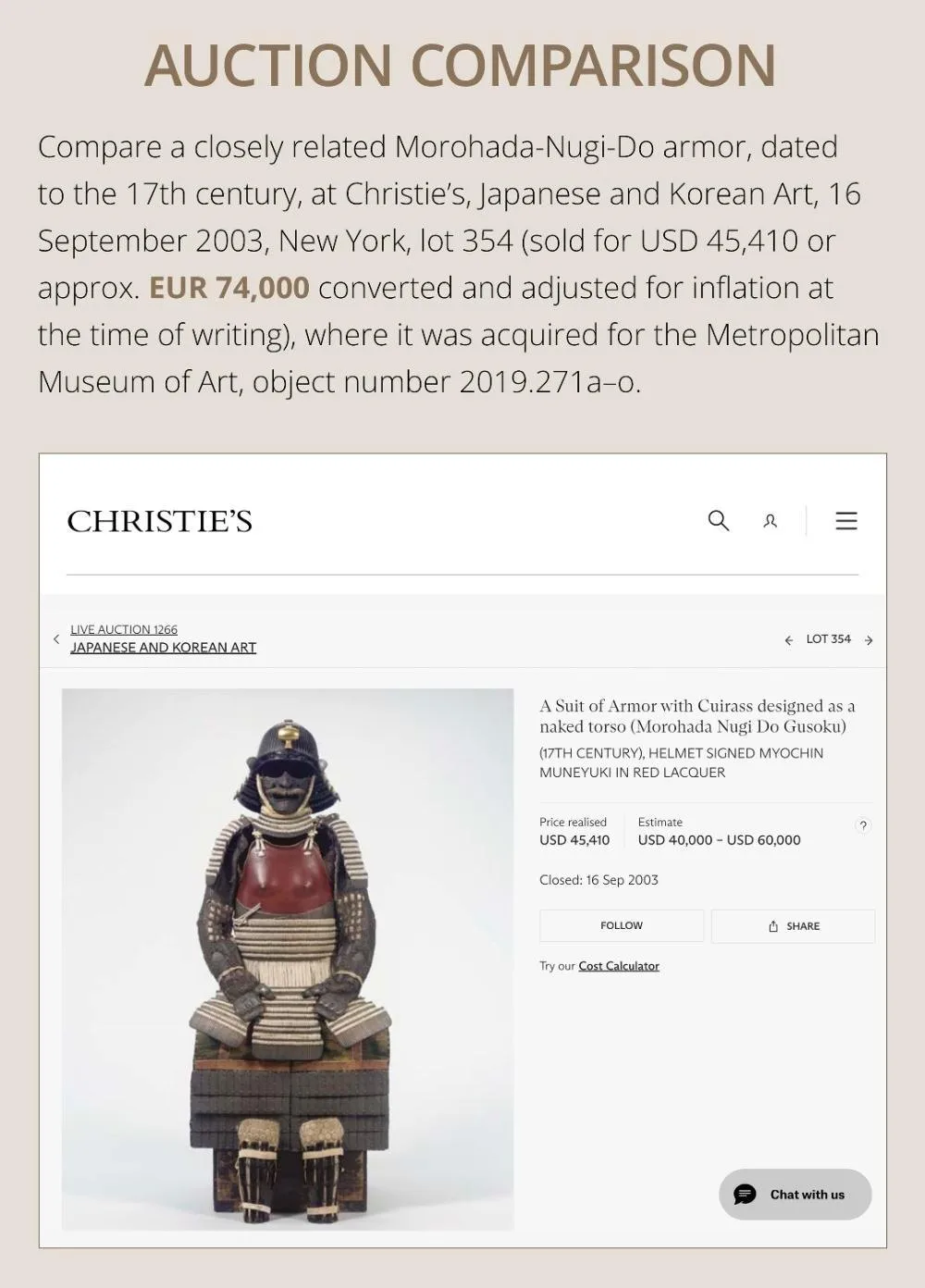
The house cites a related example sold at Christie's in 2003 for $45,410 and compares it with the Met's object 2019.271a–o. A historical result is context, not a valuation guarantee. Nor is the house's inflation-adjusted comparison a second sale price.
The €20,000–€40,000 estimate is not the final acquisition cost. Premiums, platform charges, taxes where applicable and specialist shipping can add materially to a winning bid. The Invaluable page shows a 35 per cent premium headline while the house's terms describe a 30 per cent surcharge including VAT plus online charges; a bidder would need the applicable checkout terms rather than assume those figures are interchangeable. The listing also contains general export and endangered-species warnings. The use of animal material makes jurisdiction-specific checks important; it does not, on its own, establish this lot's export eligibility.
What makes the armour compelling is the inversion. It conceals the human body by representing one. Four centuries later, the intended intimidation still works.
Source: Galerie Zacke, via Invaluable