Friday Beers was a misfire. Then it became an empire
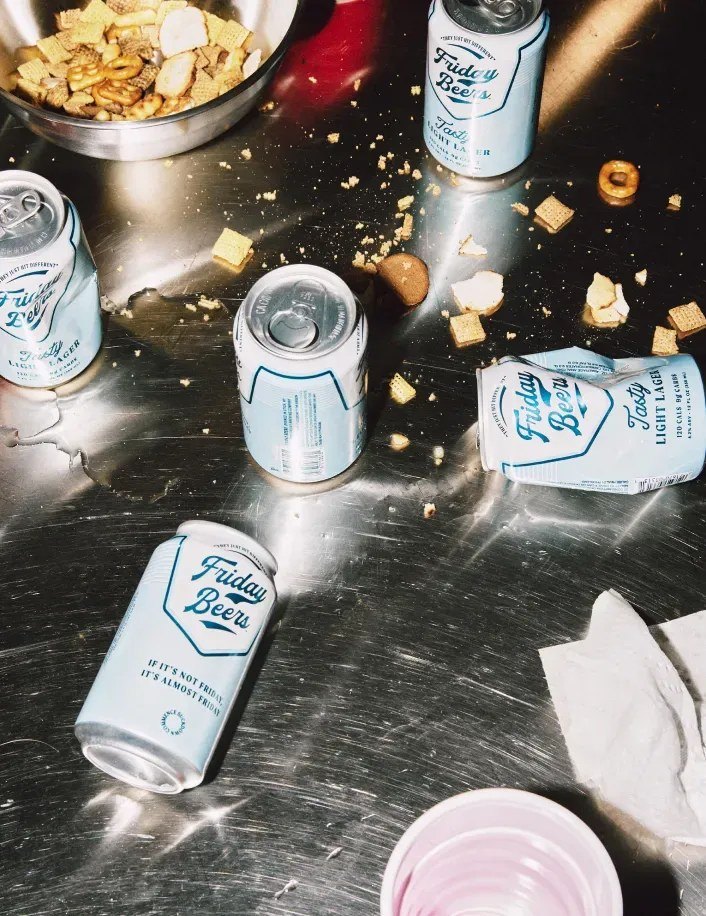
Friday Beers expanded from social comedy into a drinks brand. Photo: Almost Friday Media.
The Barrett brothers wanted television-writing jobs. They made Friday Beers instead. The account that was supposed to help them get through the door became the business on the other side of it.
Almost Friday Media now encompasses more than 25 brands and over 20 creators, with a combined audience above 40m followers and more than 2bn impressions a quarter, according to figures reported by The Hustle. Those are reach measures, not revenue or profit. They nevertheless explain why an account built around the feeling of finishing work on a Friday could become something more durable than a run of popular clips.
The company took an intensely recognisable mood and turned it into distribution. The difficult second act was finding businesses that could use that distribution without exhausting the joke.
A small idea with a very large audience
Jack and Max Barrett launched Friday Beers in 2019 while trying to break into television writing. Jack told The Hustle that starting the account was “the greatest misfire of all time”. The outcome was better than the intended route.
The early growth was organic: people passed videos to friends who recognised the same rituals and frustrations. During Covid, jokes about missing the bar gave the account another emotional entry point. Its specificity was an advantage. An audience did not need an explanation of the feeling the brand was selling.
By the end of 2021, the founders faced a familiar creator-business choice. They could remain a successful account with merchandise attached, or use the audience to build an organisation capable of making more than one kind of thing.
The latter required a change in operating model. A social channel can depend on a small number of people maintaining its voice. A media company needs production capacity, commercial relationships and a way to develop talent without making every new project look like an imitation of the original feed.
The expansion is the business story
The Hustle reports that Almost Friday TV sold the show Last Night Was a Movie to FX; the group shot Boys for Life in South Africa for Paramount this summer; and it produced 24 YouTube episodes alongside Netflix's On Campus college-football series. A project sale, a production and a successful release are different milestones. The reporting establishes the projects, not a guaranteed outcome for each.
The company has also moved into the places where its audience actually spends money. There is an Almost Friday Sporting Club in Nashville and Friday Beers beer brewed by Saranac. Its reported commercial partners include BetMGM, White Claw, Celsius and Fireball. A possible airport location at LAX remains a possibility, not an opened venue.
This is more coherent than it might look. The account's premise is social leisure. Entertainment, drinks, merchandise and a place to watch sport all sit near the same customer occasion. The brand is extending into the behaviour it already depicts rather than selecting unrelated categories because they happen to carry a sponsor's budget.
Impressions do not pay the bills on their own
The large audience numbers need careful handling. Forty million followers across multiple accounts need not mean 40m unique people. An impression is a recorded exposure, not necessarily a person who watched to the end, and certainly not a paid transaction. The Hustle does not provide audited group profit or a current valuation.
The strategic point survives those caveats. Owning more formats reduces dependence on one feed or one advertising model. It also creates more complexity: a bar has operating costs that a meme account does not; a television production has deadlines and delivery obligations that a popular clip does not.
The successful move is not simply “go viral, then sell beer”. It is to turn an audience's repeated habit into a recognisable franchise, and then build the organisation needed to serve it in more than one place. The Barretts' initial misfire found an audience. The company exists because they chose not to stop there.
Source: The Hustle