
SpaceX aims to catch the whole Starship on Friday the 13th
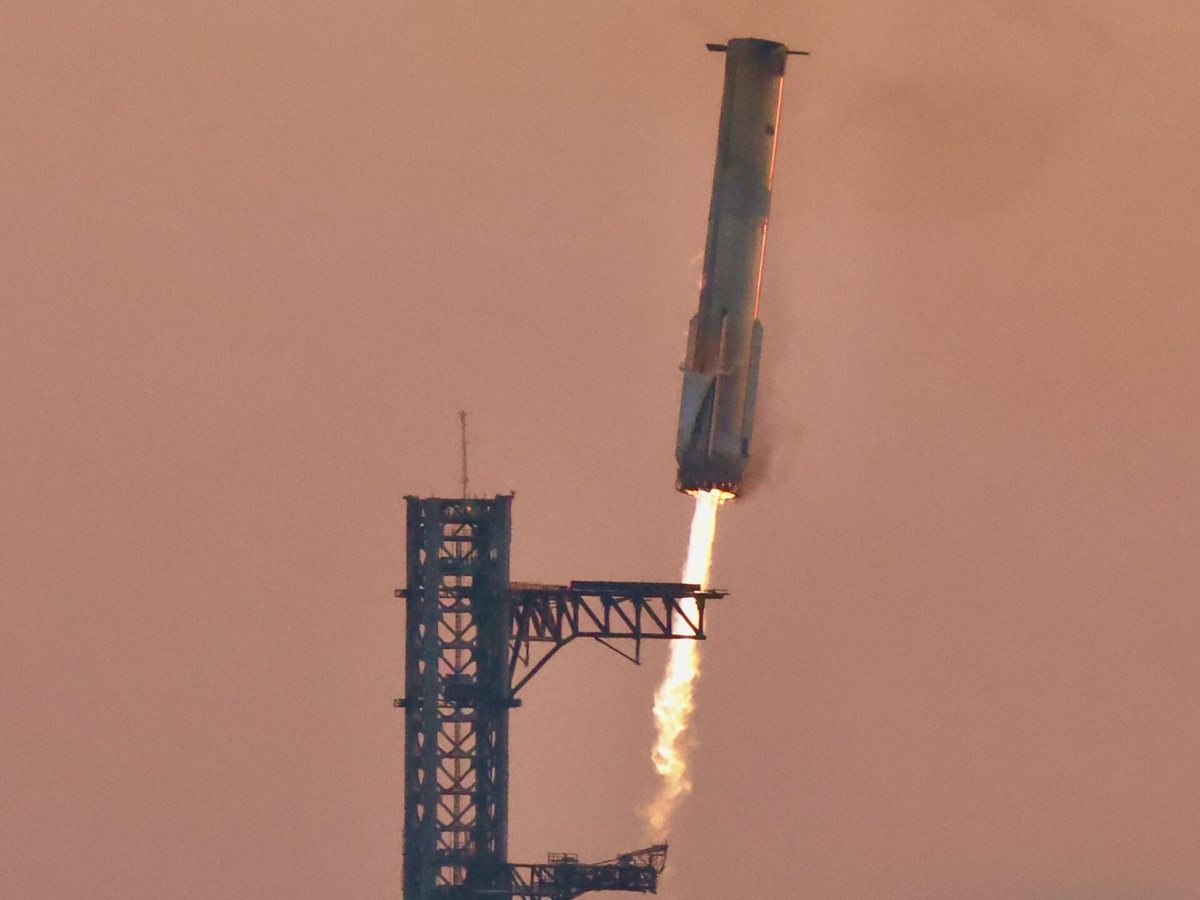
SpaceX is going to try something no rocket company has done: launch an orbital rocket and bring every piece of it home. If the weather, the regulators and the hardware cooperate, Starship Flight 15 lifts off from Starbase, Texas, as early as Friday, November 13, in a 75-minute window that opens at 4:45 p.m. Central. Both stages are meant to end the day in the arms of a launch tower.
"If both are successful, it will mark the first time that all parts of an orbital rocket return to Earth intact," Elon Musk wrote on X. "You really want to watch this one," he said in a separate interview clip. "It's the largest flying object ever made. And then the giant thing comes back."
Six and a half minutes for the booster
The first catch happens fast. Super Heavy, the 33-engine first stage, separates about two minutes and twenty seconds after liftoff, flips, fires a boostback burn and heads back to the pad. SpaceX's timeline puts the catch at about six minutes and 35 seconds into the flight.
SpaceX has done this before, three times, with the first-generation booster, and two of those caught boosters later flew again. This is the first catch attempt for the larger V3 booster, which has three grid fins instead of four, each 50% larger and with a new catch point built in. The tower's arms, which engineers call the chopsticks, are shorter than before and now move on electric actuators rather than hydraulics, which SpaceX says makes them faster and more reliable.
Twenty-two hours for the ship
The upper stage is the real test. Starship first goes up on a "passively safe" path that would drop it into the Indian Ocean if anything looks wrong. Only after a health check does a single engine fire, about 26 minutes in, to put it into orbit.
Then it goes to work. Starship carries 26 Starlink V3 satellites and starts releasing them about 35 minutes into the flight. SpaceX says each adds about one terabit per second of capacity, so the load equals roughly ten Falcon 9 launches of the current satellites. Three of them carry cameras pointed back at the ship to photograph its heat shield before anyone decides to bring it home.
After that comes a long coast of about 21 hours and 14 orbits at around 275 kilometres, while controllers check engines, power, computers, tank pressure and steering. If anything fails, there are bail-out splashdowns north of Hawaii, early and late in the mission, and one off Chile. These are the same zones used on Flight 14.
The final approach
If the ship passes, a single Raptor fires for the deorbit burn at about 21 hours and 36 minutes, and Starship reenters over the Pacific. This is where it gets new. To reach the tower, the ship has to fly over land, across northern Mexico and southern Texas, weaving around the cities of the Rio Grande Valley, passing north of South Padre Island and turning south over the Gulf toward Starbase. SpaceX says people in Cameron County may hear one or more sonic booms.
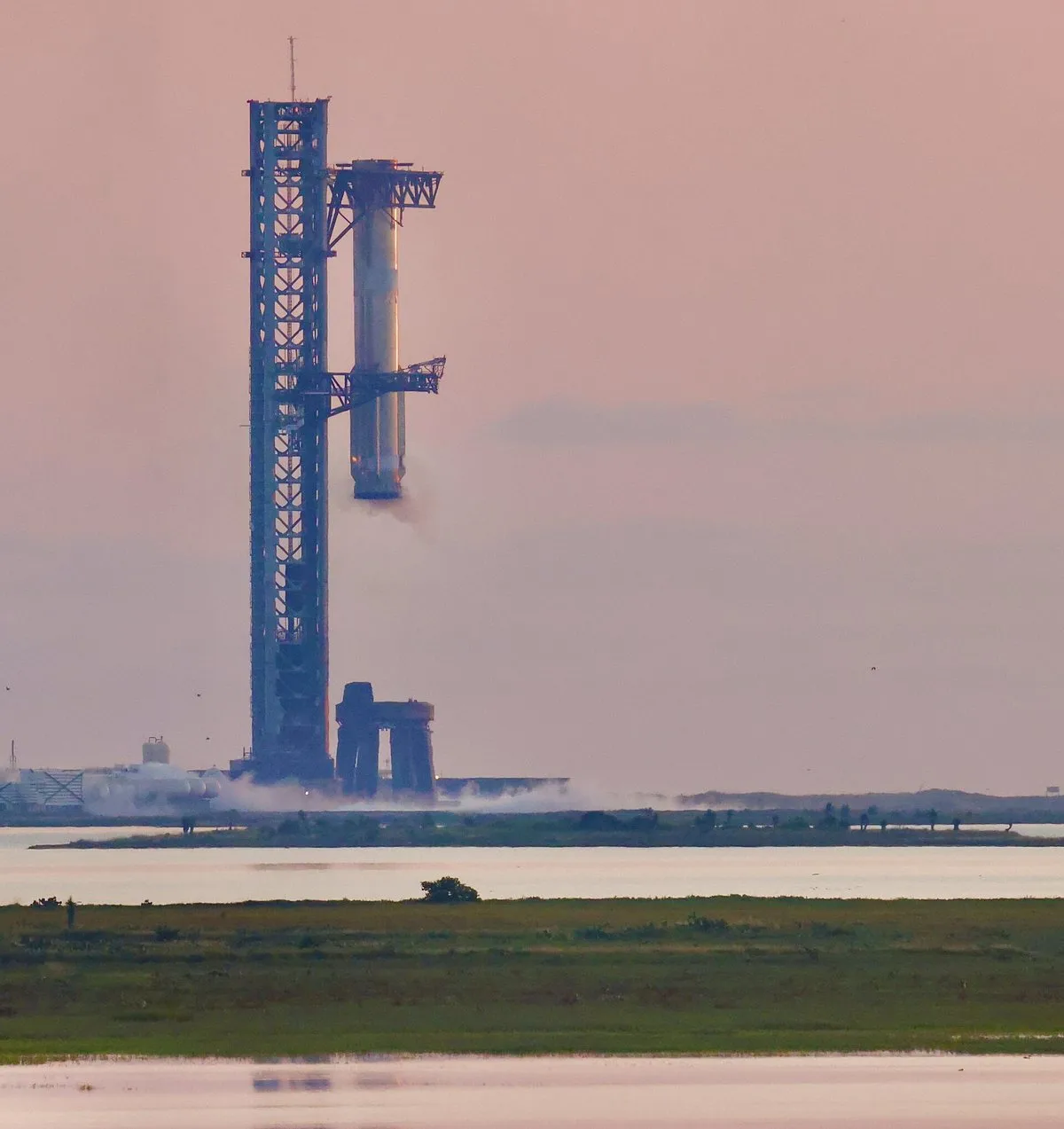
At the end it falls belly-first toward the tower at Pad 2, lights three engines, flips upright, throttles down to one engine and settles between the arms. The arms close on two fittings just below the forward flaps. Catch is scheduled for about 22 hours and 32 minutes after liftoff.
SpaceX has built in exits all the way down. It can break the ship up on purpose by tumbling it before it reaches land, or send it into the Gulf if the ship or the tower has a problem.
Why it matters
Every rocket in service today throws away at least part of itself. Falcon 9 lands its booster but loses its upper stage. A fully recovered Starship, refuelled and flown again, is what turns launch into something closer to airline flight. That is the whole economic case for the vehicle, and the basis for SpaceX's plans for the Moon, Mars and a much larger Starlink network. Every earlier Starship flight was planned to end in the ocean. This one is meant to end on the pad.
*Image: A Super Heavy booster on final approach to the launch tower at Starbase, October 2024. Photo: Steve Jurvetson, CC BY 2.0, via Wikimedia Commons.*
Source: SpaceX