The ex-Goldman banker who sold shares in his stand-up career
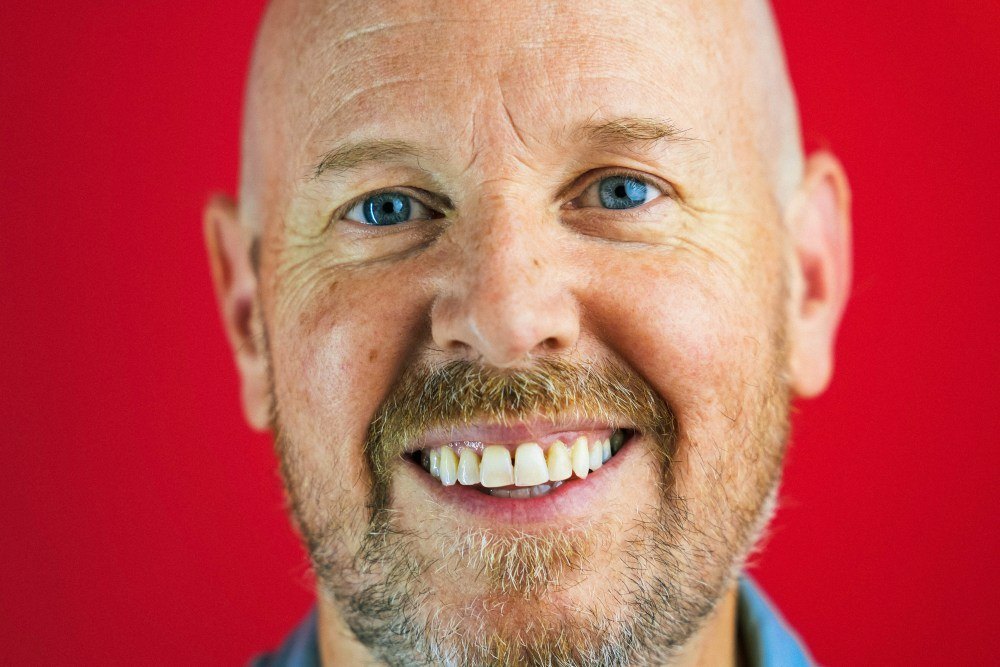
Pete Smack, whose stand-up business gives outside investors a share of gross revenue. Photo: courtesy of Pete Smack, via Variety.
Most people who leave investment banking for comedy accept that their financial returns are about to become a punchline. Pete McEntegart decided to bring investors along.
The former Goldman Sachs banker, Sports Illustrated writer and startup co-founder performs as Pete Smack. As Variety reports, he raised $57,765 from 104 backers to finance a late-career attempt at stand-up. This is not a donation page dressed up with startup vocabulary. It is an investment in an entertainment business, with a revenue share, conversion terms and securities paperwork.
At 57, Smack has done something more interesting than quit his job to follow a dream. He has made the dream legible to a cap table.
The terms behind the joke
Investors collectively participate in 10 per cent of gross revenue through 2029. On January 1, 2030, their investment converts to equity at a $1m pre-money valuation, according to the arrangement described by Variety. His Wefunder page confirms $57,765 raised from 104 people and says an equity financing could trigger earlier conversion. Smack used Wefunder and spent $5,000 on lawyers to set up the offering.
Those distinctions matter. Ten per cent is the pool shared by investors, not the return promised to each backer. Gross revenue is also not profit. A revenue-share structure can distribute money while a business still has meaningful expenses, which is attractive to backers but requires the operator to keep costs under control.
Nor is the $1m conversion valuation proof that the comedy business could be sold for $1m. It is a contractual valuation for the conversion. An illiquid stake in a small entertainment company does not become easy to sell because the paperwork includes a number.
The market is not necessarily a comedy club
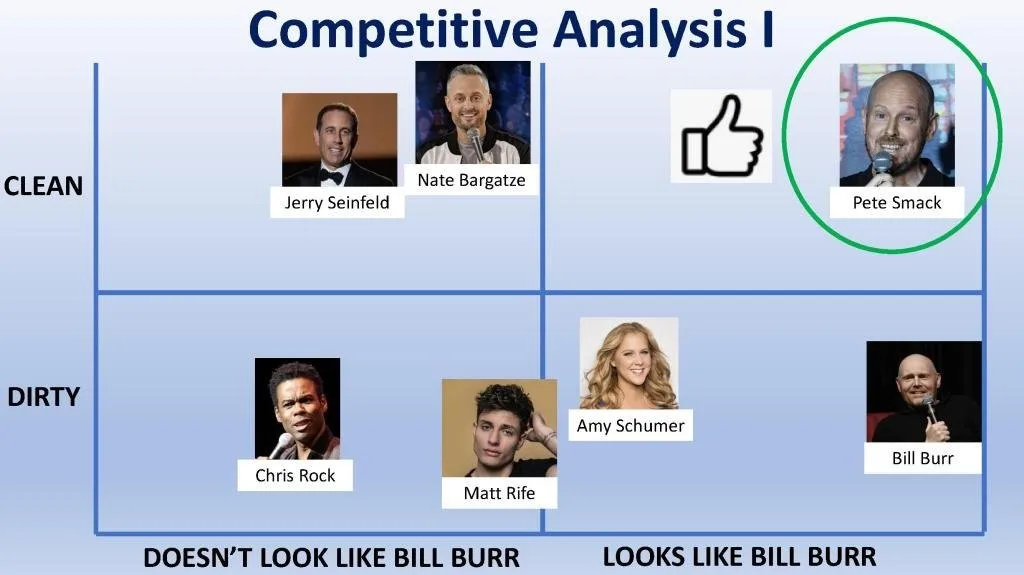
Smack's plan is deliberately less glamorous than the usual fantasy of a Netflix deal. He is pursuing corporate events, cruise ships and active-living communities for people aged 55 and over. He works clean, which widens the range of rooms that can book him without worrying about offending their customers.
It is a sensible segmentation exercise. Instead of competing only for late-night club audiences, he is looking for buyers with budgets and a reason to purchase a self-contained evening's entertainment. The demographic fit is a feature, not a concession.
The early operating numbers are modest. Variety says his annual report recorded $18,497 in revenue and $9,585 in expenses for 2025, with 2026 running at a similar pace. Subtract the reported expenses and the difference is $8,912, before treating that figure as a salary, a tax calculation or a comprehensive measure of investor returns. On the reported revenue alone, a 10 per cent pool would amount to about $1,850 for that year across all participants.
Investors buy accountability, too
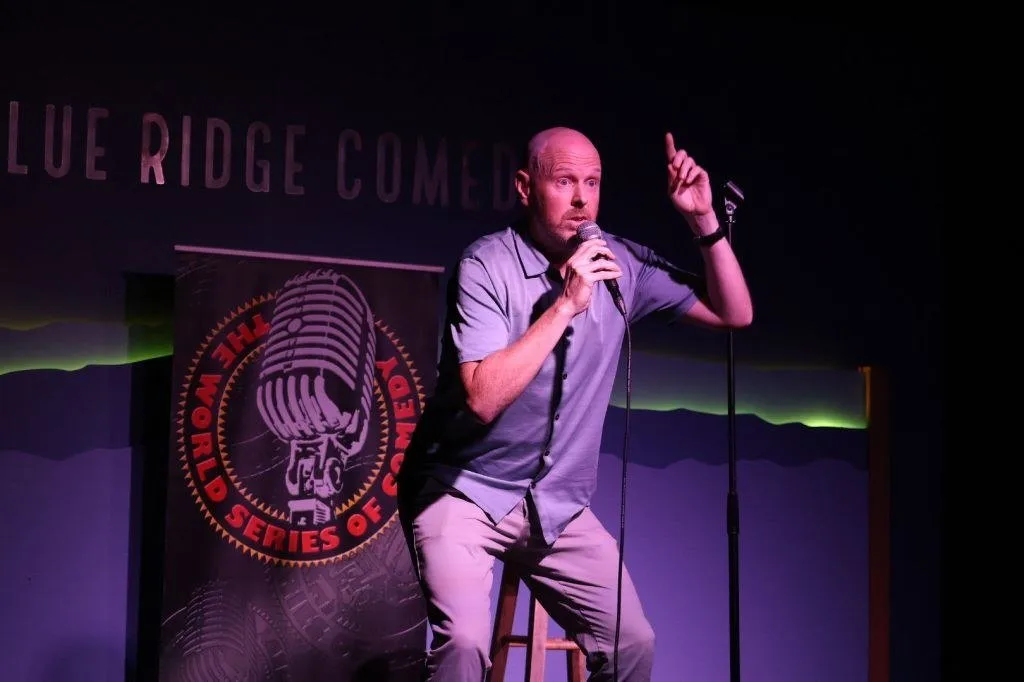
The money helped rent a venue and film a special, Last Man Standing, released on video-on-demand platforms by Comedy Dynamics on September 22. Smack also sends monthly investor updates, is developing a pilot and has considered business speaking work about what stand-up teaches.
Each activity gives the project another possible revenue stream. None guarantees that demand will arrive. His own investor projections range from a conservative collective revenue share of $55,000 through 2029 to a dream case of $228,000. They are forecasts, not earned returns.
There is an unusually human element to the financial structure. Most of the individual commitments were small, commonly $100 to $150. Some supporters may value a front-row seat to the experiment as much as a conventional payout. Smack told Variety that much of the pressure is self-imposed.
Still, backing someone you like is not the same as owning a liquid entertainment asset. The useful lesson is not that everyone should securitise a midlife crisis. It is that a creative career can be run as a disciplined small business: identify paying customers, keep overhead low, report progress and distinguish the dream from the financial promise.
Source: Variety