Leave them enough to do anything, not enough to do nothing

Warren Buffett once put the whole problem in a single sentence. The right amount to leave children, he told *Fortune* in 1986, is "enough money so that they would feel they could do anything, but not so much that they could do nothing." Leave less and you have failed them. Leave more and you have, in his view, committed something close to an antisocial act: a lifetime supply of food stamps for winning the birth lottery.
The formula is easy to quote and hard to keep. Every generation that builds a fortune wants to protect the next one; every heir who burns through it proves the opposite impulse was kinder.
The Vanderbilt cautionary tale
Cornelius "Commodore" Vanderbilt died in 1877 with a fortune of about $100 million, more money than sat in the United States Treasury at the time, according to Forbes's account of the dynasty. His son William Henry roughly doubled it. Then the heirs spent. Mansions, Newport cottages, yachts, horses and fashionable charity ate the principal. By the time Gloria Vanderbilt, the Commodore's great-great-granddaughter, died in 2019, probate filings put her estate under $1.5 million. The trust fund she was born into had already been gone for decades.
Her son Anderson Cooper grew up inside that story. "I don't believe in inheriting money," he told Howard Stern in 2014. "I think it's an initiative sucker. I think it's a curse." His mother, he said, had made clear there was no trust fund waiting. From childhood he assumed he would have to work.
The Vanderbilts are the American textbook case of what happens when a fortune is treated as a lifestyle, not a responsibility.
Carnegie called it a curse
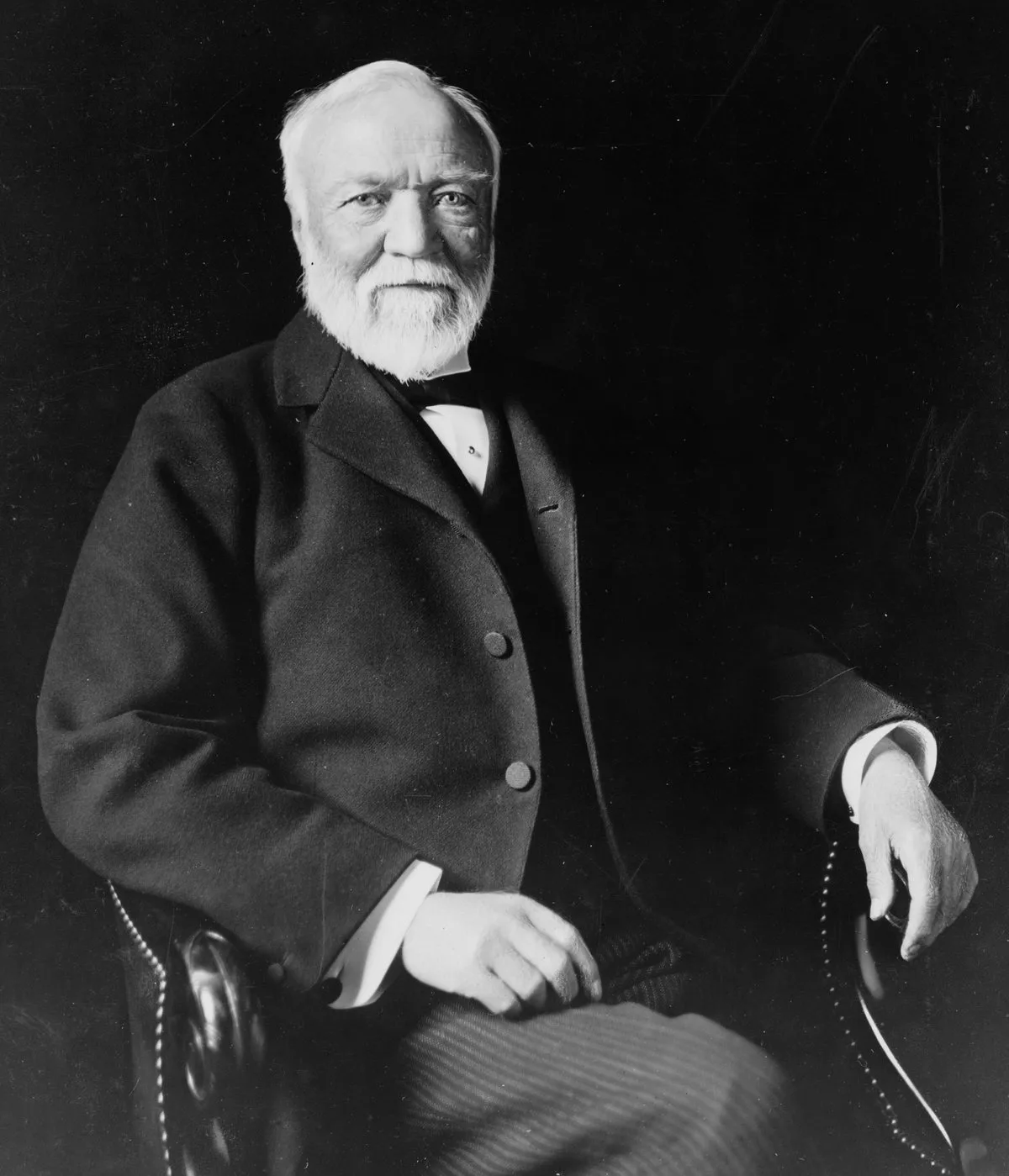
Andrew Carnegie said the quiet part first. In his 1889 essay *Wealth*, later retitled *The Gospel of Wealth*, he asked why anyone should leave great fortunes to their children at all. "Observation teaches that, generally speaking, it is not well for the children that they should be so burdened," he wrote. "Neither is it well for the state." Looking at the usual result of enormous bequests, "the thoughtful man must shortly say, 'I would as soon leave to my son a curse as the almighty dollar.'"
He was not arguing for destitution. He allowed moderate provision for dependants. What he rejected was the family pride that mistakes a giant legacy for love. Surplus wealth, in his view, was a trust to be administered for the public during the giver's lifetime.
The 70 percent failure rate
A century later the data caught up with the sermon. Roy O. Williams of The Williams Group spent two decades studying how families transfer wealth. His firm's research, spanning some 3,250 families and published with Vic Preisser in *Preparing Heirs*, found that about 70 percent of intergenerational wealth transfers fail. Failure meant the outcomes families most wanted to avoid: loss of control over the assets, damaged relationships, or both.
Taxes and bad lawyers were not the main problem. About 60 percent of failures traced to breakdowns in trust and communication; another 25 percent to unprepared heirs. Only about 15 percent were blamed on estate documents or investment mistakes. The families that succeeded had a shared mission for the money and let heirs practice stewardship before the patriarch or matriarch died.
The will is the easy part. Raising people who can hold what they inherit is the hard part.
The modern refusal
Bill Gates has said his children will receive a fixed sum and that most of his fortune will go to the foundation. "It's not a favor to kids to have huge sums of wealth," he has argued; it "distorts anything they might do as they create their own path." In 2025 he put the children's share at less than 1 percent of the total.
Sting told the *Daily Mail* in 2014 that he did not want to leave his six children "trust funds that are albatrosses round their necks." They have to work. Jackie Chan, speaking to Channel NewsAsia in 2011, was blunter still about his son: "If he is capable, he can make his own money. If he is not, then he will just be wasting my money."
They are restating Buffett and Carnegie after watching enough trust-fund disasters up close.
Our take
Coddling an heir is not generosity. It is risk management done badly. The parent who removes every consequence from a child's life is not protecting the child; they are training them for a world that will not exist once the parent is gone. Money without work and status without skill are a poor education for anyone, and a lethal one for someone who will one day control other people's capital.
The Buffett line is still the cleanest test. Ask whether the sum you plan to leave would let a competent adult start almost anything, or whether it would let a lazy one finish nothing. If the answer is the second, you are not planning an estate. You are planning a soft landing that becomes a soft life.
Prepare the heir first: talk about money early, make them earn, let them fail with amounts that will not wreck the family, and agree what the wealth is for. Write the documents second. Families that reverse that order get beautiful trusts and ugly outcomes. You do not owe your children a life without friction. You owe them the chance to survive contact with the fortune you built.
Sources
- Carol J. Loomis, Should you leave it all to the children?, *Fortune*, September 29, 1986 (2012 reprint), Warren Buffett quotes
- Andrew Carnegie, *Wealth* / *The Gospel of Wealth*, *North American Review*, June 1889 (Wikisource transcription of the 1889 text)
- Natalie Robehmed, The Vanderbilts: How American Royalty Lost Their Crown Jewels, *Forbes*, July 14, 2014
- Probate filings after Gloria Vanderbilt's June 2019 death, as reported contemporaneously (estate under $1.5 million)
- ABC News / Lesley Messer, Why Anderson Cooper Won't Receive an Inheritance From Mom Gloria Vanderbilt, April 1, 2014 (Howard Stern interview quotes)
- The Williams Group, Our Story; Carolyn Rosenblatt, Wealth Transfers: How To Reverse The 70% Failure Rate, *Forbes*, December 9, 2011; Roy Williams and Vic Preisser, *Preparing Heirs* (2003)
- The Guardian, Sting says his six children will not inherit £180m fortune, June 22, 2014
- Vulture / Channel NewsAsia reporting, Jackie Chan Is a Tough Dad, April 2011
- Fortune, Bill Gates says his children will get less than 1% of his wealth, March 31, 2025