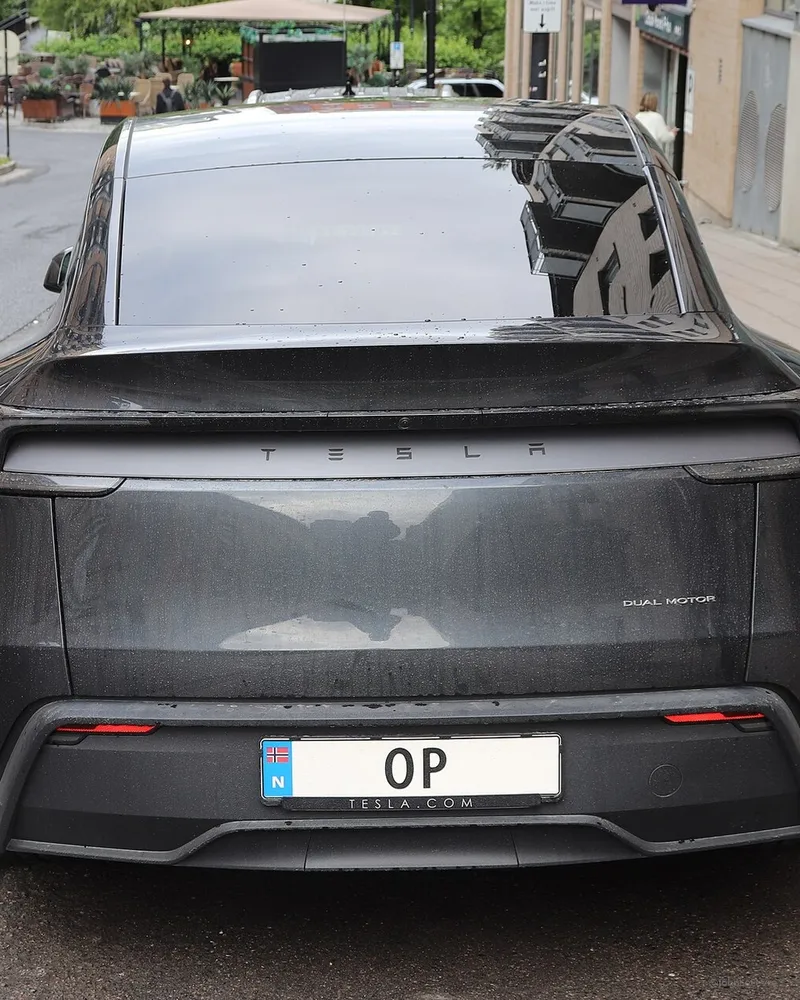
Musk says it is easier to cool computers in space. On the physics, he has a point
Can you cool a computer in space? Over the past day that question became one of the louder physics arguments on X, and on Monday night Elon Musk weighed in himself.
It matters because SpaceX is betting a large part of its future on the answer. In January the company asked the Federal Communications Commission for permission to launch up to one million satellites as the "SpaceX Orbital Data Center system". The FCC's public notice quotes SpaceX describing it as the "first step towards becoming a Kardashev II-level civilization – one that can harness the Sun's full power". If those satellites can't shed their heat, none of it works.
The argument
It started on Monday morning with Jan Broersen, a professor of philosophy, logic and AI at Utrecht University. He wrote that Musk's engineering credibility took a blow when Musk said cooling was easier in space. "The opposite is true," Broersen posted. "A vacuum is the best possible isolator. In space you can only dissipate heat through radiation." Data centres in orbit, he added, would almost certainly not happen in our lifetimes.
Two replies set out the case against him. Phil Metzger, director of the Stephen W. Hawking Center and a co-founder of NASA's Swamp Works lab at Kennedy Space Center, wrote that vacuum is "definitely not the best possible insulator". Engineers fill vacuum flasks with granular material such as perlite precisely to block radiative heat transfer. And at the temperatures GPUs run at, he wrote, "the heat transfer via radiation grows gigantically."
Shaun Maguire, a partner at Sequoia Capital with a physics PhD from Caltech, made the engineering case. Cooling in space is "vastly harder" overall, he conceded, "but 99.9999% of that challenge is Starship". Once you can lift huge amounts of mass cheaply, he argued, the system is simple and passive: chips heat a working fluid such as ammonia, the industry standard for space radiators, which carries the heat into a big, light aluminium structure that glows it away.
Musk then replied to Maguire:
When Metzger pointed out how sharply radiation rises with temperature, Musk answered: "Yup, T^4 scales super fast."
Who is right
On the narrow point, the physicists are. A vacuum stops conduction and convection, but it does nothing to stop radiation, and radiation is how satellites already shed their heat. The Stefan-Boltzmann law says a surface radiates in proportion to the fourth power of its absolute temperature. Double the temperature and the heat shed rises sixteen-fold. A radiator facing deep space is looking at a background only about three degrees above absolute zero, so almost nothing radiates back.
Musk's numbers also match what SpaceX has already said in public. In June, ahead of the company's IPO, SpaceX showed a draft of its first AI satellite, AI1, according to DatacenterDynamics. It is rated at 150kW peak and 120kW sustained. Musk said the design assumed 250W per square metre from the solar array and about 1,400W per square metre for the radiators, "radiating both sides, orientated knife-edge to the sun". The satellite has a 110 sq m deployable liquid radiator, with redundant pumping loops, on a 70-metre wingspan.
The figures roughly add up. A 110 sq m radiator at 1,400W per sq m sheds about 154kW. At 250W per sq m, 150kW of power needs around 600 sq m of solar cells, about five and a half times the radiator area. That is close to the "~5 times" Musk cited on Monday.
Where the skeptics have a point
Easier per square metre is not the same as easy. In a June analysis for the World Economic Forum, Tony Pan, founder of Borrowing Arrows, cited Starcloud's own white paper: a two-sided radiator held at about 20°C emits only about 633W per square metre. At that rate a single megawatt of compute would need roughly 1,600 sq m of radiator.
SpaceX's 1,400W figure is more than double that. Textbook physics explains how: a perfect emitter shedding 700W from each face settles at roughly 60°C, ignoring heat from Earth and the Sun. The gap comes down to running radiators, and therefore chips, much hotter. Pan warns that semiconductor leakage and error rates climb with temperature, so that trade-off has limits.
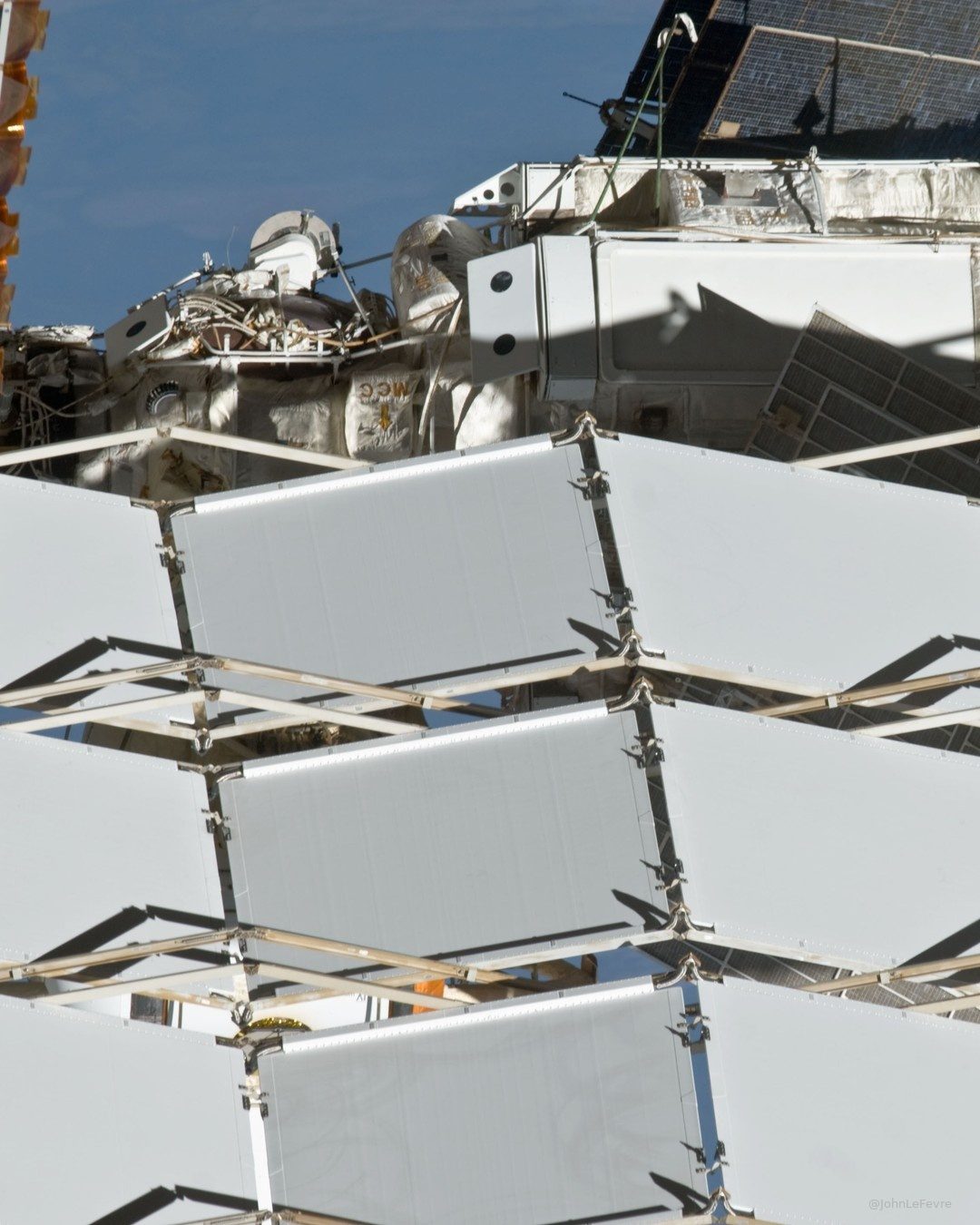
Then there is weight, which is what Maguire meant by Starship. The International Space Station's main cooling system rejects up to 70kW through two ammonia loops, according to NASA. Pan puts the mass of its radiator wings at about seven tonnes. Scaled to one megawatt, he argues, ISS-style radiators could weigh close to ten times as much as the computers they cool, and launch cost scales with mass.
What to watch
The critics are not only on X. In February, Wccftech notes, OpenAI's Sam Altman told the Indian Express that putting data centres in space was "ridiculous" in today's landscape, while allowing that "there will come a time."
What would settle it is hardware in orbit. Starcloud has already flown a satellite with an Nvidia H100 GPU. SpaceX plans to develop AI1's solar arrays in-house at its plant in Bastrop, Texas, and Musk said in June that "the AI satellite is much simpler than a Starlink satellite." The test now is whether a 110 sq m radiator can actually hold 150kW in orbit.
Image: NASA, public domain. The ISS's P1 truss radiators, photographed from Space Shuttle Atlantis on STS-135.