Inside the robot Neuralink built because human hands are too clumsy
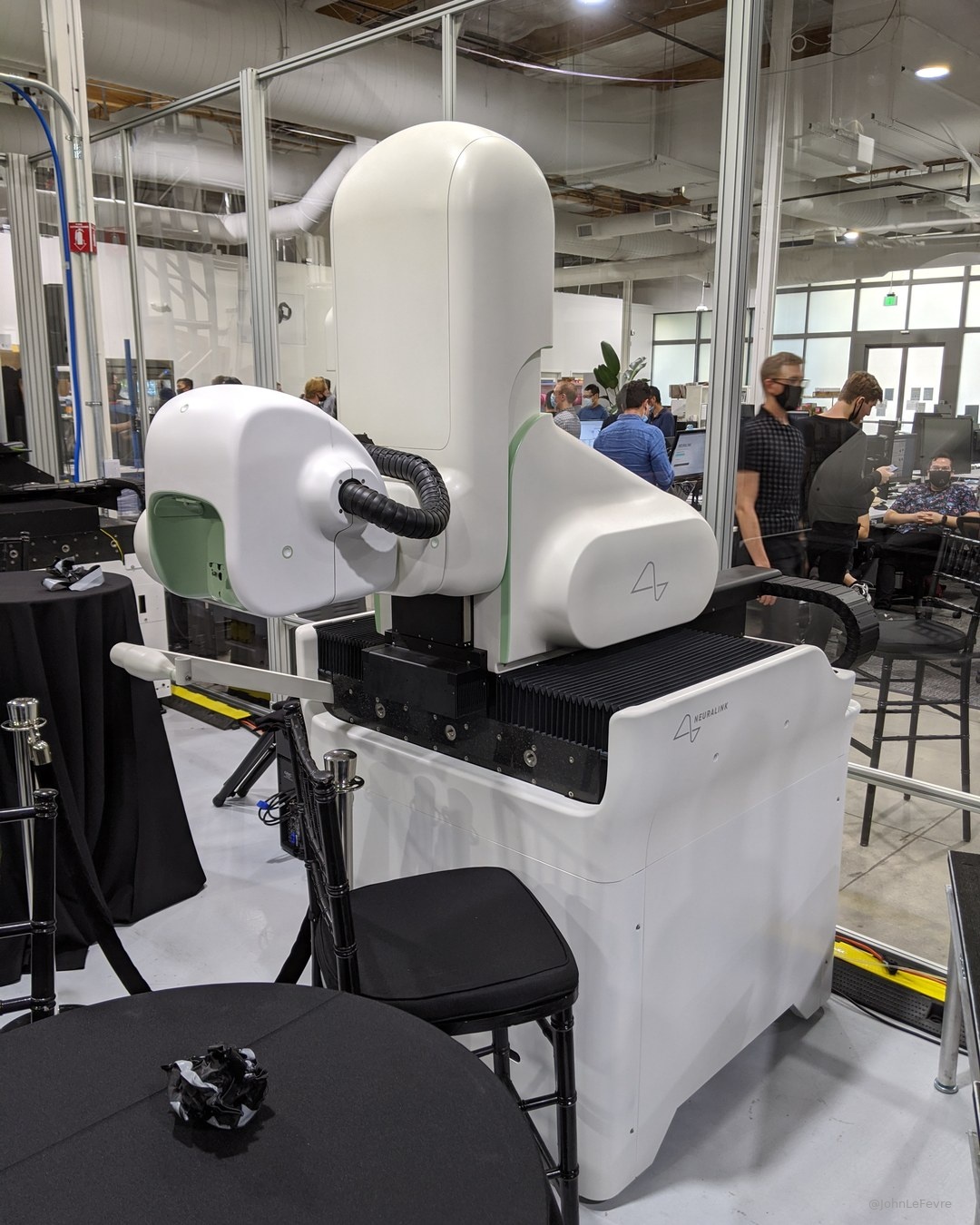
Brain surgery has a new pair of hands, and they aren't human.
Neuralink let science journalist Cleo Abram film its next-generation R1 surgical robot, shown publicly for the first time in her new HUGE* If True episode. Elon Musk shared it with three words: "Neuralink deep dive."
The robot exists because of the implant. Neuralink's chip, called the Link, connects to the brain through hundreds of flexible threads, each far too small and floppy for a surgeon's fingers.
So a machine does it. Cameras map the surface of the brain, extra sensors keep updating that map in real time, and a needle thinner than a human hair picks up the threads one by one, steering around tiny blood vessels. Each thread takes about a second and a half.
The finished implant carries more than a thousand electrodes, sits flush with the skull under the skin and talks to a computer over Bluetooth. Older implants such as the Utah Array, used in people since 2004, are rigid and can scar brain tissue.
It doesn't read your thoughts. It reads the intent to move, which Abram calls neural lip reading.
Next up is Blindsight, Neuralink's implant meant to let blind people see. Musk says it is ready from an engineering standpoint and waiting on regulators.
Image: Leijurv, CC BY-SA 4.0.